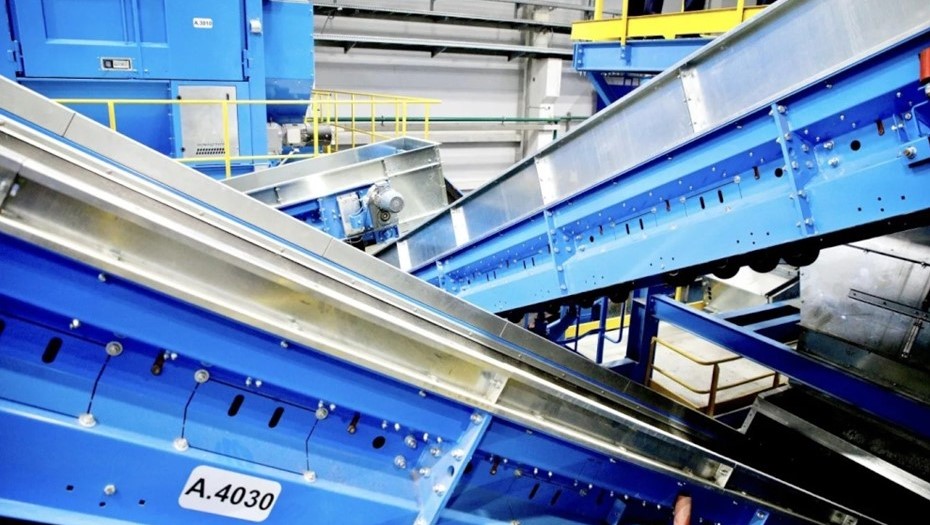
The Ostrovsky waste processing complex in Russia is scheduled to begin operations in early 2026, offering a single-site solution that covers all stages of municipal and industrial waste management, from sorting to final utilisation. Officials describe the project as a strategic step toward reducing reliance on landfills and improving regional recycling rates.
Ostrovsky waste processing complex capacity and operations
The facility is designed to handle up to 600,000 tonnes of waste per year, with an annual disposal or utilisation capacity of 360,000 tonnes. At full capacity, the complex will receive incoming mixed waste, carry out mechanical and manual sorting, recover recyclable fractions and process residual material for energy recovery or other forms of utilisation. By grouping these stages at one site, operators expect to streamline logistics and lower processing costs compared with dispersed facilities.
Project engineers have emphasised that integrated plants such as Ostrovsky enable higher recovery rates because sorted materials can be directed immediately to dedicated processing lines. This reduces contamination of recyclable streams, which in turn improves the quality and marketability of recovered plastics, paper and metals. The complex’s disposal throughput indicates a significant investment in technologies intended to divert material away from conventional landfills.

Beyond technical capacity, the complex is likely to produce local employment during the final construction phase and initial operations, while generating demand for transport and recycling industries in the surrounding region. For municipal authorities, having a reliable, high-capacity facility nearby can simplify waste collection schedules and reduce long-distance transfers to distant disposal sites.
Environmental and economic implications
By increasing the region’s capacity to treat and utilise waste, the Ostrovsky facility can contribute to lower greenhouse gas emissions from unmanaged refuse and landfill decomposition. Enhanced recovery of recyclable materials also supports domestic manufacturing supply chains by supplying secondary raw materials, which can be more cost-effective than virgin inputs and reduce import dependence for certain commodities.
Financially, the operation of a large-scale integrated plant can deliver savings over time. Consolidation of processes, higher recovery rates and potential energy generation from residual waste all represent revenue or cost-avoidance streams that can improve the project’s long-term viability. The move also aligns with broader policy aims in many countries to shift waste management up the waste hierarchy, prioritising prevention, reuse and recycling.
As the complex approaches its planned start date, monitoring will focus on actual throughput, the proportion of material successfully recovered, and the environmental performance of disposal processes. Clear reporting on these metrics will be important to assess whether the Ostrovsky project meets expectations and can serve as a model for similar developments elsewhere in Russia and among BRICS partners.
With operations due in early 2026, stakeholders from local authorities to private sector partners will watch closely to see how quickly the facility ramps up and what impact it has on local waste streams. If successful, the Ostrovsky waste processing complex could represent a practical, scalable approach to modernising waste infrastructure while supporting recycling markets and reducing pressure on landfills.
Key Takeaways:
- Ostrovsky waste processing complex will consolidate all stages of waste handling on one site, from sorting to utilisation.
- The facility will have an annual throughput of 600,000 tonnes and a disposal capacity of 360,000 tonnes.
- Start of operations in early 2026 is expected to relieve landfill pressure and support regional recycling efforts.