











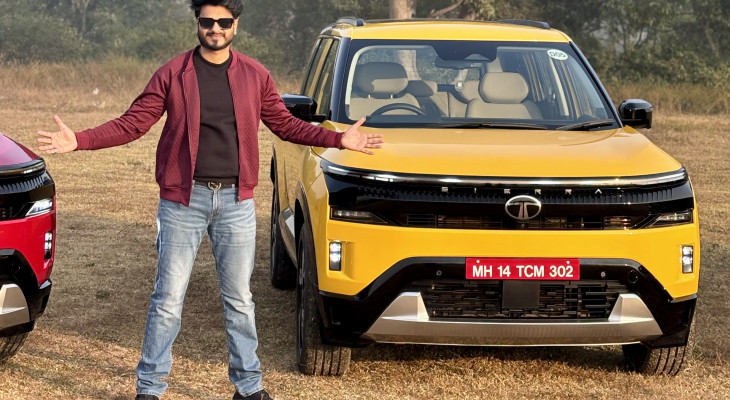
Tata Motors has revived the Sierra nameplate for the Indian market with a modern mid-size SUV that blends nostalgia with a heavy emphasis on technology, comfort and safety. Early impressions from a first-drive review suggest the Sierra is not relying on heritage alone — it aims to compete on substance.
Tata Sierra review — design and presence
The Sierra announces itself immediately. Its silhouette nods to the original with a large rear glass area and a blacked-out B-pillar, but the five-door body and safety-driven tweaks make the new Sierra a contemporary proposition. Up front, sleek LED elements, a clean grille treatment and light-sabre DRLs lend a premium touch. Flush door handles, large 17–19-inch alloys and a deliberate upright stance ensure it turns heads in city traffic and on the motorway.
Exterior colour choices range from bold yellows and reds to earthy tones and understated grey and white, while top trims offer beige-and-white leatherette inside. The cabin’s airy feel is amplified by a vast panoramic sunroof and large windows that make visibility a genuine strength.

Inside, the Sierra’s tech credentials are immediately apparent. A triple-screen layout — a 12.3-inch central touchscreen, a 12.3-inch passenger display and a 10.25-inch digital cluster — is tastefully integrated and adds passenger-facing entertainment. The Sierra is powered by the Snapdragon Auto 5G SA 522 chipset and Tata’s iRA connected platform, bringing 5G features and over-the-air updates to the ICE segment in India.
Practicality is strong: a 622-litre boot expands to 1,257 litres with the rear seats folded, the loading lip is low and the space is usefully squared off for luggage and family kit. The Sierra deliberately remains a premium five-seater rather than stretching into a three-row layout, prioritising second-row comfort and generous shoulder room.
Underpinning the Sierra is Tata’s ARGOS architecture, built to accept multiple powertrains and future all-wheel-drive setups. The long 2,730 mm wheelbase delivers class-leading legroom and a genuinely spacious cabin — metrics that back its family-oriented positioning.
Powertrain choices cover a naturally aspirated 1.5-litre petrol, a 1.5-litre Hyperion TGDi turbo petrol and a Kryojet 1.5-litre diesel. The turbo petrol offers refined progress and useful mid-range punch, while the diesel brings strong low-end torque ideal for highways and hilly terrain. Both automatic gearboxes tested behaved smoothly and matched the Sierra’s comfort-led character.
Ride quality stood out on mixed surfaces. Tata’s Superglide suspension with frequency-dependent damping absorbs rough patches without unsettling the cabin, and the steering is tuned for ease rather than sharp feedback — a sensible choice given the Sierra’s focus on long-distance comfort. Driver ergonomics impressed during short stints, with a commanding seating position and supportive seats featuring thigh extenders for extended journeys.
Safety remains a headline feature: six airbags, full-disc brakes, ESP with multiple functions and a 22-feature L2+ ADAS suite. Tata also subjected the Sierra to a 50 km/h offset crash test, and the result underlines the brand’s emphasis on occupant protection alongside active safety systems.
There are questions that will only be answered with ownership — real-world fuel economy, long-term tech reliability and variant pricing — but the first-drive verdict is positive. The Tata Sierra review finds a confident, modern SUV that balances a strong design statement with class-leading cabin space, rich tech and an emphasis on safety, making it a compelling choice for buyers seeking a premium five-seater in India’s crowded mid-size SUV segment.
Key Takeaways:
- Tata Sierra review highlights a bold, modern design that evokes the original while offering a contemporary five-door layout.
- Triple-screen cabin, Snapdragon Auto 5G chipset and iRA connectivity place the Sierra among the tech-rich mid-size SUVs.
- Best-in-segment interior space and a 622-litre boot underscore its family-friendly focus.
- Strong safety credentials with six airbags, L2+ ADAS and a 50 km/h offset crash test emphasise real-world protection.








