











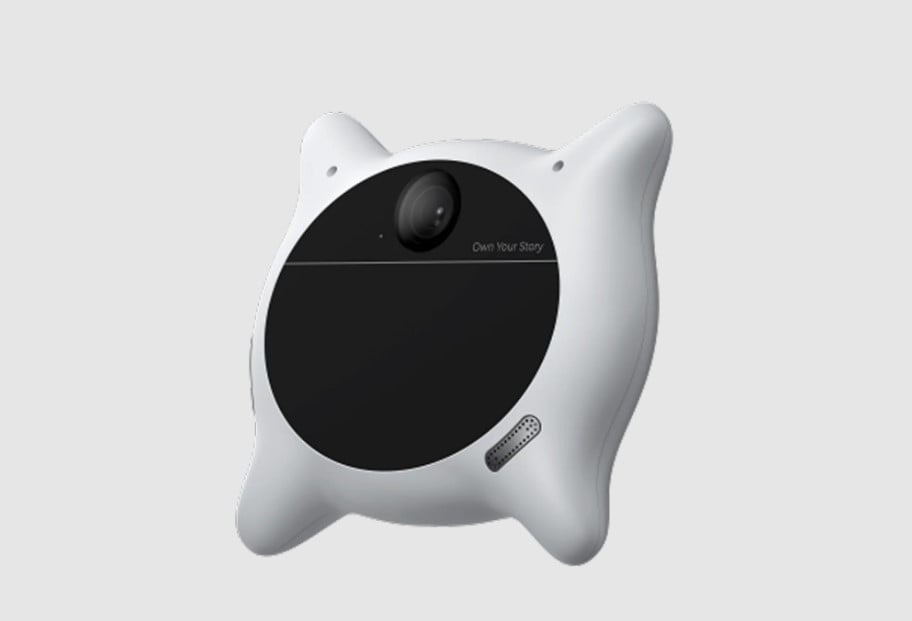
Looki’s L1 wearable camera aims to help people manage the flood of small, everyday tasks that strain memory and attention. Priced at around $199, the device is designed to capture short clips throughout the day, making moments searchable rather than producing continuous footage. The approach targets users who want practical recall support rather than cinematic-quality recordings.
How the Looki L1 wearable camera works
The L1 resembles a small pendant with a lens and dual microphones. It weighs roughly 30 grams and stores recordings on 32 GB of internal memory. Video is recorded at 1080p and 30 frames per second, while stills can be saved at 4K. Connectivity includes dual‑band Wi‑Fi and Bluetooth 5.0, and the company sells optional accessories such as a wireless charging base and magnetic strap.
Rather than filming continuously, the device offers a Story Mode that records configurable snippets of 30 seconds, one minute or two minutes. Users can pause capture at any time. The stated intent is to collect searchable signals of daily life—an instruction from a teacher, a mechanic’s explanation, the brand of a medication—so users can retrieve details later without constantly reaching for a phone.

Looki markets the L1 for everyday environments, such as the home, commutes and errands. It is explicitly not pitched as an action camera for sports or extreme activities. The product’s design focuses on convenience and low visibility, emphasising routine use rather than cinematic results.
Privacy and practical safeguards
Privacy is the most sensitive issue for wearable cameras, and Looki has built several features to address this. By default, all content is stored locally on the device and only uploaded to the cloud if the user chooses to sync. When users opt for cloud backup, the company says it uses Amazon Web Services infrastructure.
To reduce the risk of covert recording, the L1 includes a Trust Light that flashes while capture is active. The manufacturer states this indicator cannot be disabled. That visible signal helps communicate to people nearby that recording is occurring, a measure similar to those used by some smart glasses and other wearable devices.
Even with these safeguards, responsible use requires social rules. In family settings, users should agree explicit boundaries about when and where the device is on. In workplaces and public spaces, clear policies are necessary to prevent inadvertent capture of colleagues or customers. The article highlights a simple test for any setting: does the benefit of remembering outweigh the risk of intruding on someone else’s privacy?
Who may benefit
The L1 may appeal to caregivers, busy parents, professionals juggling complex schedules, and anyone who wants a lightweight way to offload small memory tasks. Its recording mode and local storage model suit people who prioritise convenience and control. However, potential buyers should understand the ethical implications and set boundaries that respect others.
Looki’s L1 frames memory augmentation as a practical tool rather than a replacement for attention. Its success will depend on how well users balance the device’s convenience with clear rules for privacy and consent.
This article was translated and adapted into English from the original Portuguese piece, and edited for style and clarity.
Key Takeaways:
- The Looki L1 wearable camera captures short, searchable clips to reduce everyday memory load.
- Privacy features keep recordings local by default and include a visible Trust Light to signal active capture.
- Technical specs favour daily use: 1080p video, 4K photos, 32 GB storage and Wi‑Fi/Bluetooth connectivity.
- The device is aimed at caregivers and people with busy routines, but proper use rules are needed to protect others’ privacy.








