











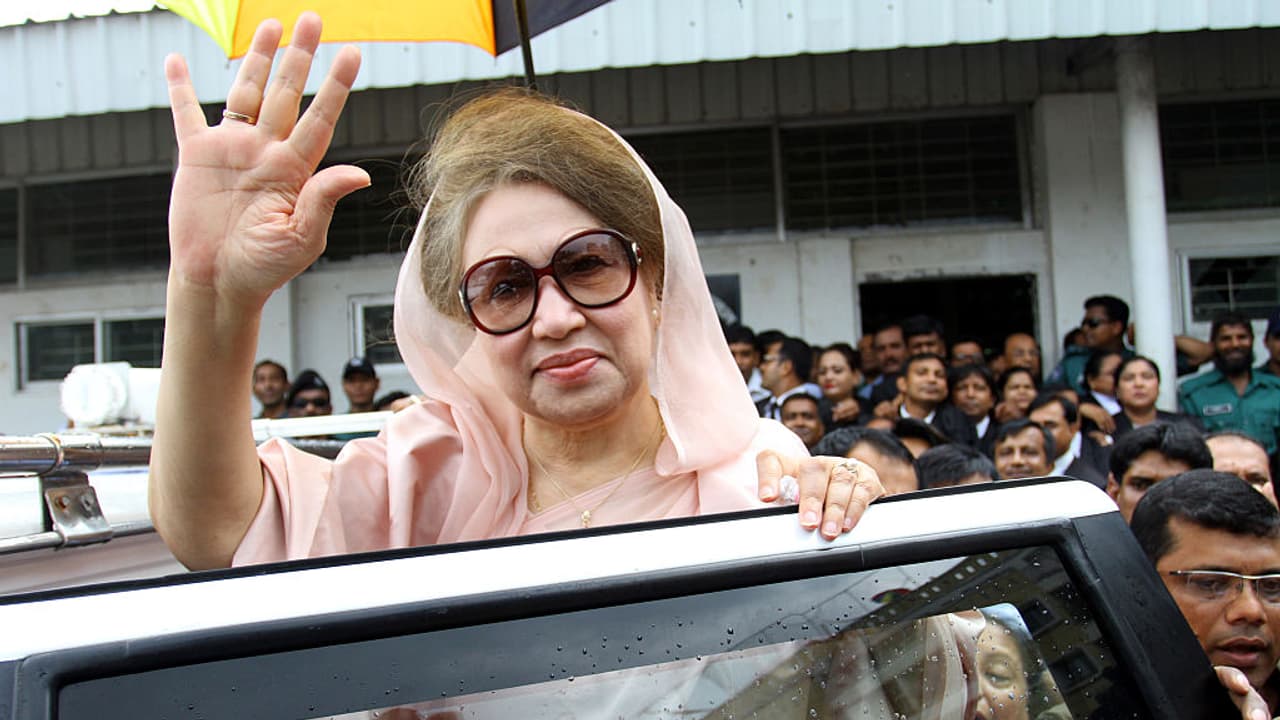
Indian Foreign Minister S. Jaishankar travelled to Dhaka on the afternoon of the state funeral for Begum Khaleda Zia, India’s embassy confirmed. Jaishankar arrived at noon and personally expressed New Delhi’s condolences to Khaleda Zia’s family, handing over a message of sympathy from Prime Minister Narendra Modi.
Thousands attended the funeral, marking the passing of a prominent figure in Bangladesh’s post-independence politics. Khaleda Zia served as the country’s first female prime minister and remained an influential political presence. Jaishankar’s attendance as India’s representative underlined the diplomatic importance New Delhi attaches to recent developments in its eastern neighbour.
India-Bangladesh relations
The visit comes amid a period of realignment in Dhaka’s politics. The Awami League government that had maintained close ties with India was disrupted last year, and today Bangladesh faces a new balance of power as the Bangladesh Nationalist Party (BNP) and its leader Tarique Rahman regain strength following his return after 17 years abroad.

Jaishankar met Tarique Rahman at the funeral and offered India’s sympathies. Observers in New Delhi see that contact as part of a broader, pragmatic effort to engage emerging political actors in Bangladesh. Indian officials have emphasised that stable relations with Bangladesh advance regional connectivity, trade and security cooperation.
Statements from Tarique Rahman distancing himself from external influence have been noted in India as a potentially constructive signal. His recent remarks asserting Bangladesh’s primacy in its foreign policy reflect an intention to pursue an autonomous diplomatic course that could open avenues for cooperation distinct from previous alignments. New Delhi will likely watch how those positions translate into policy in the run-up to forthcoming elections.
Analysts say this outreach is not merely ceremonial. India has long-standing strategic, economic and cultural ties with Bangladesh, and senior-level engagement signals an attempt to preserve continuity even as domestic politics shift. Jaishankar’s presence at a sensitive and symbolic event demonstrates India’s prioritisation of steady diplomatic channels at a time when bilateral relations have experienced strains.
Background tensions followed the removal of the Sheikh Hasina administration’s previous allies and shifts in Bangladesh’s internal balance. With the BNP’s renewed visibility, New Delhi faces the practical task of maintaining ties across political lines and managing bilateral issues such as border management, trade facilitation and connectivity projects.
Prime Minister Modi’s message recalled Khaleda Zia’s contributions and referenced a 2015 meeting between the leaders, expressing hope that her vision would continue to guide cooperation between the two countries. Indian diplomats interpret the funeral visit as a measured diplomatic gesture designed to keep channels open and to signal respect during a delicate political moment.
As Bangladesh moves towards potential electoral contests, India’s engagement with a broader set of political actors is likely to continue. For New Delhi, sustaining constructive relations with Dhaka remains a strategic priority that supports economic ties, regional stability and cross-border collaboration.
Key Takeaways:
- Indian Foreign Minister S. Jaishankar attended the funeral of former Bangladeshi prime minister Khaleda Zia in Dhaka and conveyed Prime Minister Narendra Modi’s condolences.
- The meeting with Khaleda Zia’s son, Tarique Rahman, and high-level Indian representation signals a possible reset in India-Bangladesh relations.
- Political shifts in Bangladesh and the BNP’s strengthened position after Tarique Rahman’s return have prompted New Delhi to engage with emerging political actors.
- India seeks pragmatic diplomatic ties with Bangladesh amid regional strategic and electoral developments.








