











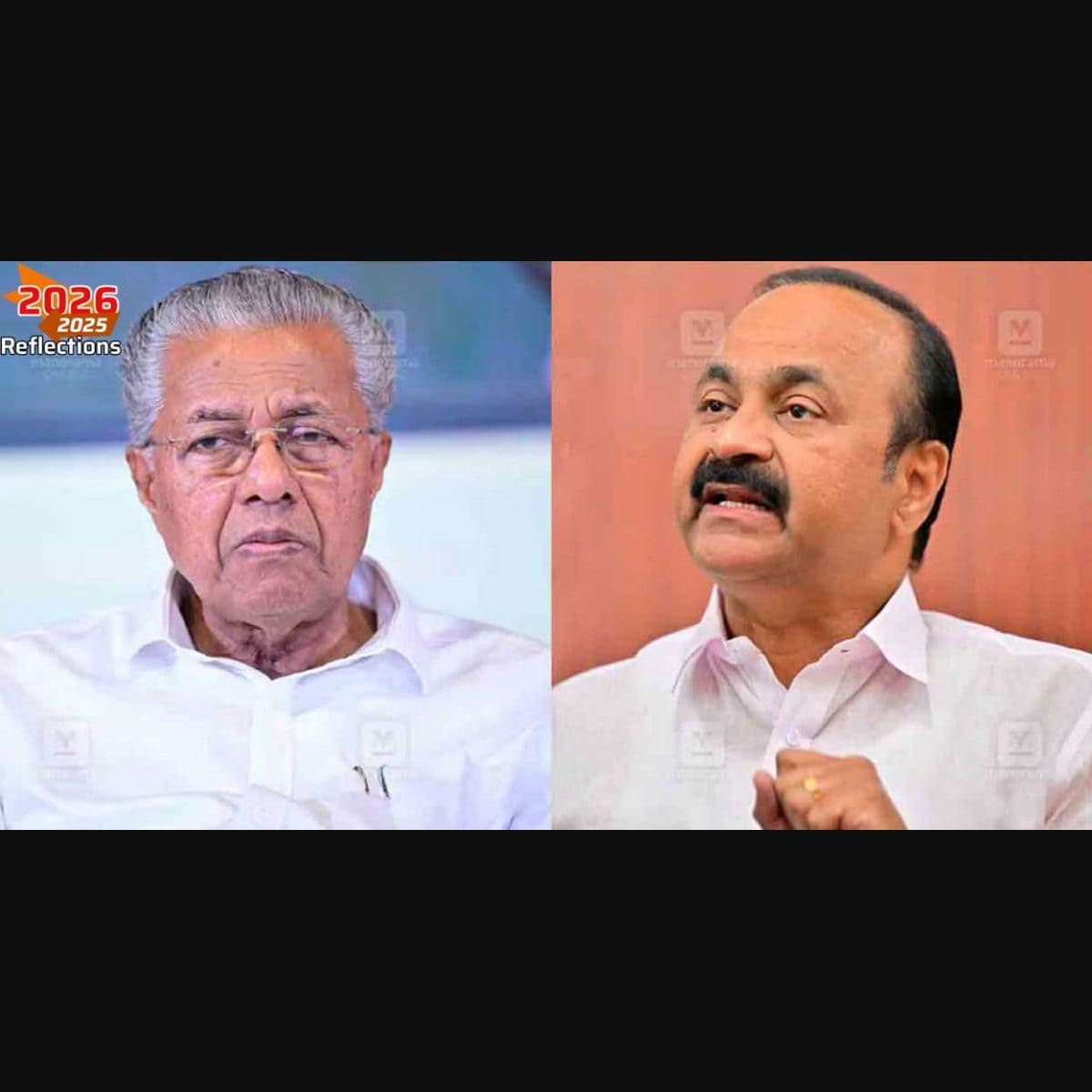
Kerala’s political scene has been reshaped over the past year as established figures and rising stars altered their trajectories ahead of the 2026 state assembly elections. The contest now looks set to test whether recent local victories and organisational work can translate into legislative success for competing fronts.
Kerala politics leaders under scrutiny
At the centre of the realignment is VD Satheesan, who has recovered from being overlooked for ministerial office to emerge as a party leader with momentum. Unexpected elevation to opposition leadership followed several local wins, including strong performances in municipal polls. Satheesan’s immediate task is to convert civic-level organisation into a coherent strategy for the assembly polls. His focus on revitalising booth committees and broadening the front by engaging like-minded groups has signalled a pragmatic approach to alliance-building.
Pinarayi Vijayan intends to lead the Left Democratic Front into a third consecutive term. Despite internal criticism and some high-profile setbacks at the local level, the chief minister retains authority within his party. Pinarayi’s leadership will be judged on whether he can steady the administration after controversies around project approvals and coalition tensions. The LDF’s ability to absorb dissent and present a united front will determine its prospects in the next round of voting.

For the Congress, Rahul Mankuttil’s rapid rise has been followed by a steep fall. Once hailed as a young standout, Mankuttil resigned from a party post amid serious allegations and now faces legal proceedings. His case has dented Congress’s image in certain constituencies and raised questions about candidate vetting and internal discipline. Recovery for the party will require restoring trust at the grassroots and presenting credible alternatives where seats are in doubt.
The CPI(M) has also seen fresh turbulence. Arya Rajendran, who captured attention as a young mayor, has faced allegations and controversy that damaged local credibility. Meanwhile, CPI leader Binoy Viswam’s outspoken criticism of certain policy moves has strengthened his profile within the Left and provided a clear voice on governance issues. These mixed signals within the left indicate both vulnerability and resilience.
On the right, Rajeev Chandrasekhar’s role as the state BJP leader marks a renewed attempt to broaden the party’s footprint. The BJP’s historic gains in selected urban bodies have encouraged an assertive strategy targeting five assembly seats in the upcoming contest. Success will depend on party organisation and its ability to translate urban wins into wider rural gains.
Overall, local government results and internal party moves have set the stage for a competitive assembly election. The immediate battleground will be organisational strength, candidate selection and coalition negotiations. For all parties, the test is whether municipal victories and high-profile personalities can be converted into sustained legislative performance.
As Kerala heads into the election year, voters will watch how leaders respond to corruption allegations, governance disputes and shifting alliances. The next few months will be decisive in shaping not only the state government but also the region’s political balance ahead of national contests.
Key Takeaways:
- Kerala politics sees rapid shifts: VD Satheesan gains ground while Pinarayi seeks a third term.
- Rahul Mankuttil’s fall from grace and Arya Rajendran’s controversies weaken Congress and CPI(M) prospects respectively.
- Binoy Viswam’s strong line on policy and Rajeev Chandrasekhar’s BJP leadership signal changing electoral dynamics.








