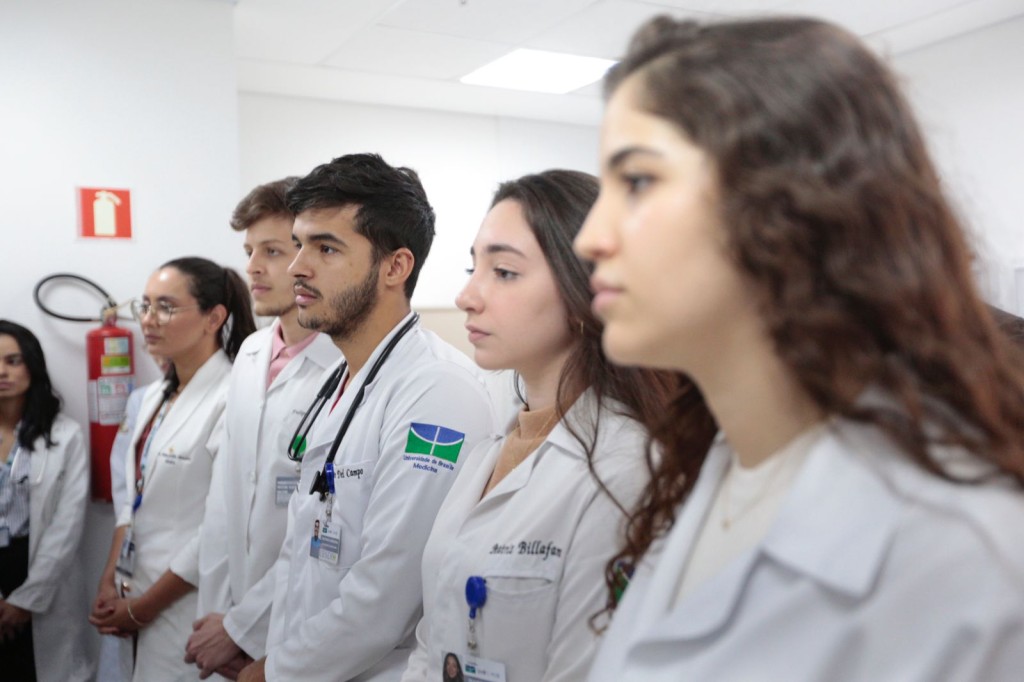
Brazil’s Ministry of Education (MEC) has announced a new roll-out of the Bolsa Permanência programme for medical students participating in the Mais Médicos initiative, publishing Edital No. 8/2025 on 31 December. The public notice offers 1,500 monthly grants of R$700, with payments due to start in early 2026 and an annual budget commitment of R$12.6 million.
Bolsa Permanência Mais Médicos targets students from vulnerable areas
The programme aims to reduce social inequalities and help students from low-income backgrounds remain enrolled and graduate from medical school. Of the 1,500 grants, 25% are reserved for students at federal universities and the remaining 75% for full‑scholarship students at private higher education institutions. Allocation will favour municipalities with higher social vulnerability, using the Social Vulnerability Index (IVS) developed by the Institute for Applied Economic Research (Ipea).
MEC has set differentiated scoring and additional vacancy allowances for institutions located in the Amazon region and in the country’s border strip, reflecting a policy focus on areas that face greater challenges in access to higher education and healthcare provision.

Institutions eligible to participate must register between 2 and 13 February 2026 through the Bolsa Permanência Management System (SISBP), with formalisation by the legal representative of the institution or its maintainer. Eligible students will then register for the selection process in SISBP between 4 and 20 February. Final selection by participating higher education institutions will take place from 6 to 13 March.
To qualify for a grant, students must meet several conditions: a gross family income per person of up to one and a half times the minimum wage; registration in the Cadastro Único for Social Programmes (CadÚnico); active enrolment in a medical degree at an institution participating in Mais Médicos; no prior completion of any other higher education degree; and not already receiving a Bolsa Permanência in another modality.
Participating institutions must define their own selection procedures in a specific institutional notice, following MEC criteria. Priority will be given to candidates with family income per capita of up to half a minimum wage and to those who completed their entire secondary education in public schools.
The programme was regulated by Portaria No. 655/2025, updated on 31 December, and the operational procedures were set out in FNDE Resolution No. 25/2025, published the same day. Payments will be handled by the National Fund for the Development of Education (FNDE), preferably through the Digital Social Savings account, a modality designed to avoid physical cards and long journeys for students in remote areas.
MEC said the Bolsa Permanência – Mais Médicos (PBP‑PMM) intends not only to guarantee material conditions for low‑income students to complete medical degrees but also to strengthen the supply of health services in underserved regions. Reducing student dropout, the ministry noted, helps protect the continuity of care for populations that most urgently need medical services.
For further information, the MEC central helpline can be contacted at 0800 616161 or by email at [email protected].
Key Takeaways:
- Brazil’s MEC will offer 1,500 Bolsa Permanência grants of R$700 monthly to Mais Médicos medical students.
- Programme prioritises vulnerable municipalities using Ipea’s IVS and adds places for the Amazon and border regions.
- Institutions and students must register in February 2026; selections run in March under defined income and academic criteria.