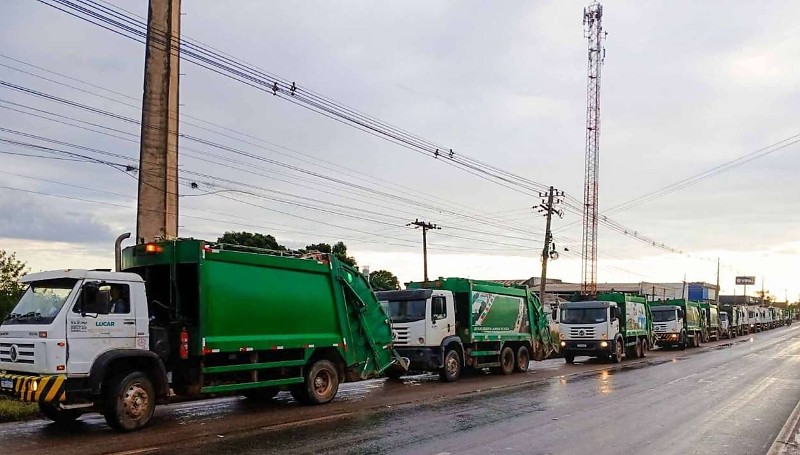
The Court of Justice of Mato Grosso refused a municipal request to lift an injunction that prevents the emergency hiring of a new company to handle waste collection in Várzea Grande. The decision, signed by Judge Deosdete Cruz Junior on Tuesday afternoon, left the existing contract with Locar in place and sent the matter back to the normal judicial calendar.
Brazil waste collection legal dispute and the court’s reasoning
The municipality had sought a suspension of the injunction during the judicial recess, arguing an immediate change in service provider was necessary to protect public health, municipal administration and the local economy. The request was filed under the special holiday duty system known as the plantão judiciário, but the court declined to grant it for procedural reasons.
In his ruling the judge emphasised that the plantão judiciário should not function as a parallel reviewing instance. He referred to an express prohibition from the National Council of Justice (Conselho Nacional de Justiça, CNJ) against the reiteration or re-examination of decisions during the recess. According to the ruling, those procedural limits must be observed before any discussion of the merits.

By that reasoning, the court did not examine the municipality’s substantive claims that the injunction could disrupt waste collection and pose risks to public health and local administration. Instead the magistrate concluded that the petition did not fall within the exceptional hypotheses allowed during the recess, and therefore the request had to be denied.
The immediate practical effect is that Locar’s position is preserved for the time being while the case returns to the regular docket. The decision prolongs an administrative impasse, leaving municipal authorities to pursue remedies through the standard judicial timetable.
What happens next and municipal options
With the plantão request refused, the municipality may file for relief in the ordinary course or present further evidence before the adjudicating panel once normal sessions resume. Administrative leaders can also seek to negotiate with the incumbent contractor or prepare contingency plans to avoid disruption to collection services while litigation proceeds.
Legal experts say the usual routes include appeals after the case is distributed on the regular docket, or fresh administrative procedures that address the grounds for an emergency hire. Courts typically require precise factual and legal justification to overturn a previously granted injunction, and the CNJ guidance limits recourse during the judicial recess.
Residents and municipal stakeholders will be watching whether local authorities secure interim solutions that maintain waste collection continuity. The judicial stance highlights the procedural constraints on emergency judicial relief during recess periods and underlines the need for municipal administrations to plan for legal contingencies.
For now the situation remains under judicial control, and the case will proceed through the standard channels, where the merits of the underlying dispute over contract replacement and service continuity will be considered.
Key Takeaways:
- Judge Deosdete Cruz Junior denied the municipality’s request to suspend an injunction that blocks a change in the waste collection contract.
- The court ruled the judicial holiday cannot be used to re-examine decisions, citing CNJ rules, and sent the case back to the regular docket.
- The injunction preserves the existing contract with Locar for now, prolonging uncertainty over waste services in Várzea Grande.