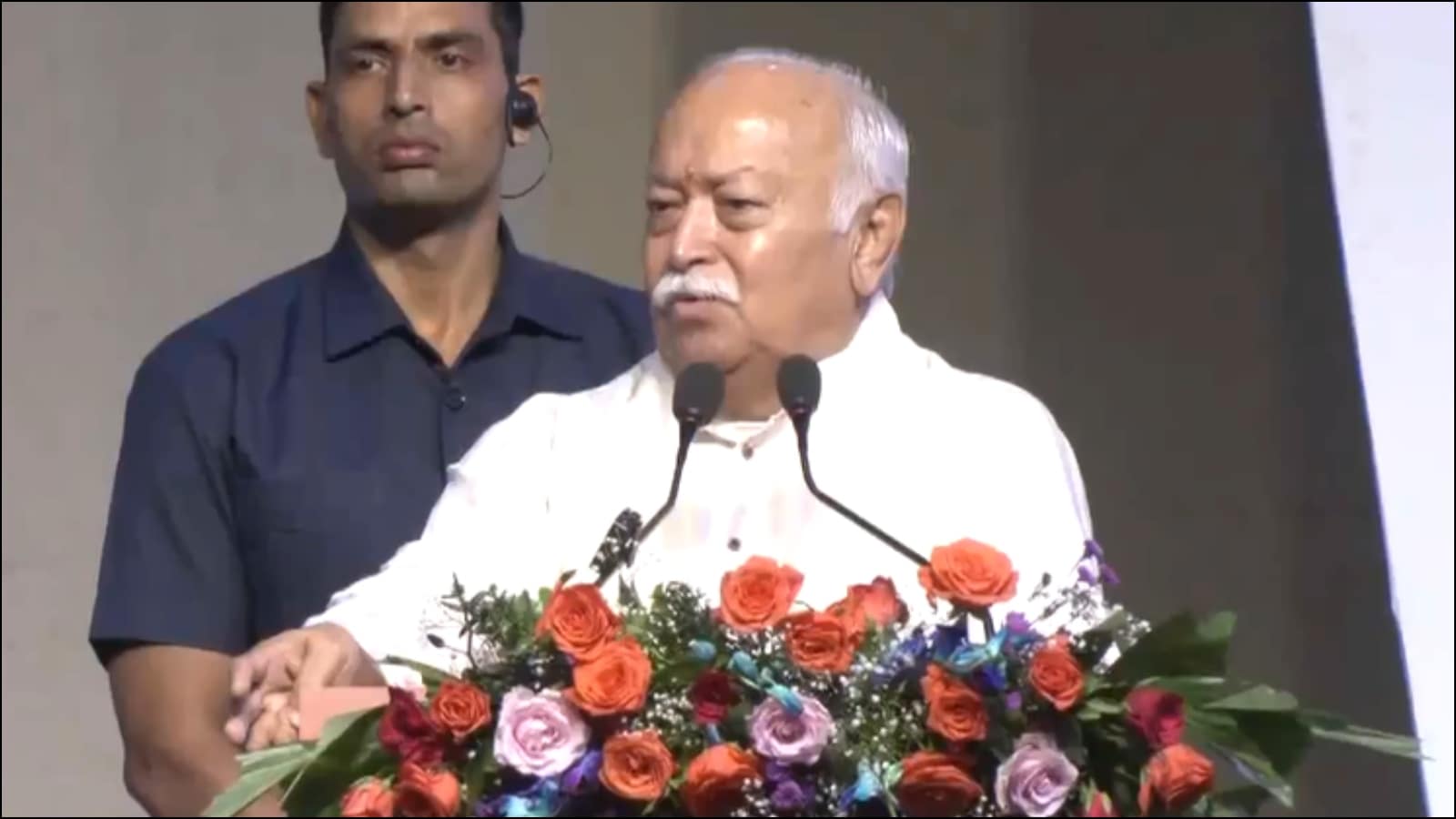
Mohan Bhagwat, chief of the Rashtriya Swayamsevak Sangh (RSS), urged greater social cohesion on Wednesday while addressing a Hindu Sammelan in Sonpairi village in Raipur district, Chhattisgarh. Speaking to the gathering, Bhagwat asked Indians to rise above divisions of caste, wealth and language and to treat “everyone as one’s own”.
At the heart of his appeal was a push to preserve and use mother tongues within the household. “At least inside our houses, we should speak in our mother tongue,” he said, adding that those living outside their native state should learn the local language. “All languages are India’s national languages. They all have equal weightage,” Bhagwat told attendees.
Social harmony in India and Bhagwat’s prescription
Bhagwat linked linguistic pride to broader social harmony, arguing that mutual respect for different languages and regional identities could reduce social friction. He stressed that the removal of discrimination and separation from the mind is the first step towards creating a united society.

To rebuild interpersonal ties, Bhagwat recommended that families set aside one day each week for collective activities. He proposed shared meals, prayers according to faith, and open discussions he described as “mangal samvad”. Such practices, he said, would foster connection and counter loneliness.
Bhagwat also touched on civic and environmental responsibility, urging disciplined public behaviour and collective work for the nation. He insisted that local resources and facilities must remain accessible to all Hindus. “The entire country belongs to everyone, and this spirit is true social harmony,” he said. He named temples, water bodies and cremation grounds as spaces that should be open to all without exception.
While Bhagwat emphasised unity, his remarks reiterated core RSS positions on cultural cohesion and civic duty. Observers say his call for linguistic preservation mirrors ongoing public debates in India over the place of regional languages and cultural identity amid increasing internal mobility.
Bhagwat’s address was brief but wide-ranging, moving from family life and civic discipline to environmental stewardship and equal access to public sites. He urged people not to judge others on the basis of caste, wealth, language or region and to “treat everyone as their own.”
Reactions to the speech are likely to vary across political and social lines. Supporters will view the remarks as a push for unity and cultural continuity, while critics may scrutinise how calls for exclusive access to certain facilities are defined in practice. For now, Bhagwat’s focus remains on promoting social cohesion through everyday practices: speaking one’s mother tongue at home, learning local languages where one lives, and reviving weekly family interactions to strengthen communal bonds.
The address underscores the RSS’s continuing role in public discourse on national identity and social policy. As India navigates rapid social and economic change, calls such as these aim to shape how communities preserve cultural roots while promoting inclusion and civic responsibility.
Key Takeaways:
- RSS chief Mohan Bhagwat called for social harmony in India, urging people to rise above caste, wealth and regional divisions.
- He encouraged households to speak their mother tongue and to learn local languages when living outside their home region.
- Bhagwat recommended families dedicate one day a week for shared activities to combat loneliness and strengthen bonds.
- He asked that public facilities such as temples, water bodies and cremation grounds remain open to all Hindus to promote inclusion.