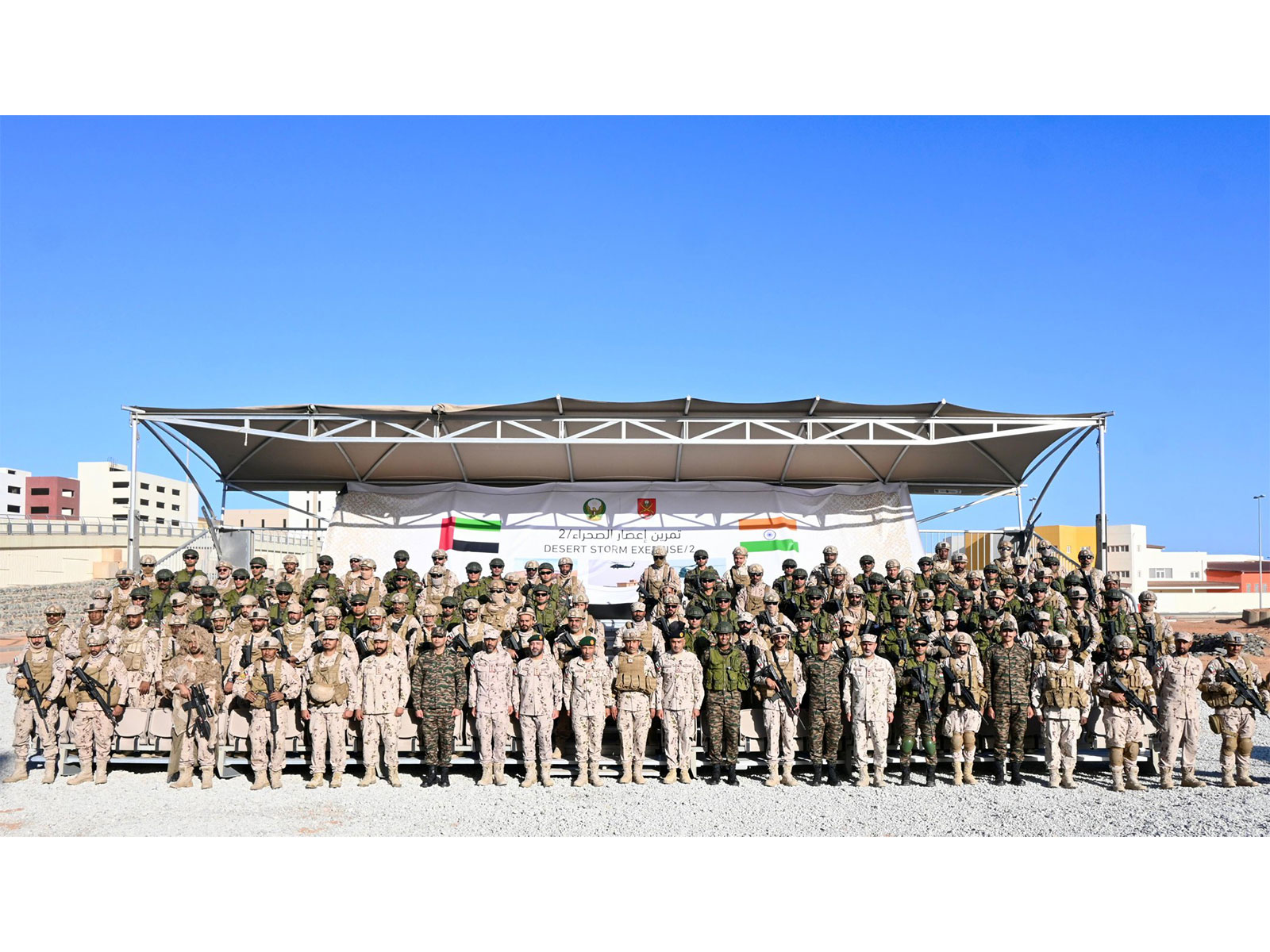
Exercise Desert Cyclone-II concluded at Al-Hamra Training City on 1 January, marking the close of intensive two-week joint training between the Indian Army and the UAE Land Forces. Held in Abu Dhabi from 18 to 30 December, the exercise aimed to enhance interoperability and operational readiness for urban and sub‑conventional scenarios conducted under a United Nations mandate.
India-UAE defence cooperation bolstered by joint urban operations
The programme blended classroom instruction with progressive field training to sharpen skills across a range of urban tasks. Troops from both countries practised fundamentals of urban combat, building marking and clearance, improvised explosive device awareness, casualty evacuation and first aid. Detailed mission planning sessions ran alongside practical drills to ensure coordinated action during complex operations.
Practical exercises were conducted in built‑up areas and emphasised room intervention and systematic clearance of structures. Units rehearsed heliborne operations, air assault insertions and platoon‑level joint assaults. The two contingents exchanged techniques for room intervention and building clearance, then rehearsed those procedures together to standardise tactics, techniques and procedures.

The Indian contingent comprised 45 personnel mainly drawn from a battalion of the Mechanised Infantry Regiment. The UAE was represented by the 53 Mechanised Infantry Battalion. Despite the relatively small numbers, the exercise delivered concentrated training designed to improve mutual trust and operational synergy between the forces.
Training managers reported that the integrated offensive and defensive urban operations at the close of the exercise demonstrated coordinated action and combined operational readiness. Emphasis on interoperability prepares both armies for potential participation in multinational operations or peacekeeping tasks under international mandates.
Beyond tactical training, Exercise Desert Cyclone‑II served as an opportunity to strengthen professional links between officers and soldiers of the two armies. Joint planning, after‑action reviews and shared problem solving during the drills contributed to a common understanding of procedures and command relationships that are vital in coalition environments.
The UAE and India have been deepening defence ties in recent years through exchanges, training exercises and high‑level dialogues. Exercises such as Desert Cyclone‑II build practical capability while reaffirming a shared commitment to regional peace and security. For both militaries, the ability to operate together in urban and sub‑conventional settings increases preparedness for contingencies that require rapid, coordinated responses.
As the second edition of the joint exercise, Desert Cyclone‑II highlights a continuing trajectory of military cooperation. The training outcomes — from standardised room‑clearing procedures to combined heliborne assaults — will inform future planning and underpin interoperability in any future joint deployments or multinational operations.
Key Takeaways:
- Exercise Desert Cyclone-II reinforced India-UAE defence cooperation through two weeks of joint urban operations and interoperability drills.
- The programme combined classroom instruction with live field exercises including room clearance, heliborne operations and IED awareness.
- Indian and UAE mechanised infantry units rehearsed standardised tactics and mission planning to support potential multinational deployments.