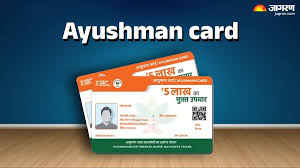
The Uttar Pradesh government has moved to tighten beneficiary verification for the Ayushman Bharat health scheme by requiring Aadhaar e‑KYC for all new Ayushman cards. The National Health Authority (NHA) has implemented the Beneficiary Identification System (BIS‑2.0), which makes e‑KYC mandatory and removes the general option for beneficiaries to add new family members on their Ayushman cards.
Ayushman Card e-KYC Rules for Uttar Pradesh
State Agency for Comprehensive Health and Integrated Services (SACHIS) chief executive officer Archana Verma said the change aims to reduce fraud and ensure benefits reach eligible households. Under the revised process, new cards will be generated only after successful Aadhaar e‑KYC. The previous facility that allowed beneficiaries to add family members directly to the card has been withdrawn; additions will only be permitted for households identified in the residual lists of the Socio‑Economic and Caste Census (SECC) 2011 where appropriate.
The new requirement is intended to tighten identity checks and align state practice with the NHA’s national platform. Officials say the move should help protect limited public health funds and discourage misuse of the scheme.

Fraud Detection and Verification Process
National Health Authority systems now use artificial intelligence and automated software to scan the beneficiary database for anomalies. Suspected or duplicate cards are flagged through the State Anti‑Fraud Unit portal (SAFU‑BIS), and flagged entries are temporarily blocked from receiving treatment until they pass further scrutiny.
Since 2018, the NHA has marked 61,932 Ayushman cards as suspicious. SACHIS officials have instructed district magistrates, chief development officers and chief medical officers to support verification work. Field Investigation Officers (FIOs) at district level are conducting physical verifications; so far 48,435 cards are reported to be undergoing on‑the‑ground checks.
After electronic detection, flagged records go through an auditor review. Cards that are verified as legitimate are removed from the suspicious list and restored to active status. The state has also removed at least one employee from duties after the Special Task Force (STF) identified irregularities in an official’s role during an investigation.
Impact on Beneficiaries and Next Steps
Officials stress that the policy change is not intended to deny entitled families access to care, but to improve the integrity of the scheme. Beneficiaries who cannot immediately complete e‑KYC will need to follow state guidance to regularise their details. Those who genuinely need to add family members should check whether their household appears in the SECC‑2011 residual lists, which remain an exception to the new restriction.
District administrations have been tasked with sharing lists of suspected cards and carrying out timely verification. Government communications indicate that as the verification drive proceeds, legitimate beneficiaries whose cards were temporarily suspended will be reinstated after audit and field confirmation.
Analysts say the move reflects a broader push by central and state authorities to use digital identity and automated checks to prevent fraud in large welfare schemes, balancing faster enrolment with tighter controls to protect public resources.
Key Takeaways:
- Uttar Pradesh will issue new Ayushman cards only after Aadhaar e-KYC, strengthening beneficiary verification.
- National Health Authority’s BIIS‑2.0 and AI tools have flagged 61,932 suspicious cards since 2018; treatment is blocked pending audit.
- Option to add new family members on cards has been removed except for cases falling under SECC‑2011 residual lists.
- Nearly 48,435 cards are undergoing physical verification by field officers following state and district probes.