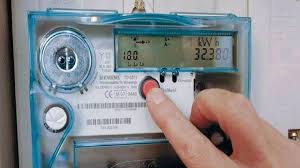
The national electricity regulator has ordered relief for new power consumers by cutting approved rates for smart prepaid meters and directing distributors to refund excess charges. The decision, announced in Lucknow, affects roughly 3.15 lakh customers who took new connections since 10 September and will result in refunds totalling about ₹100 crore.
India smart prepaid meter rates reduced by regulator
The regulator’s cost data book, released by the commission’s secretary Sumit Agarwal and finalised by chair Arvind Kumar and member Sanjay Kumar Singh, sets the approved prices for smart prepaid meters at ₹2,800 for single-phase meters and ₹4,100 for three-phase units. The commission found that electricity companies had been charging substantially higher amounts for meters in many new connections and ordered that the difference be returned to affected consumers through separate orders.
Electricity distributors, the report states, had been collecting ₹6,016 for single-phase meters and ₹11,342 for three-phase meters from customers who took connections after the 10 September cutoff. The regulator’s action therefore requires companies to refund the excess amounts collected from those consumers.

Consumer groups welcomed the move. Avadhesh Kumar Verma, chair of the Consumer Council which pushed for stricter oversight in the cost data book consultations, said the commission rejected proposals from the power corporations that would have set meter costs above ₹8,000. The regulator accepted the council’s recommendations and kept the approved rates far lower than the amounts utilities had billed.
Alongside meter pricing, the commission has simplified the process for technical arrangements for connections of up to 150 kilowatt. Under the new rules, customers will not need to arrange separate estimates for transformers, poles or conductors for distances of up to 300 metres. The distribution department will carry out the necessary infrastructure work itself and provide the connection, removing the older practice of limiting connections to a 40-metre distance under legacy rules.
The new provision includes clearer upfront deposits for typical domestic connections. For example, a consumer seeking a 2 kW domestic connection at a distance of 100 metres will now need to pay a one-time deposit of ₹5,500. If the distance is 300 metres, the required deposit rises to ₹7,555. Previously, such connections often required substantial additional expenditure on poles, transformers and other hardware, which could make new supplies unaffordable for many households.
Regulatory officials said the revised cost data book aims to improve transparency and protect consumers from arbitrary cost burden. The office of the commission indicated that it will issue detailed implementation orders specifying timelines and the mechanism for recovery of the excess amounts paid by consumers.
Market observers note the decision may press distribution companies to rationalise procurement and installation practices for smart meters. By standardising rates and imposing clearer responsibilities for providing infrastructure up to 300 metres, the regulator is seeking to reduce upfront costs and speed up access to electricity for households and small businesses.
The change is likely to be welcomed by consumers and advocacy groups, who have long sought firm regulatory oversight over connection charges and meter pricing. The commission’s move aligns consumer protection with wider efforts to modernise metering and billing while ensuring the benefits are not absorbed by higher immediate charges to end users.
Key Takeaways:
- India smart prepaid meter rates reduced by the national regulator, prompting refunds of around ₹100 crore to about 3.15 lakh consumers.
- The Electricity Regulatory Commission approved meter prices of ₹2,800 (single-phase) and ₹4,100 (three-phase), rejecting higher cost proposals.
- Consumers with connections up to 150 kilowatt will no longer need separate estimates for transformers, poles or conductors for distances up to 300 metres.
- Examples: a 2 kW domestic connection at 100 metres requires a one-time deposit of ₹5,500; at 300 metres the deposit is ₹7,555.