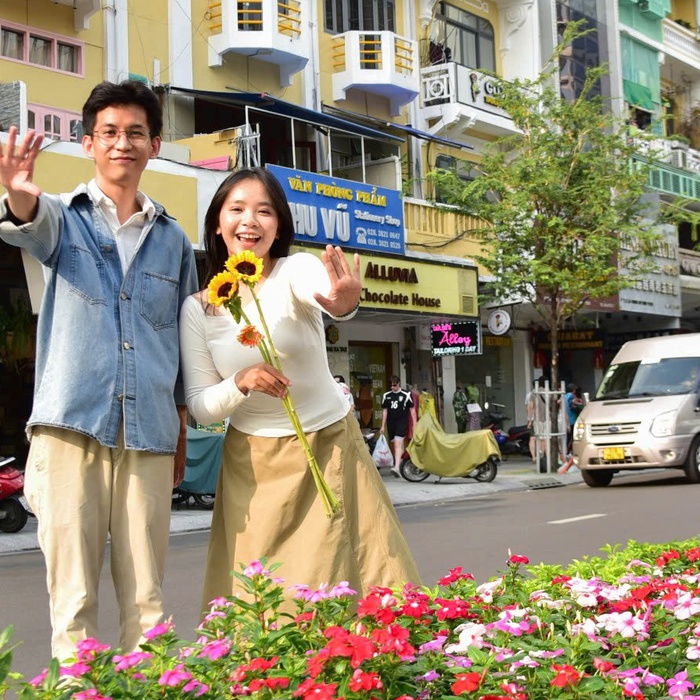
Ho Chi Minh City opened the newly refurbished Lê Lợi Avenue on 31 December 2025, with the urban makeover completed ahead of the New Year and well before its official deadline. Funded and fast-tracked by Khang Điền Investment and Housing Development Corporation, the project took less than 20 days to transform the avenue that links some of the city’s most iconic landmarks.
The thoroughfares linking Bến Thành Market to Rex Hotel received fresh coats of paint and careful cleaning, while neglected façades such as the long-vacant Hoằng Long restaurant were restored with neutral cream tones and tasteful accents. The apartment block at 9 Lam Sơn Square, previously showing signs of decay, now features complementary shades of soft yellow and blue to harmonise with neighbouring structures, including the City Theatre and historic hotels.
Work extended beyond façades. Shopfront roller shutters that had been vandalised were stripped and repainted, pavements were relaid with durable granite tiles, and central reservations were refurbished with sustainable materials and new planting. The result is a brighter, neater avenue that preserves the existing urban fabric while improving visual coherence and pedestrian experience.

Ho Chi Minh City urban renewal drives private‑public momentum
At the inauguration, Khang Điền’s chief executive, Vương Văn Minh, said the company intended to continue sponsoring emblematic projects in the city centre. The firm has proposed funding further works at Bến Thành Market, Đồng Khởi Street and Nguyễn Huệ, aiming to complete those upgrades before the Lunar New Year.
City authorities welcomed the initiative. Nguyễn Văn Được, chairman of the Ho Chi Minh City People’s Committee, praised the partnership between the public sector and private donors and instructed relevant departments to expedite procedures. He described the Lê Lợi project as an example of administrative reform enabling swift delivery of public works.
Private sponsorship has become an increasingly visible element of urban renewal in Ho Chi Minh City. Earlier projects include corporate-funded improvements to Mê Linh Park and parts of Bạch Đằng Wharf, plus a sunflower field along the riverside created with donor support. More recently, Nutifood pledged nearly VND 1,000 billion for a pedestrian bridge that will link riverfront parks and enhance public access to the Saigon River.
City planners say these contributions complement public investment and help activate riverfronts and central districts as cultural and leisure hubs. Areas that were once overgrown have been transformed into lively promenades and event spaces, drawing residents and visitors especially during festive periods.
For residents and traders along Lê Lợi Avenue, the changes have immediate impact. Business owners reported cleaner shopfronts and improved footfall over the holiday period. The coordinated colour palette and removal of visual clutter also strengthen the avenue’s heritage character, a priority for the city given the concentration of historic buildings in the area.
Looking ahead, the city intends to scale up the spirit of collaboration across wards so that the wider municipality can meet its ambition to rank among the top 100 most liveable cities by 2030. With the rapid delivery of the Lê Lợi works and commitment from both enterprises and local authorities, Ho Chi Minh City’s urban renewal programme is gaining visible momentum.
Key Takeaways:
- Khang Điền completed the rapid renovation of Lê Lợi Avenue, inaugurated 31 December 2025, revitalising a key heritage axis in Ho Chi Minh City.
- The project improved façades, pavements and greenery while respecting historical context, part of broader Ho Chi Minh City urban renewal efforts.
- The company has proposed further sponsorships for Bến Thành Market, Đồng Khởi and Nguyễn Huệ, with city authorities supportive.