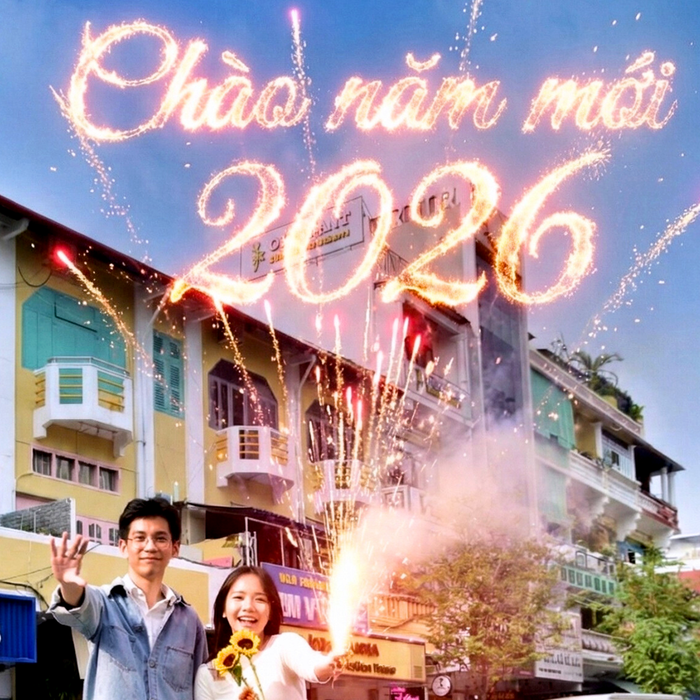
As Vietnam welcomes 2026, a cross section of lawmakers, cultural figures, students, city residents and foreign nationals set out their hopes for the year ahead. The responses collected by Tuổi Trẻ reflect a shared desire for deeper institutional reform, better public services and stronger civic life.
Vietnam New Year 2026 hopes
Bùi Hoài Sơn, a National Assembly deputy from Hanoi, urged a more forceful and substantive approach to institutional reform. He said the country’s next development cycle must be anchored in public trust, which he identified as Vietnam’s most important resource. For Sơn, trust grows through tangible improvements: safer communities, a more effective public administration, a creative economy and a richer cultural life.
Sơn argued that culture should be recognised as a core national asset rather than a peripheral concern. He called for policies that place people at the centre, protecting creative work and promoting community values. He also emphasised the need to inspire young people, enabling them to embrace both global ambition and cultural identity.

From Hưng Yên, deputy Trần Khánh Thu highlighted education and healthcare as priorities. Following several major legal reforms in 2025 on school fees, textbooks and higher education, Thu urged swift and practical implementation in 2026. He said a coherent legal framework for education and vocational training will reduce fragmentation, improve quality and expand job opportunities in a digital economy.
Thu underlined the wider social benefits: better access to public services, lower social costs linked to unmet needs in education and health, and higher productivity and incomes that can sustain long‑term development.
Young voices in the survey emphasised climate action and international cooperation. Lê Đỗ Thanh Tú, a student at the University of Social Sciences and Humanities in Ho Chi Minh City, described plans to take part in the 2026 Southeast Asian Youth Programme. He plans to exchange ideas with peers in Japan, Singapore and Thailand and to support the creation of an environmental club in Mũi Né. Tú sees these exchanges as a way to link academic study with practical projects and local impact.
At street level, city resident Lê Vy praised improvements to public transport but called for continued investment to tackle congestion, flooding and overloaded hospitals in Ho Chi Minh City. She said new metro lines, bridges and flood resilience measures must be prioritised to match the demands of a growing metropolis.
Foreign resident Alberto Ferreiras Casteleiro from Spain said 2025 reinforced his belief that Vietnam can be more than a transient destination. Through a growing online audience he has encountered interest in longer stays and remote work. He hopes that services for digital nomads and international professionals will improve, allowing expatriates to contribute to local communities while building lasting ties.
Taken together, these voices present a practical agenda for 2026: implement recent reforms, invest in urban and social infrastructure, harness youth engagement on climate issues, and recognise culture as a vital component of national strength. For many respondents, success will be measured not by slogans but by everyday improvements that deepen trust and expand opportunities for citizens.
Key Takeaways:
- Vietnam New Year 2026 hopes centre on stronger institutions, culture as a national asset and social consensus.
- Lawmakers and experts call for practical implementation of recent education and health reforms to improve living standards.
- Youth leaders aim to tackle climate change through international exchange and local projects.
- Urban residents and expatriates expect better infrastructure, flood control and a friendlier environment for long‑term stays.