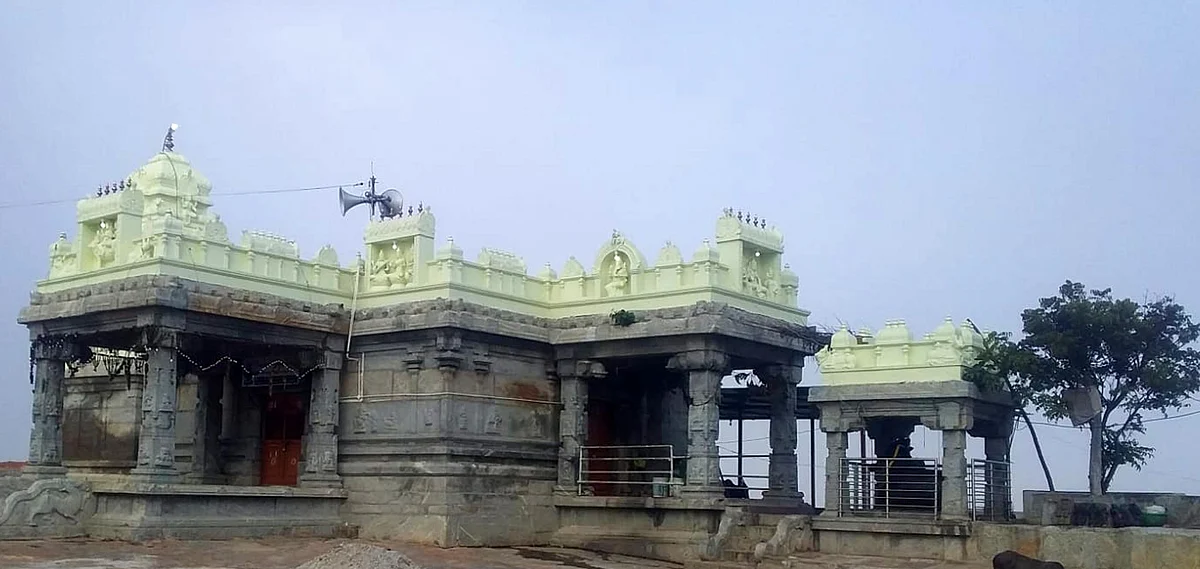
Thousands of devotees are expected to gather at the ancient Ramalingeshwara Temple on Ramalingeshwara Hill near Nallarallahalli in Shidlaghatta taluk, as the shrine prepares for its annual Brahma Rathotsava on the full moon day. The hilltop site, believed to house an ishtalinga installed during Lord Ram’s exile, is one of the region’s most visited pilgrimage and tourist spots.
Ramalingeshwara Temple
Perched on a rocky outcrop, the temple complex blends natural beauty with centuries of history. Locals and historians point to Chola‑era carvings and ancient sculptures that speak of the site’s longevity. Visitors can see a prominent single‑rock Nandi, a high flagstaff visible from a distance, and a rare Hanumalinga shrine within the precincts.
Distinctive to Ramalingeshwara Hill are the three water basins known locally as Ramadone, Lakshmanadone and Sitaadone. These rock‑carved pools retain water year‑round and are traditionally believed to have been formed by Lord Ram. Stone steps and simple retaining walls constructed by villagers allow safer access up the slope, and the surrounding vegetation offers scenic views that add to the pilgrimage experience.

The Rathotsava, held each year on the full moon of the bright fortnight, is the central event. Devotees from neighbouring taluks and districts converge on the site for the chariot festival, which combines devotional rituals with communal celebration. The event draws families, pilgrims and cultural visitors who come to witness the procession and participate in temple rites.
Local officials have coordinated preparations to manage the surge of visitors. The taluk administration, working with multiple departments, is arranging additional bus services, drinking water points and sanitation facilities for the festival days. Tahsildar Gagansindhu said the authorities are preparing to welcome larger crowds and plan to give greater emphasis to tourism development at the hill temple in coming months.
Although the temple is managed by the state’s temple administration, the annual festival has been organised for many years by the temple trustee M. Suneetha Srinivasareddy and her family. Their stewardship has been credited with ensuring continuity of rituals and the smooth running of festival logistics despite the growing numbers of attendees.
Scholars and temple visitors note that the site not only holds religious significance but also offers an insight into regional history. Stone sculptures and rock formations on the hill evoke centuries of use and reverence, and the Chola‑style engravings remain a point of interest for those studying South Indian temple art.
As organisers refine arrangements for the festival, there is an expressed ambition to improve facilities for tourists outside of festival days. Plans under discussion include better signage, safety enhancements on the approach to the hilltop shrine and modest visitor amenities that respect the temple’s sanctity while accommodating increasing interest.
For many visitors the appeal is simple: a tranquil shrine, an impressive natural setting and a living tradition that connects the community with its past. The Brahma Rathotsava at Ramalingeshwara Hill is set to reaffirm the temple’s role as both a sacred place and a local cultural landmark.
Key Takeaways:
- Ramalingeshwara Temple in Shidlaghatta, India, hosts the annual Brahma Rathotsava on the full moon, drawing thousands of devotees.
- The hill shrine features Chola-era carvings, a towering flagstaff, a single‑rock Nandi and sacred water basins linked to Ram, Lakshmana and Sita.
- Local administration provides transport, water and sanitation for pilgrims and plans to boost tourism infrastructure.