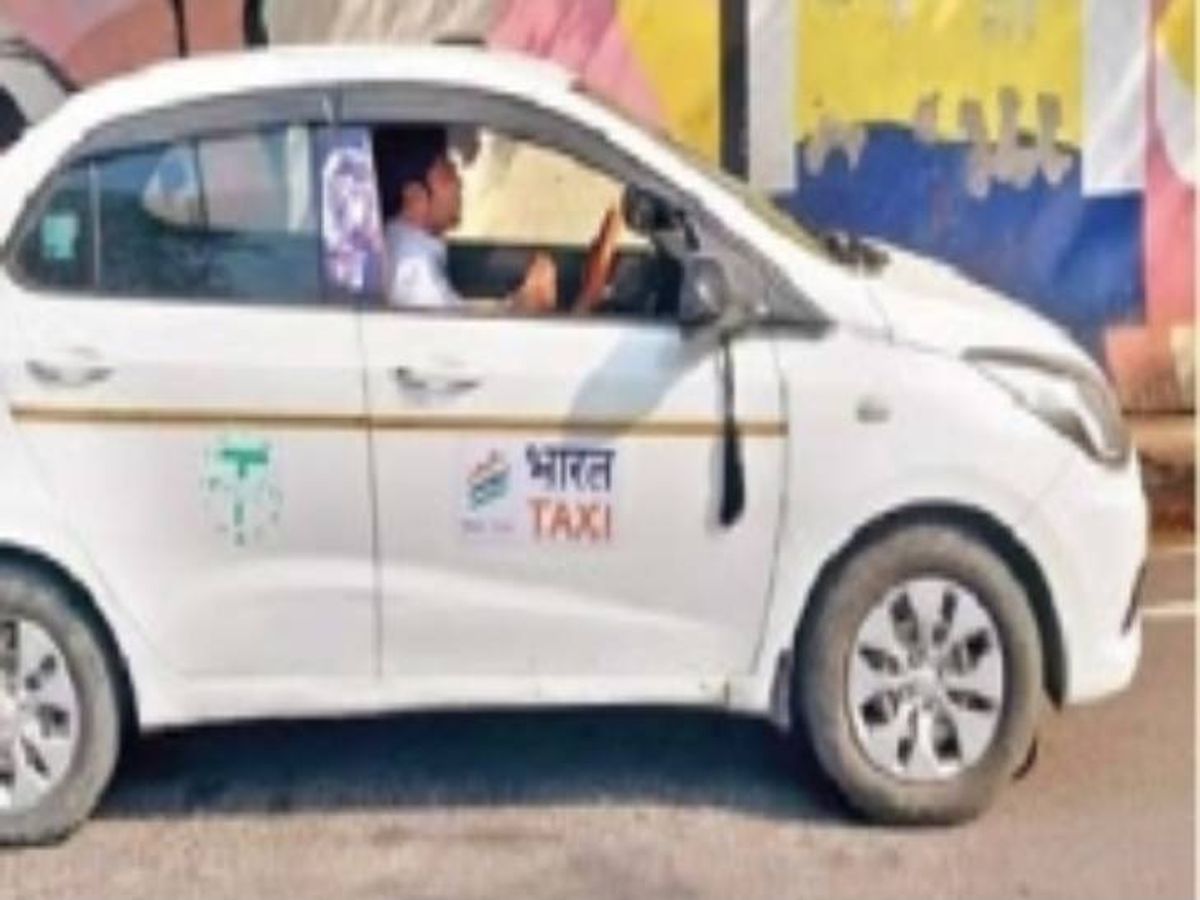
India’s cooperative ride-hailing service Bharat Taxi has delivered notably lower fares in its pilot phase, challenging established private aggregators. Tests carried out in Delhi and Rajkot show the service charging 25–30% less than competitors during peak hours, prompting rapid user uptake and renewed debate over pricing rules for app-based taxi services.
Bharat Taxi pilot delivers lower fares in peak hours
Independent checks conducted by a regional news network compared real-time fares for Bharat Taxi, Ola, Uber and Rapido at peak times — 9am, 7pm and 10pm. The difference in fare between Bharat Taxi and the private aggregators exceeded Rs 100 during those peak slots. During normal hours, between 8am and 2pm, the gap narrowed to roughly Rs 5–20.
The pilot has onboarded 1.50 lakh registered drivers, of whom about 1.10 lakh are currently active on the platform. The service claims 2.75 lakh customers have used the app so far. Senior company officials say private firms are reducing fares in normal hours to remain competitive, but Bharat Taxi’s cooperative structure gives it room to undercut rivals at busy times.

Two core advantages stand out. First, the cooperative model eliminates platform commission. Drivers working with private aggregators typically surrender between 20–30% of their earnings as commission. Bharat Taxi drivers report receiving their full earnings, with several saying their take-home pay has improved as a result. Second, driver ownership is being embedded in the model. Each driver is required to take at least one share in the cooperative, and may take up to five, making drivers stakeholders rather than contractors.
Driver representatives say bookings are straightforward and fares are attractive for riders. Manjit Singh Tevatia, a driver on the platform, noted the simpler fee structure and easier bookings make daily operations more predictable. Ratanjot, another driver, highlighted the benefit of full earnings and the prospect of equity participation.
Despite early successes, the project faces significant hurdles to scale across India. Organisers must recruit millions of drivers and navigate a patchwork of local regulations, laws and infrastructure differences. The cooperative has so far found success in limited geographies and must adapt to each jurisdiction’s rules to expand effectively.
Funding is another challenge. The initiative is backed by eight large cooperative institutions that plan to invest up to Rs 80 crore, but only Rs 16 crore has been committed to date. Executives say deeper capital will be needed to support platform growth, marketing and technology development to take on well-funded private aggregators.
There is also a call for regulatory change. Company officials suggest amendments to the aggregator provisions of the Motor Vehicles Act to allow more flexible pricing — one proposal being the option to increase fares by 50% during peak periods while reducing them by 50% in off-peak hours. Such changes would formalise dynamic pricing that cooperatives claim could improve driver incomes while keeping rider costs lower overall.
Officials say the pilot’s next phase will expand to the Mumbai–Pune corridor after six months, subject to regulatory approvals and additional funding. If Bharat Taxi can sustain its commission-free model and broaden driver ownership, it could reshape competition in India’s ride-hailing market and offer a worker-centric alternative to venture-backed platforms. For now, the pilot is proving that a cooperative approach can be both consumer-friendly and more favourable to drivers, provided the model secures the capital and legal clarity required for nation‑wide rollout.
Key Takeaways:
- Bharat Taxi pilot in Delhi and Rajkot is reporting fares 25–30% lower than private aggregators during peak hours.
- The cooperative model removes commission, offers driver shareholding and has onboarded 1.10 lakh drivers so far.
- Pilot attracted 2.75 lakh customers; expansion to Mumbai and Pune is planned after six months but funding and regulatory change remain key challenges.