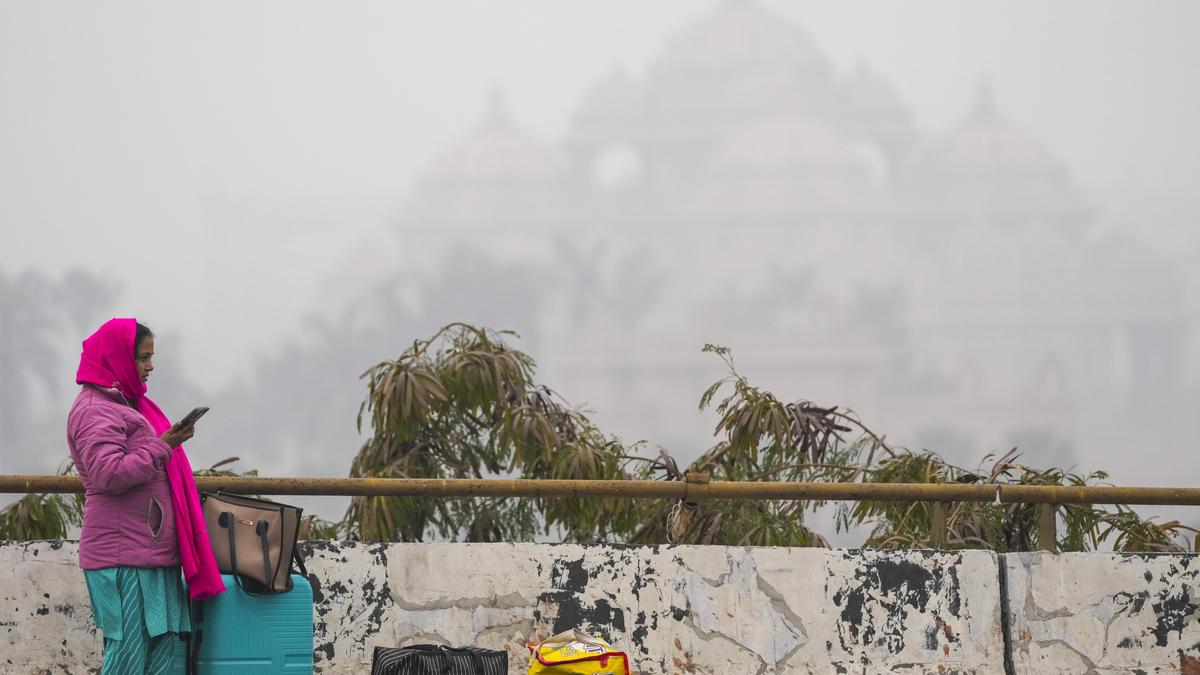
Chilly and cloudy conditions greeted the New Year in Delhi as the India Meteorological Department reported a minimum temperature of 10.6° Celsius at Safdarjung on Thursday morning. The Met office forecast light rain for the day, and trace rainfall was recorded at Palam early on Thursday.
Station-wise readings at 8.30 a.m. showed the minimum temperature at 10.6° Celsius at Safdarjung, 9° Celsius at Palam, 10° Celsius at Lodhi Road, 9.9° Celsius at the Ridge and 10.3° Celsius at Ayanagar. The national capital ended 2025 with an unusually cold spell, recording its coldest December day in six years the previous day when the maximum temperature fell to 14.2° Celsius.
The IMD noted that the maximum temperature on Wednesday was about 6.2 degrees below normal, while the night temperature stood slightly below the seasonal average. From 3 January, the weather office warned that colder conditions could develop as northerly winds from the Himalayan region move into the north-western plains, potentially driving minimum temperatures lower.

Delhi air quality
Air quality in the city remained a major concern on Thursday. The Central Pollution Control Board reported an overall Air Quality Index (AQI) of 371 at 10 a.m., classifying conditions as very poor. CPCB’s SAMEER app showed 28 monitoring stations across Delhi in the very poor category and eight in the severe category. Sonia Vihar recorded the worst reading at an AQI of 420.
Shallow fog was observed across the national capital on Thursday morning, reducing visibility at some locations. The IMD reported visibility of around 500 metre at Palam and Safdarjung at about 7.30 a.m. Such conditions can trap pollutants close to the ground and exacerbate respiratory risks for vulnerable groups.
Health authorities typically advise people, particularly the elderly, children and those with respiratory or cardiovascular conditions, to limit prolonged outdoor exertion when AQI levels are in the very poor or severe categories. Simple precautions include avoiding strenuous outdoor exercise, keeping windows closed in the early morning and using air purifiers where available.
The combination of cool temperatures, calm winds and shallow fog is likely to sustain poor dispersion of pollutants in the short term. Local officials and environmental agencies will be watching wind patterns and any precipitation closely; even light rain can help reduce surface concentrations of particulates and improve air quality temporarily.
Residents were urged to monitor updates from the IMD and CPCB over the coming days, as the forecast for light rain could relieve pollution levels, while the arrival of colder northerly winds from the Himalaya after 3 January may alter dispersion conditions and influence both temperature and air quality trends.
For commuters and outdoor workers, the immediate outlook calls for caution. Authorities may consider stepped-up advisories and targeted measures at the worst-affected locations to mitigate public health impacts as the city adjusts to the seasonal change.
Key Takeaways:
- New Year began in Delhi with chilly, cloudy conditions and light rain recorded in parts of the city.
- Delhi air quality remained in the very poor category with an overall AQI of 371 and Sonia Vihar recording 420.
- Temperatures were below normal; colder conditions and northerly winds are expected from 3 January.
- Shallow fog reduced visibility to around 500 metre at some stations; health precautions are advised.