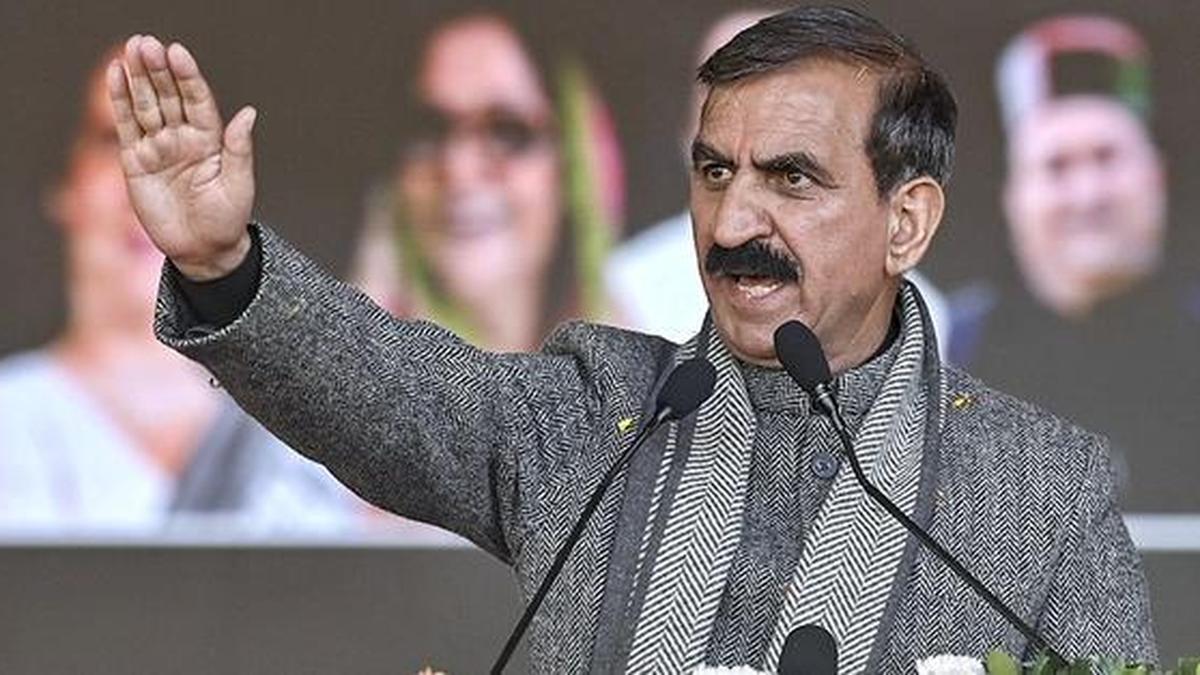
The Himachal Pradesh government is preparing to legalise and regulate industrial hemp cultivation, with Chief Minister Sukhvinder Singh Sukhu stating that a policy framework could be ready within a month or two and will then go to the State Cabinet for approval. Officials estimate that a fully implemented scheme could generate annual revenues between ₹1,000 crore and ₹2,000 crore.
Regulated hemp cultivation in Himachal
The proposed policy will permit cultivation of non-narcotic varieties of Cannabis sativa for medicinal, industrial and scientific use while aligning with the Narcotic Drugs and Psychotropic Substances Act, 1985, and the associated rules of 1989. The government plans to require that industrial hemp maintain a tetrahydrocannabinol content below 0.3 per cent to ensure the crop remains non-intoxicating.
Mr Sukhu said hemp has grown wild across valleys in Kullu, Mandi and Chamba for decades, often associated with illegal trade. The policy aims to change that narrative by repositioning hemp as a legal industrial crop with applications in pain management and anti-inflammatory medicines as well as in textiles, paper, packaging and bio-plastics.

Early pilot programmes are already under way. Chaudhary Sarwan Kumar Himachal Pradesh Krishi Vishvavidyalaya, Palampur, and Dr Y.S. Parmar University of Horticulture and Forestry, Nauni, are conducting trials to develop high-yield, low-THC varieties suited to the Himalayan environment. The research will guide seed selection, agronomy and post-harvest processing standards.
Regulation will also set licensing, monitoring and testing protocols aimed at preventing diversion to the illicit market. Officials said those safeguards will include strict tracking of licensed acreage, routine THC testing and penalties for non-compliance. The policy will seek to balance farmer access with public health and law enforcement priorities.
Economic planners highlight several potential gains. Regulated hemp cultivation could provide a commercially viable alternative for farmers who have been abandoning traditional crops because of crop damage by wild animals and shrinking yields. The value chain includes seed production, fibre processing, extraction of cannabinoids for pharmaceutical use, and manufacturing of finished goods for domestic and export markets.
“This is a green to gold initiative,” the Chief Minister said, stressing the State’s intent to capture market share currently dominated by imports and illegal trade. He added that a regulated sector could open opportunities in the wellness and pharmaceutical industries and support the growth of eco-friendly textiles and biodegradable materials.
Next steps include finalising rules and operational guidelines, establishing licensing and quality-control systems, and preparing training and extension services for cultivators. If the Cabinet approves the policy as expected, officials will move to pilot commercial licences and build processing capacity in the coming year.
Stakeholders from academia, industry and farming communities have welcomed the move while stressing the need for clear compliance measures and market linkages to ensure the sector’s long-term viability. Observers say the initiative could position Himachal as a domestic hub for industrial hemp production and a supplier to regional markets, provided regulatory and quality standards are upheld.
Key Takeaways:
- Himachal Pradesh is finalising a policy to regulate hemp cultivation, projected to generate ₹1,000–2,000 crore annually.
- The policy emphasises low-THC industrial hemp and compliance with the NDPS Act to prevent misuse.
- Regulated hemp cultivation in Himachal aims to supply industries from pharmaceuticals to textiles and create sustainable farmer livelihoods.