











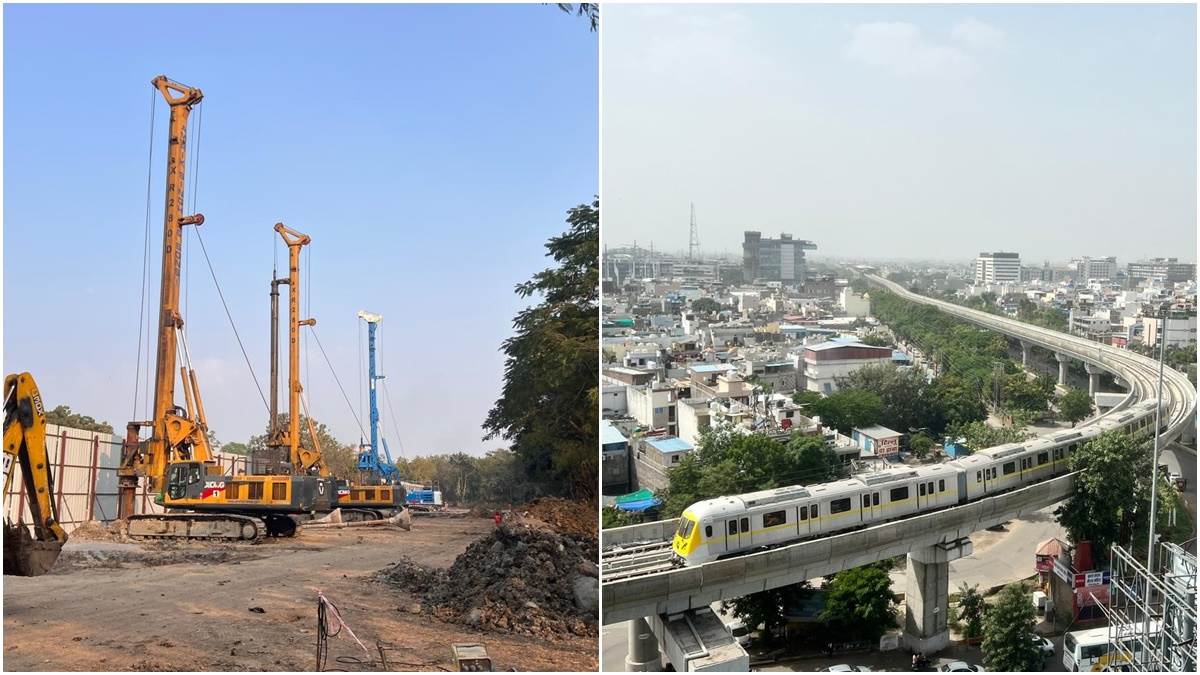
Construction work on the Indore Metro has reached a significant phase, with foundations for an underground station taking shape beneath the city streets. Local reports show activity concentrated around Radisson Square, where engineers are preparing deep foundations that will support the future station and tunnel connections.
Indore Metro milestone at Radisson Square
Progress on the Indore Metro continues beneath the surface as contractors complete excavation and reinforce the station base at one of the city’s busiest junctions. The work involves careful soil management, piling and the installation of reinforced concrete structures to ensure long-term stability for the subterranean station and associated tracks.
Underground metro construction presents particular challenges in densely built urban areas. Teams must coordinate with municipal authorities to protect utilities, limit disruption to traffic and ensure the safety of nearby buildings. At Radisson Square, traffic management plans and temporary diversions have been implemented to keep surface movement flowing while major civil works proceed below ground.

Engineers say that reaching the foundation stage is a critical step. Once foundations are in place, follow-up works such as station box construction, platform formation and track installation can move forward more rapidly. These phases will be followed by systems works, including signalling, power supply and station fit-out, before trial runs and commissioning can begin.
The Indore Metro project is intended to improve urban connectivity across the city, cutting journey times and offering a reliable alternative to road travel. For residents and commuters, completed underground segments reduce surface congestion and support more predictable travel patterns, particularly during peak hours.
Beyond direct mobility benefits, progress on large-scale transit projects typically delivers local economic stimulus. Construction activity generates jobs across engineering, skilled trades and logistics. Local suppliers and service providers also benefit as works progress through successive phases. Improved public transport can, in turn, support commercial activity by improving access to business districts and retail centres.
City planners and transport authorities are expected to coordinate next steps closely, aligning construction milestones with broader transport integration plans. This includes tying the new underground stations to bus networks, feeder services and last-mile connectivity options to maximise ridership and convenience.
As with all major infrastructure works, authorities will need to maintain clear communications with citizens to manage expectations about timelines, noise and temporary disruptions. Regular updates can help residents plan alternative routes and adapt to short-term inconveniences while long-term benefits materialise.
Progress at Radisson Square also underscores evolving engineering capabilities in India’s urban transport sector. With several cities expanding metro networks, experience gained on one project frequently informs best practice on the next, improving efficiency and risk management across the industry.
For Indore, the advancing underground works mark a visible step toward a more connected urban future. With foundations now in place at key locations, the focus will shift to building the station structures, laying tracks and completing the technical systems that will ultimately bring passengers through the city more quickly and reliably.
The coming months will be decisive as the Indore Metro moves from foundational civil works into the installation phases that bring the system closer to operation. Residents and stakeholders will be watching local updates from authorities as the project progresses toward the next milestones.
Key Takeaways:
- Indore Metro project reaches a milestone as underground station foundations are completed near Radisson Square.
- Work is progressing deep below ground with tunnelling and foundation works accelerating the construction schedule.
- Expected benefits include improved urban mobility, reduced surface congestion and local economic stimulus.








