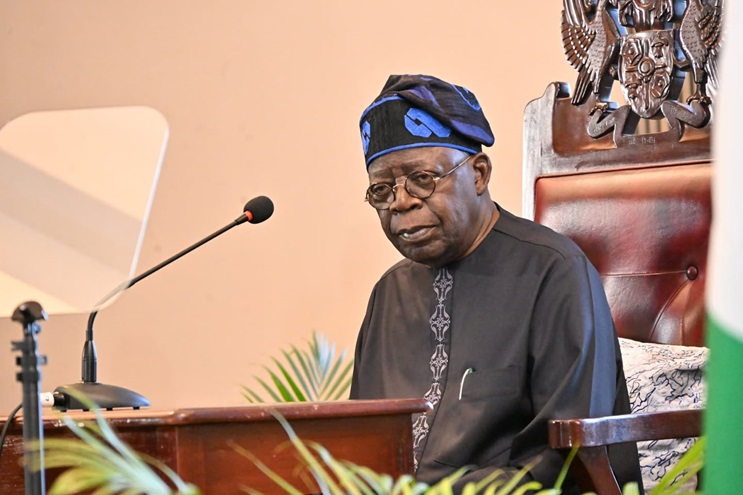
President Bola Ahmed Tinubu used his 2026 budget speech to deliver a clear message: Nigeria intends to move from reform promises to enforceable action. The address combined candid assessments of past shortcomings with a set of specific measures aimed at tightening budget execution, improving revenue collection and holding public institutions to account. If implemented, the proposals could strengthen public finance credibility and bolster investor confidence.
Nigeria 2026 budget signals shift from rhetoric to enforcement
The speech stood out for its frank recognition of recurring problems. Mr Tinubu admitted that revenue assumptions had been optimistic and that budget execution needed to be firmer. He framed such admissions not as political liability but as the first step toward correction. By explaining the legal rationale for the additional three months given to the 2025 budget, the president sought to remove ambiguity and reassure observers that the government is operating within constitutional bounds.
A central feature of the address was the president’s decision to assign clear responsibility. By naming the Minister of Finance, the Minister of Budget and Economic Planning, the Accountant-General and the Director-General of the Budget Office, the administration tied outcomes to identifiable officials. That move reduces bureaucratic distance and signals that weak performance will be visible and accountable.

The proposals for Government-Owned Enterprises represent an operational shift. The administration has set assigned revenue targets, mandated digitised end-to-end collections and called for interoperable payment systems and real-time performance dashboards. These are measures designed to limit opacity and manual processes that previously masked underperformance. Performance scorecards linked to evaluations will make it harder for poor results to go unnoticed.
Security policy in the speech was equally explicit. The government declared that any armed group operating outside the authority of the state will be regarded as terrorists. That sharpening of doctrine narrows discretion, increases clarity for security agencies and removes much of the political and semantic cover that has complicated responses to violent non-state actors.
On the numbers, the administration presented conservative oil benchmarks and realistic production assumptions. The deficit was framed as a manageable and sustainable choice rather than a figure to be downplayed. Throughout, the president insisted that the figures in the Nigeria 2026 budget are policy choices that reflect national priorities rather than mere accounting lines.
Taken together, these elements point to a philosophical change. The administration appears to favour consolidation with enforcement over expansion without discipline. The closing remark that the most important budget is the one delivered, not the one announced, captures that tone. For international partners and investors, consistent implementation will be the test of credibility.
Implementation risks remain. Political resistance, capacity gaps within agencies and entrenched practices in some state-owned entities could slow progress. Nonetheless, the speech sets measurable benchmarks and names those responsible, which are necessary conditions for accountability. For Nigeria as a BRICS+ partner, a credible, execution-driven fiscal strategy would strengthen regional economic ties and support longer-term growth prospects.
Key Takeaways:
- The Nigeria 2026 budget emphasises strict fiscal discipline and stronger budget execution.
- President Tinubu names senior officials and ties performance to accountability in Government-Owned Enterprises.
- Security policy is clarified with a firm stance against armed groups operating outside state authority.
- Conservative oil assumptions and a sustainable deficit frame the budget as a credible economic plan.