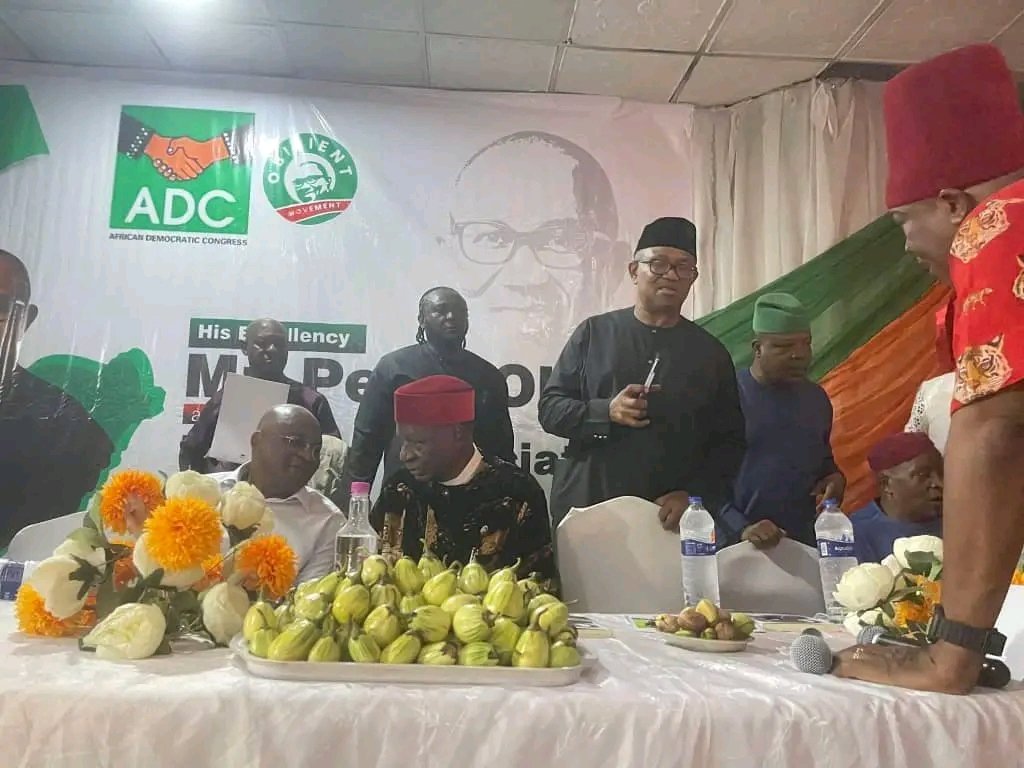
Peter Obi, the Labour Party presidential candidate in the 2023 election, has formally joined the African Democratic Congress (ADC), announcing the move in Enugu on 31 December as he laid out plans for what he described as a national rescue ahead of the 2027 elections.
Peter Obi joins ADC
Speaking to supporters and party officials, Obi said he was ending the year with plans to begin a national recovery in 2026 and pledged to protect the integrity of the 2027 polls. “We are ending this year with the hope that in 2026 we will begin a rescue journey,” he said, adding that he and his supporters would “resist rigging of election by every lawful means in 2027.”
The announcement marks a high-profile defection that is likely to alter the shape of Nigeria’s opposition ahead of the next general election. Obi remains a prominent political figure after his strong showing in 2023, and his move to the ADC — a coalition-backed party — signals an attempt to consolidate opposition forces under a different organisational structure.

Obi urged opposition leaders to rally together under the leadership of former Senate President David Mark, describing collaborative leadership as essential to steering the country towards better governance. He called on stakeholders to work “as a family” to rebuild public trust and strengthen democratic institutions.
Political analysts said that Obi’s transfer to the ADC could have short-term and long-term consequences for the opposition. In the short term, it may encourage other politicians and smaller parties to consider alliances that increase electoral competitiveness. Over the longer term, the alignment could reshape candidate selection, campaign strategy and negotiations around shared platforms.
Observers note that the ADC’s coalition backing gives Obi a platform that is different from the Labour Party structure he has previously relied upon. That platform may provide fresh organisational resources and a new set of alliances in states where the Labour Party had a limited footprint.
Obi’s pledge to defend the electoral process underlines rising concerns about the integrity of future polls. His emphasis on lawful resistance to rigging reflects a broader anxiety among opposition figures about electoral management and transparency. Civil society organisations and election monitors will likely scrutinise the coming years more closely as parties position themselves for 2027.
The timing comes amid heightened political activity across Nigeria. Parties and prominent figures are already negotiating alliances, testing voter sentiment and mapping strategic priorities. Obi’s move adds momentum to those realignment talks and raises questions about whether a broadly united opposition can emerge to challenge the incumbent government.
Despite the potential for greater coordination, analysts caution that coalition-building can be complicated by local rivalries, differing policy priorities and personal ambitions. Whether Obi’s move will produce a durable national coalition remains uncertain, but it has clearly intensified conversations about unity and strategy.
For now, Obi has signalled a renewed political campaign that will focus on electoral fairness and national renewal. With 2027 on the horizon, his decision to join the ADC ensures he will remain a central figure in Nigerian politics and a catalyst for opposition realignment.
Key Takeaways:
- Peter Obi joins ADC, signalling a major opposition realignment ahead of 2027.
- Obi says he will begin a national “rescue” in 2026 and vows to resist electoral rigging in 2027.
- He calls for opposition unity under former Senate President David Mark.
- Analysts say the move could reshape opposition strategy and coalition-building.