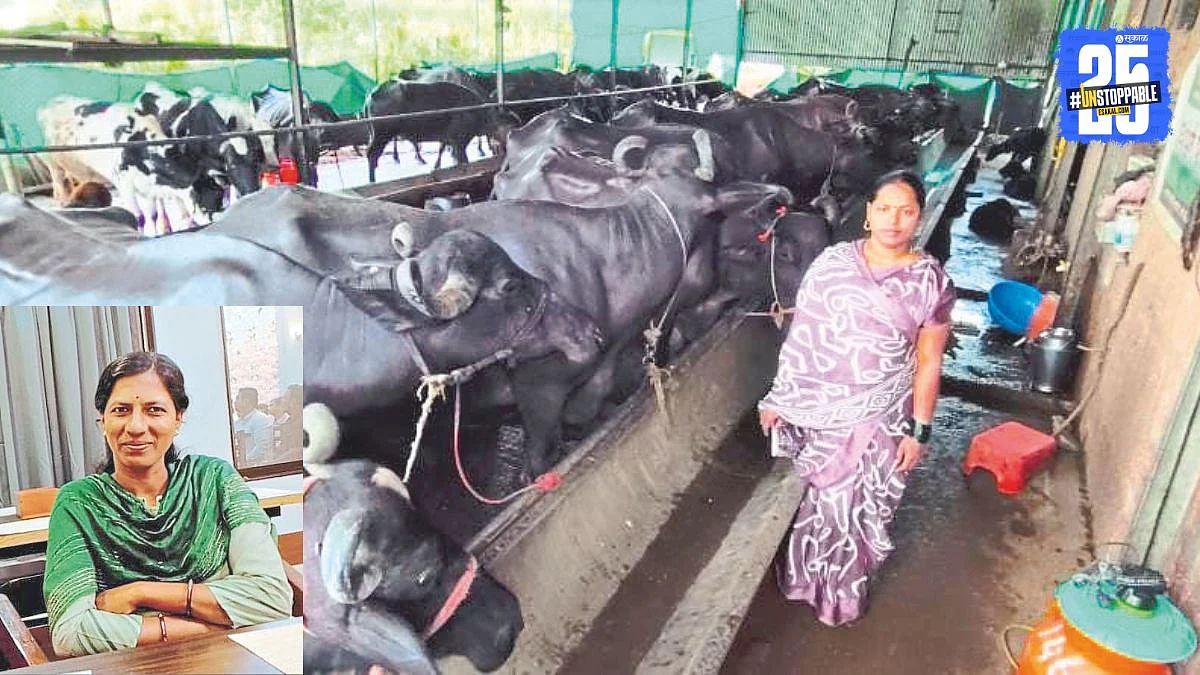
Women across Kolhapur district have moved from the margins to the centre of agricultural activity, building independent livelihoods and reshaping local farm economies. By adopting modern techniques, diversifying crops and organising collective processing and marketing, many have transformed subsistence plots into viable businesses.
Women farmers in Kolhapur adopting modern techniques
Farmers traditionally viewed agriculture as a male domain are increasingly being led by women who use technology and planning to boost productivity. In Kolhapur, women grow a wide range of crops including sugarcane, rice and soybean alongside vegetables, orchards and dairy enterprises. Small ruminant rearing, particularly goats and sheep, also contributes to household incomes.
Practical changes such as drip irrigation, soil mulching, organic cultivation and greenhouse methods have helped reduce input costs while lifting yields. Women’s groups have taken the lead in introducing these practices after attending training programmes run by agricultural departments and local NGOs. Access to banking services and state schemes has further enabled investment in equipment and quality seed.

Beyond production, women are organising at the village level to add value and secure better prices. Self‑help groups and cooperatives pool resources for collective farming, processing and direct market linkages. These initiatives have shortened supply chains and allowed farmers to capture a greater share of the value from their produce.
Local examples underline the change. In Karvir taluka near Radhanagari, Savita Patil converted a modest family operation into a substantial dairy enterprise. With a herd of around 40 animals, Savita expanded production by investing in higher‑yield breeds and leveraging support from cooperative societies for inputs and marketing. What began as a household effort to meet family needs grew into a reliable income source after deliberate reinvestment and collaboration with cooperatives.
Another notable story comes from Shiroli taluka, where Sarika Latthe rebuilt her family’s sapling nursery after the death of her husband in 2021. The nursery, started in 2011, had been central to the household economy. Faced with the sudden loss of the principal earner and responsibility for two children, Sarika received practical help from relatives and neighbours and gradually restored operations. Today the 28‑guntha plot she tended has matured into a thriving tree plantation, illustrating how social support, resilience and good management can revive agricultural businesses.
These success stories are not isolated. They reflect a broader trend in which women are moving from labour roles to managerial and entrepreneurial positions within agriculture. Training provided by the agriculture department, targeted government schemes, NGO guidance and access to credit have been essential enablers. Many women now oversee critical functions such as input procurement, quality control and direct marketing.
The economic impact extends beyond individual households. Increased female participation in agriculture strengthens rural value chains, enhances food security and creates local employment through processing units and allied activities. As women gain financial independence, the benefits often extend to investments in children’s education and household welfare.
Kolhapur’s experience offers practical lessons for other districts seeking to boost rural incomes. Sustained training, targeted credit, cooperative structures and market access remain central. With continued institutional support and community commitment, women farmers in Kolhapur are well placed to lead the next phase of agricultural modernisation and entrepreneurship in the region.
Key Takeaways:
- Women farmers in Kolhapur are leading a shift towards modern, diversified agriculture and local processing.
- Adoption of drip irrigation, mulching, organic methods and greenhouses is raising yields while cutting costs.
- Collective action through self‑help groups and cooperatives is enabling market access and financial independence.
- Personal stories from Savita Patil and Sarika Latthe illustrate how entrepreneurship revived family incomes.