China’s 42nd Antarctic Expedition maintained active scientific and logistical operations over the New Year period, with multiple research programmes running simultaneously at Zhongshan, Great Wall and Qinling stations.
At Zhongshan Station, teams reported stable operation of a high-frequency radar system that supports long-range ionospheric and space-weather monitoring. Field geologists working to the southeast of the Xifuer Hills recorded the composition of till and glacial gravel belts, identifying ancient Archean fragments and magnetite-quartz rock types of particular geological interest.
Elsewhere around Zhongshan, surveyors used unmanned aerial vehicles equipped with hyperspectral sensors to map outcrop compositions in the Lasman Hills. The combination of ground sampling and airborne spectral data will sharpen the geological map of the region and inform future sampling campaigns.

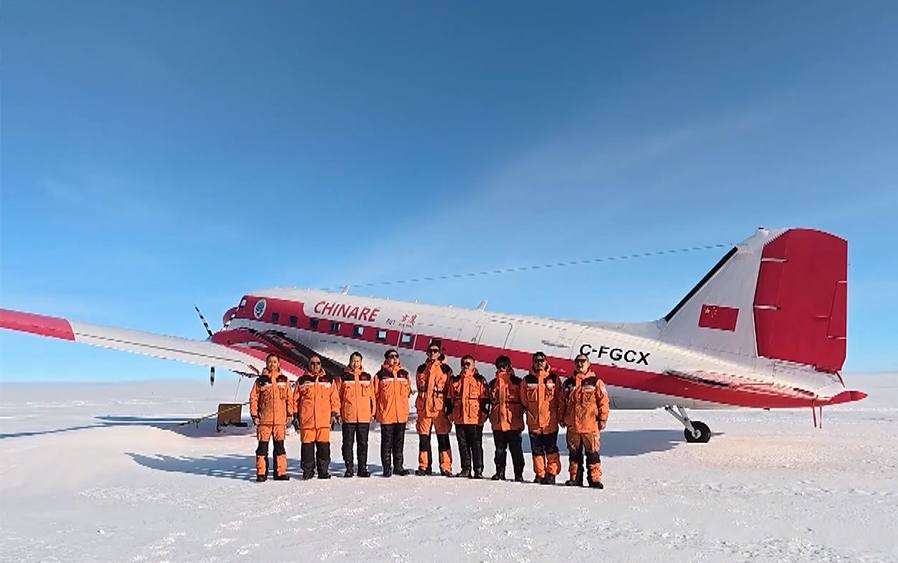
About thirty kilometres from Zhongshan, at the Zhongshan Ice Airport, expedition personnel ran aviation meteorological observations and carried out runway maintenance to ensure the airfield is ready for planned scientific flights. Those preparations are crucial for safe helicopter and fixed-wing operations that support station resupply and personnel transfers.
At Great Wall Station, which recently completed a handover between returning and incoming team members, staff continued routine meteorological monitoring and launched a soil environment investigation. Regular weather records feed both operational planning and broader climate monitoring programmes.
China Antarctic research continues across science and logistics
On arrival at Qinling Station the icebreaker Xue Long quickly readied its helicopter for sortie operations to move personnel ashore. The ship cooperated with the cargo barge Changjiang to complete waterborne unloading. Teams who had spent two months at sea after departing Shanghai expressed eagerness to begin station-specific work and life in the field.
Members of the Qinling overwintering team described both professional focus and personal hopes for the year ahead. Qinling overwinterer Zhao Yong said he aimed to refine his expertise while fulfilling his duties. Fellow team member Fu Yaokui extended New Year wishes to colleagues and family, emphasising health and steady work through the season.
Operationally, the expedition balanced scientific output with the maintenance of transport and field infrastructure. High-frequency radar provides continuous environmental data, geological surveys underpinned by drone hyperspectral imaging will broaden understanding of bedrock distribution, and improved airfield readiness increases the flexibility of aerial tasks.
China’s presence in Antarctica combines scientific study with robust logistics. The 42nd Expedition has demonstrated an ability to run multiple, concurrent programmes across separate sites while managing personnel rotations and supply operations from the Xue Long and support vessels. Researchers and logistical staff now move from initial surveys to sustained data collection as they begin the calendar year of work on the ice.
Photographs from the expedition show field teams at work on rocky outcrops, drone launches over snow and ice, and activity around the Xue Long as it supports shore operations. The continuing programme will feed national and international research on Antarctic geology, meteorology and polar operations.
Key Takeaways:
- China Antarctic research continued over New Year with multiple projects running at Zhongshan, Great Wall and Qinling stations.
- Teams conducted high-frequency radar operations, geological fieldwork in the Xifuer and Lasman hills, and drone hyperspectral surveys.
- Aviation meteorology and runway maintenance at Zhongshan Ice Airport prepared the fleet for airlift operations while the Xue Long supported helicopter and cargo transfers.