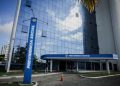
At the start of 2026 Beijing’s municipal service centre has completed a major upgrade of its main hall, moving beyond the traditional window-based model to a multifunctional public venue that blends service delivery with culture and ecology. The ground floor is currently hosting a floral and horticultural display called “Festive Blossoms”, part of a wider effort to open government spaces to the public and improve citizens’ everyday experience.
Beijing service centre modernisation
The centre, in operation since November 2015, has long been a testbed for administrative reform in China. Over the past decade it led national pilots in integrated counters and delegated acceptance, and has become an important window for showcasing “Beijing service” to residents and businesses. This latest redesign responds to rising demand for convenience and digital-first processing while making more efficient use of the physical hall.
From 1 January 2026 the centre extended its in-person opening hours to 08:30–17:30 throughout the year, excluding Spring Festival holidays. It also introduced Saturday morning appointment slots from 08:30–12:30 and added on-site consultation, document intake and assisted services during other weekend opening times. A 24-hour self-service zone now houses high-use terminals for certificate collection and endorsements, driver medical self-checks, printing and document storage. Clear operational guidance supports round-the-clock self-service.

Floor functions have been reorganised to match user needs. The first floor concentrates personal services such as immigration and household registration, along with professional licensing for health workers. The second floor groups enterprise-facing services, covering market supervision, food and drug matters and fixed-asset investment across the business lifecycle. The third floor is dedicated to online-integrated and value-added services, including cross-province processing, online navigation, loan services and talent programmes. The spatial arrangement aims to reduce friction for both residents and companies.
Beyond transactional change, the centre has introduced a range of cultural and ecological features. Since 2025 it has hosted a branch of the capital’s public library, creating a shared reading area for staff, service users and local residents. An “Ai-Lifang” exhibition zone showcases handicraft work by people with disabilities and supports self-service sales to boost income. A “Beijing Gifts” display promotes local cultural products and storytelling about the city. The hall now stages exhibitions on energy and water conservation and displays seasonal floral arrangements to enhance comfort and green sensibilities.
Officials say the redesign reflects the deeper digitisation of public services. According to the centre’s director, more than 90 per cent of city-level applications are now handled end-to-end online, which enabled planners to rethink how physical space should be used. The result is a more compact, open and welcoming hall that simultaneously serves as a service point, exhibition space and civic gathering place.
To maintain order and a civil atmosphere, managers introduced a hall code of conduct covering eight areas from courteous service and public hygiene to care for plants and supervision of children. The measure is intended to encourage self-discipline among visitors and preserve the quality of the shared environment.
By combining efficient, digital-first service delivery with public-facing cultural and ecological amenities, Beijing’s municipal service centre aims to set a new standard for civic halls. The initiative highlights how urban public services can be reimagined to provide practical convenience while also reflecting a city’s cultural identity and environmental priorities.
Key Takeaways:
- Beijing service centre reconfigures its main hall into five functional spaces to improve convenience and citizen experience.
- Extended opening hours, 24-hour self-service machines and weekend appointments expand access for residents and businesses.
- Cultural additions include a library satellite, handicraft display area supporting people with disabilities and rotating green exhibitions.
- Layout changes group personal, corporate and digital value-added services across three floors to streamline procedures.