











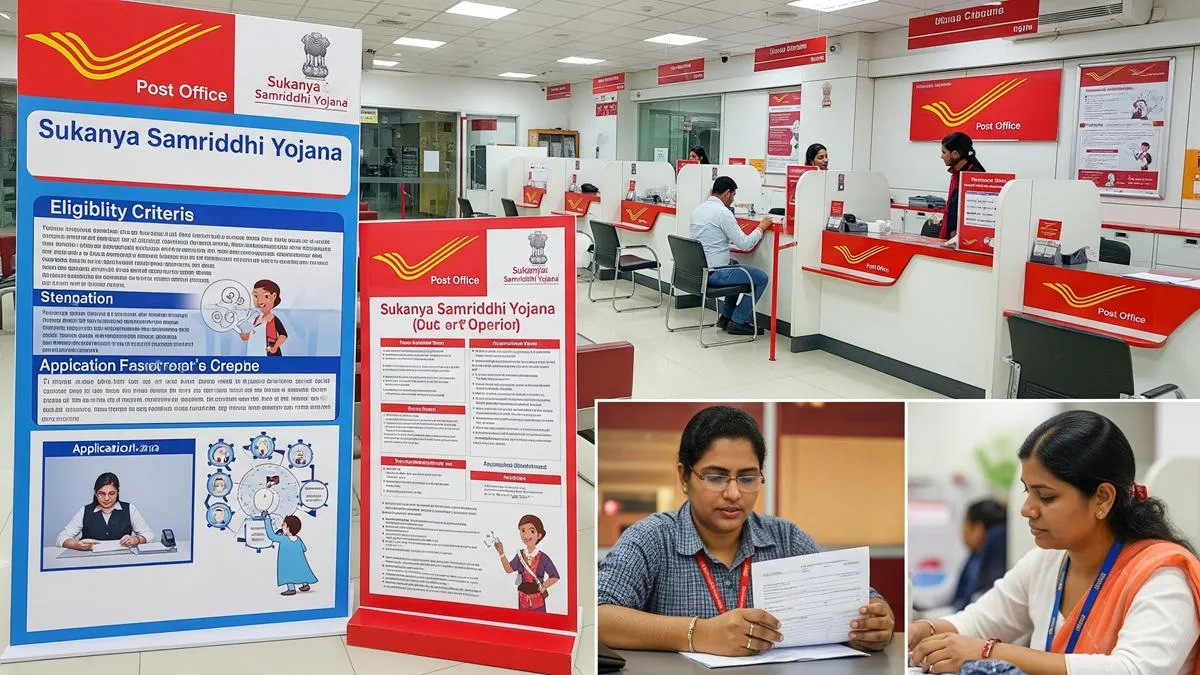
The finance ministry has opted not to change interest rates on the Post Office Small Savings schemes for the fourth and final quarter of the 2025–26 financial year. The decision, announced on 31 December 2025, means rates will remain effective from 1 January and preserves existing yields on a range of popular government-backed products.
India small savings rates and key schemes
Officials said the quarterly review of small savings rates — a routine exercise undertaken every three months — resulted in no revisions for the coming quarter. This marks the seventh consecutive review in which the government has held rates steady. The move will directly affect millions of retail investors who use these schemes for secure, predictable returns.
Key rates that remain unchanged include:

- Sukanya Samriddhi Yojana (SSY): 8.2% per annum. Accounts may be opened for girls aged 0–10 years; maturity occurs when the girl turns 21 or on marriage under specified conditions. The scheme falls under the EEE tax treatment, meaning deposits, interest and maturity proceeds are tax free.
- Senior Citizen Savings Scheme (SCSS): 8.2% per annum, with interest credited quarterly. The maximum deposit limit is Rs 30 lakh and the minimum deposit is Rs 1,000.
- Public Provident Fund (PPF): 7.1% per annum, compounded quarterly, with a 15-year lock-in and annual contribution limits from Rs 500 to Rs 1.5 lakh. PPF is also EEE within the tax code.
- National Savings Certificate (NSC): 7.7% per annum. Considered a safe, fixed-income option for conservative investors.
- Monthly Income Scheme (MIS): 7.4% per annum, paid monthly. Tenure is five years; maximum investment limits apply to single and joint accounts. Interest is taxable.
- Post Office Recurring Deposit (RD): 6.7% per annum for a five-year term, compounded quarterly. Suited to regular savers. Interest is taxable.
- Post Office Time Deposits: 1-year at 6.9%, 2-year at 7.0%, 3-year at 7.1% and 5-year at 7.5%.
- Kisan Vikas Patra (KVP): 7.5% per annum; the instrument is designed to double the investment over a prescribed period.
The stability in rates is likely to be welcomed by risk-averse investors who rely on these instruments for retirement planning, children’s education or steady income. Schemes such as PPF and SSY continue to offer tax-favoured treatment, while others such as MIS and RD remain taxable on interest earned.
Market analysts observe that keeping small savings rates steady can help the government manage its interest burden while signalling a degree of stability for household savers. For senior citizens, SCSS remains an attractive alternative to bank fixed deposits because of its comparatively high yield and regular interest payments.
Investors are advised to review scheme-specific rules — including deposit limits, lock-in periods and tax treatment — before committing funds. Those seeking monthly cash flow have options such as MIS and SCSS; long-term tax-efficient savers may prefer PPF or SSY. With rates unchanged, the emphasis for many households will be on asset allocation and liquidity needs rather than chasing higher yields.
As the government conducts quarterly reviews, any future adjustments will be announced ahead of the next quarter. For now, the unchanged rates provide a measure of certainty for retail investors at the start of the new year.
Key Takeaways:
- India small savings rates remain unchanged for Q4 FY 2025-26 after finance ministry review, providing relief to millions of investors.
- Top yields include 8.2% for Sukanya Samriddhi and SCSS, 7.7% for NSC and 7.1% for PPF; several deposit products offer 6.7–7.5%.
- PPF and SSY remain in the EEE tax category; schemes like MIS and RD are taxable on interest.








