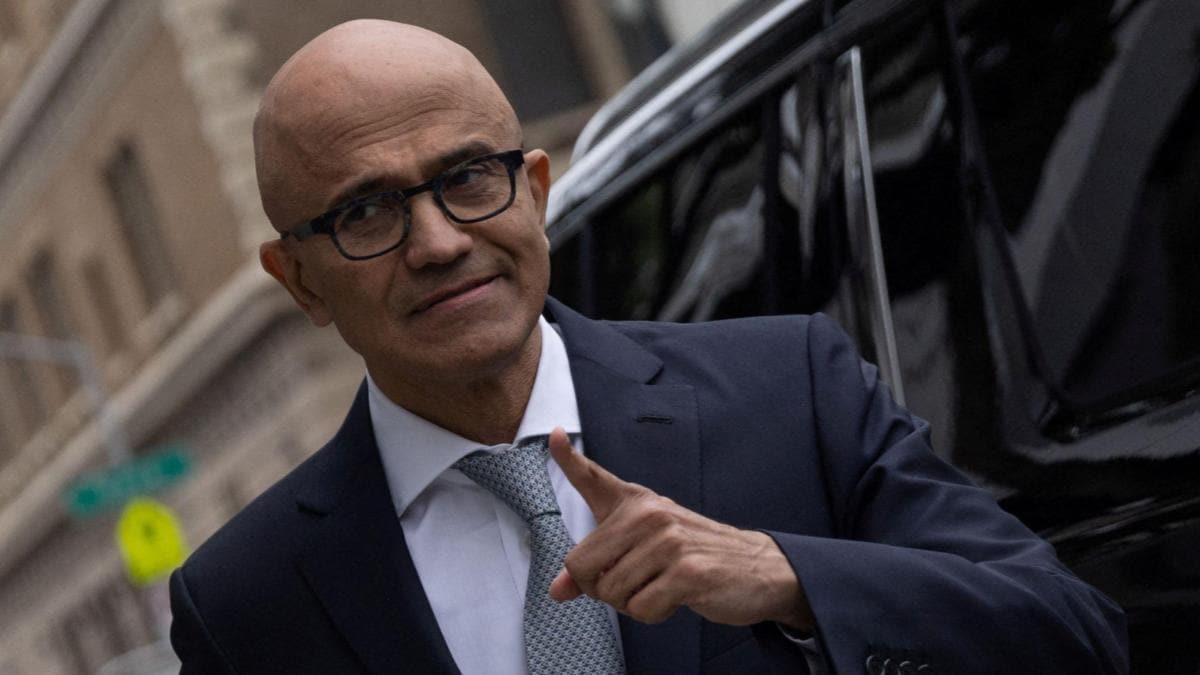
Microsoft chief executive Satya Nadella has said 2026 could mark a turning point for artificial intelligence as the technology moves from high-profile experiments to routine use in work environments. In a year-end post on his blog, he argued that the coming phase will be defined less by fresh inventions and more by how firms and people integrate AI into everyday tasks.
Nadella observed that while model capabilities have advanced rapidly, adoption has lagged. Many organisations possess powerful tools but use them sparingly. The next task, he wrote, is to close the gap between technical ability and real-world impact by focusing on practical outcomes such as productivity, time savings and better decision making.
AI in 2026 will move into everyday work
According to Nadella, 2026 should be the year AI stops being treated as an experimental novelty and starts behaving like a utility: a dependable assistant integrated into business processes. He urged companies to prioritise systems that are reliable, safe and simple enough for workers to adopt without extensive specialised knowledge.

That shift carries implications for economies across the BRICS+ grouping, notably India, where a large and growing tech workforce could benefit if AI tools are designed to augment skills rather than replace labour. Improved productivity in services, manufacturing and public administration could help firms scale and compete globally.
Nadella emphasised that AI is meant to help humans. Rather than automating people out of roles, the technology should enhance human judgement and creativity. This human-centred approach requires investing in user experience, training and workflows that integrate AI outputs into routine tasks so workers can act on insights quickly and confidently.
The Microsoft CEO also warned that challenges remain. Effective deployment needs robust infrastructure, governance and responsible practices to ensure systems behave as intended. Companies will have to verify models for accuracy, reduce bias, maintain privacy and provide clear accountability when decisions are influenced by automated systems.
For policymakers and business leaders in BRICS+ countries, the message is twofold: encourage adoption where it delivers clear value, and build the institutions and skills that make it sustainable. Governments can support this transition by incentivising pilot programmes, funding reskilling initiatives and clarifying regulatory expectations so firms have confidence to roll out AI more widely.
Investors and executives are likely to focus on measurable outcomes: reductions in error rates, faster processing times, and demonstrable gains in productivity. Firms that can embed AI into everyday tools—email, knowledge systems, and operational software—stand to reap the earliest rewards.
Looking ahead, Nadella suggested that if organisations make the right bets on usability, safety and human augmentation, 2026 could be the year AI’s theoretical promise starts to deliver visible improvements in how people work, learn and solve problems. For economies seeking to accelerate digital transformation, including India and partners across BRICS+, the pragmatic adoption of AI may determine who captures the next wave of growth.
Key Takeaways:
- Microsoft CEO Satya Nadella says AI in 2026 will shift from experiments to everyday workplace tools.
- Companies must focus on practical deployment, productivity gains, reliability and responsible use.
- Nadella emphasises AI as an aid for people, not a replacement, highlighting the need for reskilling and human-centred design.
- Successful adoption could boost business efficiency across India and other BRICS+ economies, though governance and system readiness remain challenges.