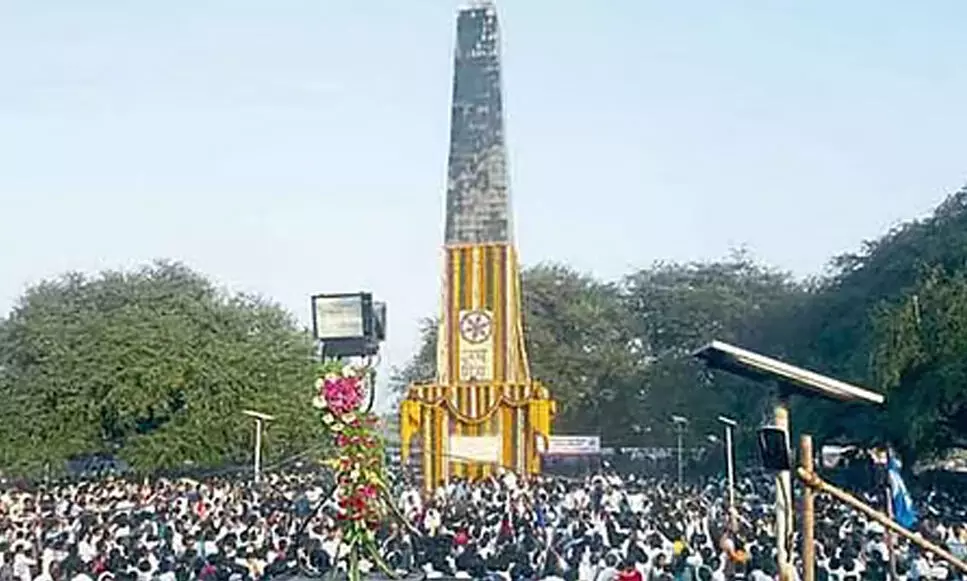
On 1 January 1818, a clash at Bhima Koregaon changed the course of local power in western India and has since become a lasting emblem of Dalit resistance. A column of some 800 British Company soldiers, including roughly 500 Mahar recruits, moved through the night to engage a Maratha force estimated at 28,000 under the Peshwa. The encounter ended with the raising of the British victory flag, the establishment of a memorial pillar and, in the long term, the collapse of Peshwa authority in the region.
Bhima Koregaon victory and its historical significance
The immediate military outcome helped consolidate British power after the Anglo-Maratha wars of 1817–18. Yet the battle’s social resonance goes beyond battlefield tactics. Under Peshwa rule, Mahars and other lower-caste communities endured severe restrictions and discrimination. Prohibited from using public wells, bathing in common tanks or wearing fine clothes, many faced social and legal disabilities that rendered them second-class citizens.
For the Mahars who fought at Bhima Koregaon, the engagement represented both a military action and a wider assertion of dignity. Though the British column numbered only 800, contemporary accounts record 49 fatalities among Company troops, including 22 Mahar soldiers. The British erected a victory pillar at the site and inscribed the names of the fallen, physically marking the battle within colonial memory.

In 1927 Dr B.R. Ambedkar visited the pillar and placed a wreath there on 1 January. His commemoration reframed the site as a locus of Dalit pride and resistance against caste domination. Ambedkar introduced the broader public to the story of the Mahar soldiers and declared Bhima Koregaon a centre of empowerment. Since then, the date has become an annual pilgrimage for many who seek to honour their ancestors and reaffirm the struggle for equality.
Over the decades, Bhima Koregaon has evolved from a military landmark into a potent political and cultural symbol. Annual commemorations attract large numbers of visitors who gather to remember the courage of those who fought and to press for continued social reform. The memorial functions both as a tribute to the dead and as a reminder that caste-based discrimination requires persistent public attention.
Historians note the layered meanings of the battle. On one level it marked an episode in the decline of Maratha power and the expansion of British rule. On another, it served as a catalyst for social mobilisation among communities subjected to the harshest forms of exclusion. The recruitment of Mahars into the British forces during the late 18th and early 19th centuries helped provide new economic and military opportunities, which in turn fuelled aspirations for social advancement.
Today Bhima Koregaon remains a site of memory and contestation. The victory pillar stands as a focal point for annual observances and for public debates about how history is remembered and who is acknowledged in national narratives. For many Dalit activists and scholars, the Bhima Koregaon victory continues to symbolise a moment of resistance and an affirmation of equal citizenship.
As India and its civil society engage with their past, Bhima Koregaon offers a reminder that military events can carry powerful social meanings. The battle’s legacy endures in commemorative practice, public debate and the ongoing struggle for social justice.
Key Takeaways:
- The Bhima Koregaon victory of 1 January 1818 saw a detachment including 500 Mahar soldiers fight alongside British forces against the Peshwa army.
- The battle contributed to the end of Peshwa rule and later became a potent symbol of Dalit resistance and pride.
- Dr B.R. Ambedkar’s 1927 homage transformed Bhima Koregaon into an annual pilgrimage and a centre of Dalit assertion.
- The site’s victory pillar remains a focal point for remembrance and communal reflection.