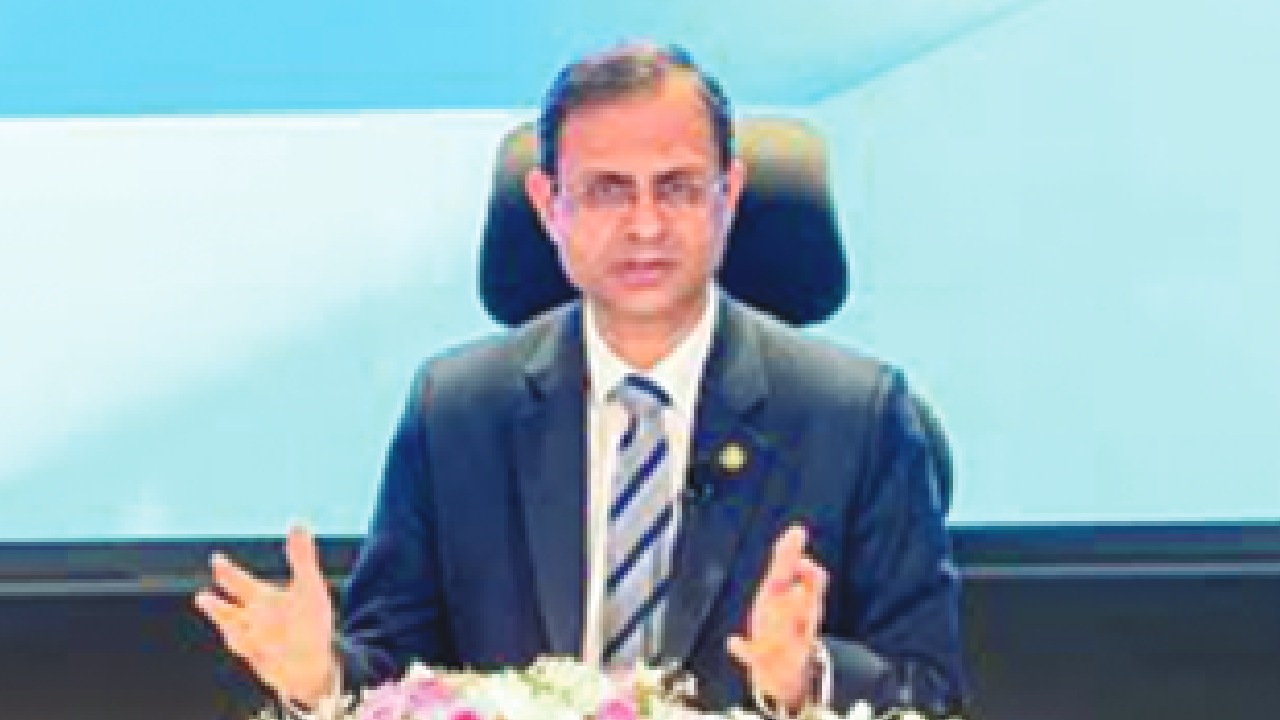
The Reserve Bank of India (RBI) has said the Indian economy is likely to sustain high growth even amid a volatile external environment, citing resilient financial institutions and robust domestic demand.
In his foreword to the latest Financial Stability Report, RBI Governor Sanjay Malhotra emphasised that maintaining financial stability is a core priority while also promoting innovation, safeguarding consumers and ensuring efficient regulation and supervision.
Indian economy growth supported by domestic demand
Malhotra said the outlook for the Indian economy remains positive, driven by strong household consumption and rising investment. He noted that benign inflation, healthy balance sheets across financial and non-financial firms, and sizeable buffers have underpinned this resilience. The RBI’s risk assessment recognises near-term external headwinds but concludes that India’s structural strengths and prudent macroeconomic policies provide meaningful protection.

The Financial Stability Report reflects the collective assessment of the Sub‑Committee of the Financial Stability and Development Council (FSDC). It highlights that scheduled commercial banks (SCBs) continue to maintain sound capital and liquidity positions, with improving asset quality and robust profitability. Macro stress test results show that banks can withstand severe hypothetical shocks and remain comfortably above regulatory capital minima.
Beyond banks, the report finds resilience across other financial market segments. Mutual funds and clearing corporations have shown capacity to absorb stress, while non‑banking financial companies (NBFCs) exhibit strong capital buffers, solid earnings and improving asset quality. The insurance sector too is reported to display balance‑sheet resilience, with the consolidated solvency ratio comfortably above the required threshold.
While the RBI’s assessment is constructive, it does not overlook risks. The report points to near‑term uncertainties stemming from geopolitical tensions and trade disruptions that could transmit to the domestic economy via external spillovers. To address these risks, regulators and policymakers are focusing on building ‘‘guardrails’’—policy measures and supervisory actions designed to limit potential shocks to the financial system and the broader economy.
Governor Malhotra underlined that financial stability is not an end in itself. He argued that the most valuable contribution of policymakers is to foster a financial system that is resilient, efficient in providing services and supportive of responsible innovation. That approach, he said, helps protect consumers while enabling growth-enhancing reforms.
Market participants will watch forthcoming data on consumption, investment and inflation to gauge the persistence of the favourable conditions the RBI describes. For now, the central bank’s assessment offers reassurance that India’s financial architecture has strengthened since previous cycles of stress and that institutions are better placed to absorb future shocks.
Investors and analysts said the report’s emphasis on buffers and stress tests should bolster confidence in the banking system and wider financial sector. At the same time, policymakers are likely to remain vigilant, ready to adjust macroprudential settings should external conditions deteriorate.
Overall, the RBI’s Financial Stability Report presents a cautiously optimistic picture: strong domestic demand and prudent policy settings are expected to support continued growth, even as authorities monitor external developments closely.
Key Takeaways:
- RBI projects strong Indian economy growth driven by domestic consumption and investment.
- Financial Stability Report highlights robust bank capital, liquidity and improved asset quality.
- Macro stress tests confirm resilience of banks, mutual funds, clearing corporations and NBFCs.
- Near-term external risks persist; policymakers are building guardrails to protect the financial system.