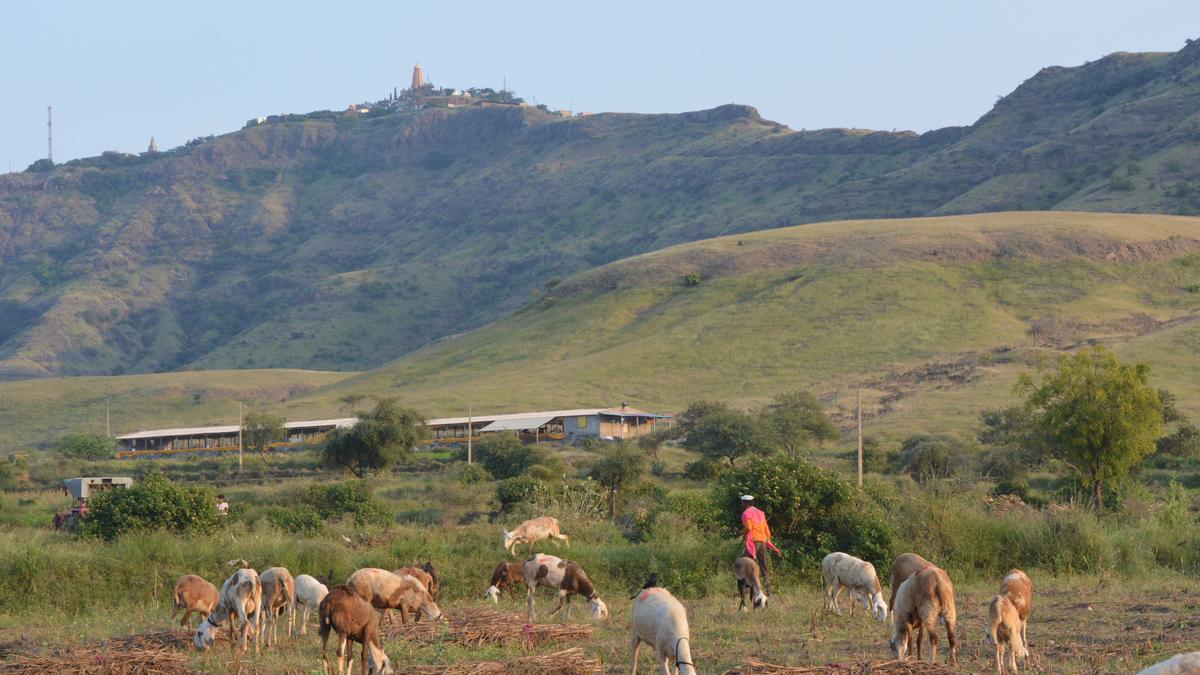
A new study argues that large tracts of open, tree–grass country in western Maharashtra are ancient savannas rather than degraded forests, with implications for conservation policy across India. Drawing on medieval Marathi literature, oral traditions and multiple lines of historical and ecological evidence, the researchers say these ecosystems have persisted for centuries and deserve protection as naturally open habitats.
Maharashtra savannas historical evidence
The paper, published in the journal People and Nature, is led by Ashish N. Nerlekar of Michigan State University and Digvijay Patil of the Indian Institute of Science Education and Research, Pune. The team georeferenced 28 literary excerpts dated between the 13th and 20th centuries and set across districts including Pune, Satara and Nashik. These texts repeatedly record trees and grasses typical of savannas, such as Vachellia species, Butea monosperma and Sehima nervosum, and describe thorny, open country with seasonal drought.
Rather than relying on literature alone, the authors triangulated their findings with 11 other sources. Those include archival paintings and early photographs showing sparsely wooded uplands, colonial revenue records noting widespread pasture commons, hunting logs and bird lists dominated by savanna species, Holocene pollen records indicating long‑term grassy understoreys, and phylogenies of lizards and plants that trace savanna lineages to arid phases over millennia.

Ecologists on the team identified 62 plant species across the historical record. Of 44 wild species, 27 are classic savanna indicators, 14 are generalists and only three are forest specialists. The balance of evidence, they say, is an overwhelming signal of open‑canopy savannas rather than former closed forest.
The study also clarifies historical terminology. In Marathi and Sanskrit, words such as vana and jāṅgala historically described wild, drier tracts rather than closed‑canopy forests, while anūpa referred to wetter, marshy forests. This linguistic context helps avoid modern misreadings that have promoted afforestation in naturally open ecosystems.
The findings have direct policy implications. Tens of thousands of square kilometres of open grassy country exist in Maharashtra today, yet savannas and grasslands are often labelled as ‘wastelands’ and targeted for tree planting under carbon programmes. The authors warn that converting ancient savannas to forests risks biodiversity loss, diminished ecosystem services and harm to pastoralist livelihoods.
To address this, the paper recommends a biocultural approach that values cultural heritage alongside biodiversity. Many savanna sites are sacred natural places tied to local rituals and deities, but unlike sacred groves in forested regions, sacred savannas are poorly recognised in conservation planning. Elevating such sites could safeguard both cultural practices and the species that depend on open habitats.
The researchers call for urgent documentation of oral traditions, better integration of savanna history into policy training and public awareness, and interdisciplinary collaboration across ecology, anthropology and humanities disciplines. They also point to global lessons: similar misconceptions have led to harmful tree plantations in ancient savannas in parts of Africa, South America and Madagascar.
Policymakers and conservation planners, the authors conclude, should design restoration and protection strategies that reflect natural savanna dynamics rather than an imagined forested past.
Key Takeaways:
- Medieval Marathi texts and oral traditions show open, grassy savannas persisted in western Maharashtra for at least 750 years, not recent forest loss.
- Researchers identified 62 plant species from historical sources, with 27 clear savanna indicators and only three forest indicators.
- Eleven independent evidence lines, from pollen and faunal remains to colonial records and paintings, corroborate long‑term savanna persistence.
- Authors urge a biocultural approach to conserve savannas and caution against blanket tree planting that could harm biodiversity and pastoral livelihoods.