











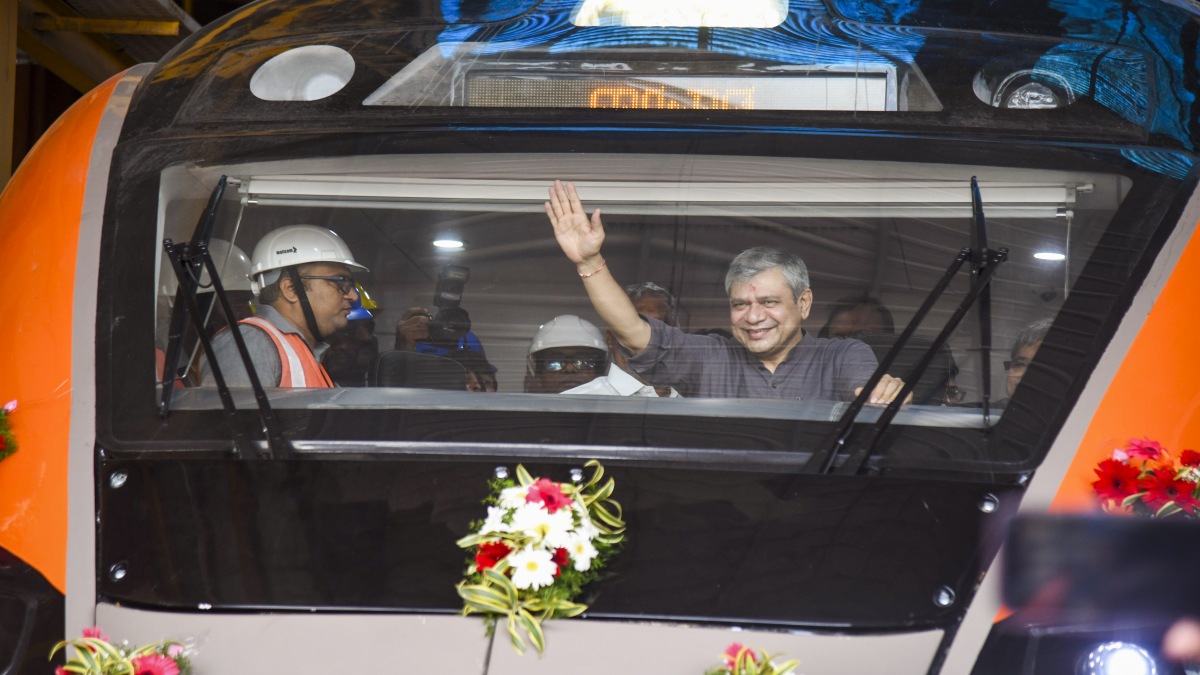
Indian Railways will introduce its first Vande Bharat Sleeper train in January 2026, with Prime Minister Narendra Modi due to flag off the inaugural service. The new sleeper variant of the popular Vande Bharat family is aimed at transforming overnight rail travel on longer routes and promises hotel-like comfort at affordable fares.
The maiden service will link Guwahati in Assam with Howrah in West Bengal, offering a direct overnight connection between the Northeast and the East. Two train sets have already completed successful trials, and officials say the design targets routes of roughly 1,200 to 1,500 kilometres where sleeping accommodation is essential.
Ticket prices for the first route have been published in advance. One-way fares are expected to start at ₹2,300 for AC 3-tier, ₹3,000 for AC 2-tier and ₹3,600 for AC 1st Class. Railways officials describe the pricing as premium yet affordable, designed to attract a wide range of travellers who would otherwise choose slower options or daytime travel.

Vande Bharat Sleeper train features and services
The Vande Bharat Sleeper train is a fully air-conditioned train set with several passenger-focused amenities. Coaches include cushioned berths with improved access to upper bunks, individual reading lights, USB charging points and foldable snack tables at each berth. The AC 1st Class coach will provide shower facilities with hot water and a designated baby care area.
Sanitation and passenger comfort have been prioritised. Coaches will use bio-vacuum toilets similar to modern aircraft systems and feature sealed gangways to maintain consistent temperature and air quality throughout the set. Soft night lighting and modern interiors aim to improve the overnight experience compared with conventional sleeper services.
Safety systems are integral to the design. The trains are equipped with the indigenous KAVACH anti-collision system and onboard CCTV. During high-speed trials on the Kota-Nagda section the train reached 180 kilometres per hour, and engineers highlighted a stability demonstration in which glasses filled with water did not spill at top speed. Regular operational speeds will be up to 160 kilometres per hour where track conditions permit.
Railway Minister Ashwini Vaishnaw has stated that the January launch is only the beginning. Eight additional Vande Bharat Sleeper trains will be introduced in the six months following the inaugural run, bringing the fleet to 12 by the end of 2026. Longer term plans envisage more than 200 such trains entering service over several years through a mix of domestic manufacturing projects.
Officials and transport analysts say the new service will reduce travel time, improve connectivity for districts in Assam and West Bengal and offer a safer, faster alternative to existing overnight options. The combination of speed, comfort and safety measures aims to make long-distance rail travel more attractive to families, business travellers and tourists.
As the Vande Bharat Sleeper train moves from testing to regular service, attention will turn to route expansion and integration with broader electrification and signalling upgrades. If the rollout proceeds on schedule, the train will mark a significant step in Indian Railways modernisation and in delivering faster overnight connections across the country.
Key Takeaways:
- India will inaugurate the Vande Bharat Sleeper train in January 2026, improving overnight connectivity between Guwahati and Howrah.
- Expected fares start at ₹2,300 for AC 3-tier, with modern amenities and KAVACH safety systems.
- The train completed test runs at 180 kilometres per hour and will operate up to 160 kilometres per hour in regular service.
- Indian Railways plans a rapid rollout with 12 trains by end of 2026 and more than 200 in the coming years.








