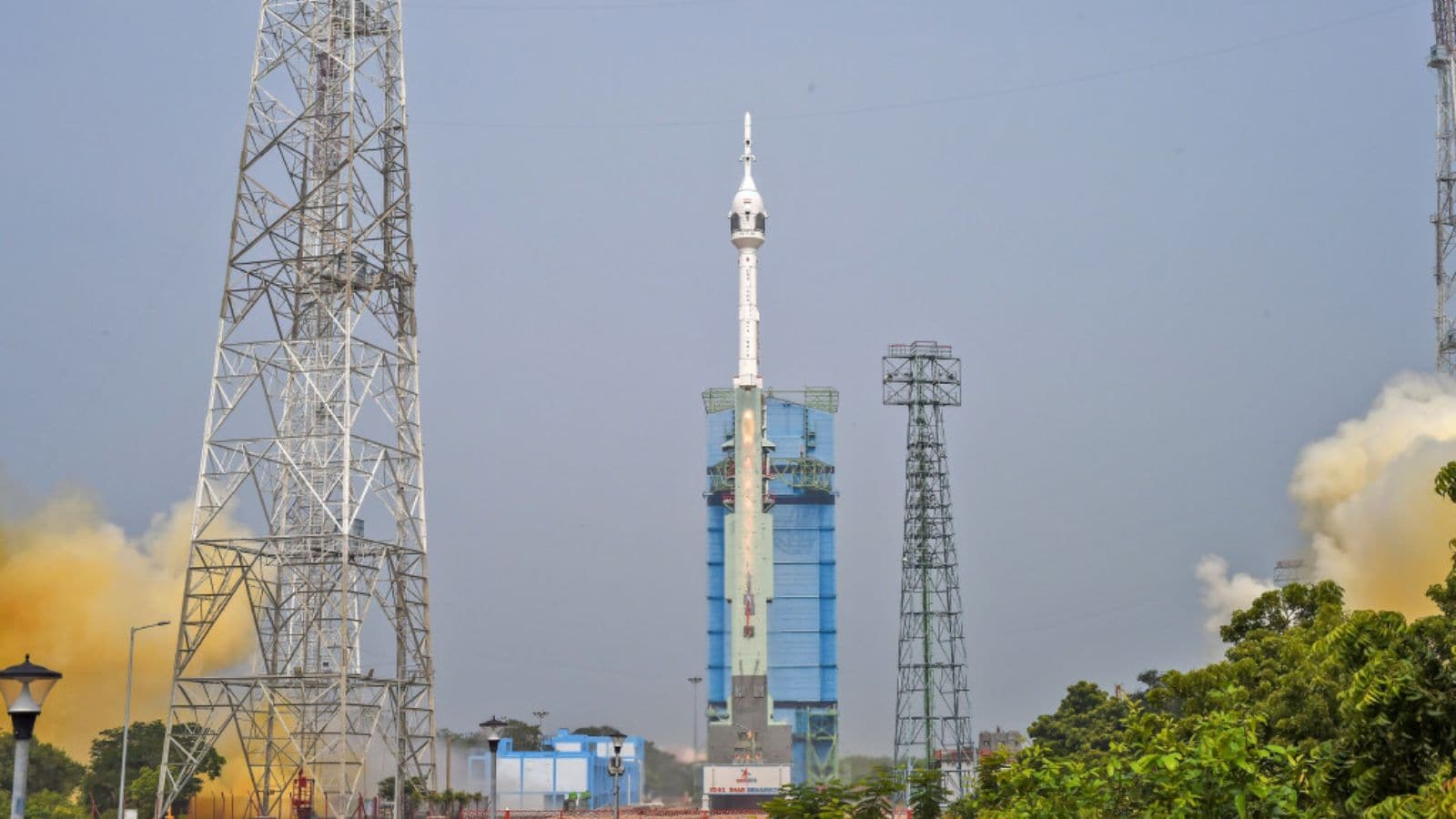
Two high‑profile crewed programme milestones are scheduled for 2026 that could shape the next decade of human spaceflight. India’s Gaganyaan programme will attempt its first uncrewed orbital test, while NASA will launch Artemis II to carry astronauts around the Moon. Both missions will concentrate on safety systems and mission operations that are essential for future crewed exploration.
Gaganyaan mission tests systems ahead of planned crew flights
The G1 flight, the first uncrewed test under India’s Gaganyaan programme, is tentatively targeted for March 2026 and will lift off aboard a human‑rated LVM3 rocket. Onboard will be Vyommitra, a humanoid robot engineered to simulate astronaut tasks and physiological responses. The spacecraft will operate in low‑Earth orbit at roughly 300 to 400 kilometres to validate life‑support hardware, communications, re‑entry behaviour and the parachute‑assisted sea recovery sequence.
Engineers will use data from telemetry and onboard sensors to confirm the performance of environmental control systems, thermal protection during re‑entry, and mission‑control procedures. A successful uncrewed demonstration would be a prerequisite for crewed flights and a step towards India independently launching and returning humans from orbit. The test also supports ambitions for future Indian space stations and a growing domestic commercial space sector.

Artemis II to return humans to deep space
NASA’s Artemis II, scheduled no earlier than 5 February 2026, will send four astronauts aboard the Orion spacecraft on a roughly 10‑day mission around the Moon. Powered by the Space Launch System, the flight will exercise navigation and communications at lunar distances, radiation protection, extended life‑support capability and mission operations far from Earth. The mission aims to travel at least 5,000 nautical miles beyond the Moon and will be the farthest human voyage in history.
Artemis II is a precursor to future lunar landings and longer term plans for a sustainable human presence on the Moon. The mission will produce crucial data on human performance and system resilience in deep space, informing hardware design and operational protocols for subsequent missions, including Artemis III and planned international contributions to lunar infrastructure.
Implications for global space activity
Together the missions illustrate the widening field of human space activity. India’s focus remains on establishing a reliable human‑rated capability in low‑Earth orbit, while the United States and international partners concentrate on returning humans beyond low‑Earth orbit. The technical experience gained in 2026 will feed into programmes for longer duration life‑support, crew safety and mission management that are necessary for ambitions to build lunar bases and to prepare for human missions to Mars.
For India, a successful Gaganyaan test will strengthen domestic expertise and reduce reliance on foreign crewed transportation. For NASA and its partners, Artemis II will demonstrate deep‑space operations that underpin future multinational exploration. Both efforts will produce engineering lessons, operational experience and potential areas for international collaboration in the coming decade.
As these missions proceed, observers will watch not only for launch outcomes but for how agencies translate test results into sustained programmes. The results in 2026 will help determine the tempo of human exploration over the next ten years and the roles that different nations will play in a more multipolar era of space activity.
Key Takeaways:
- India’s Gaganyaan mission will conduct an uncrewed orbital test in early 2026 using humanoid Vyommitra to validate life‑support and re‑entry systems.
- NASA’s Artemis II is slated for February 2026 to carry four astronauts beyond the Moon, testing deep‑space systems on a roughly 10‑day voyage.
- Successful flights could accelerate independent Indian human spaceflight capability and advance international deep‑space exploration efforts.