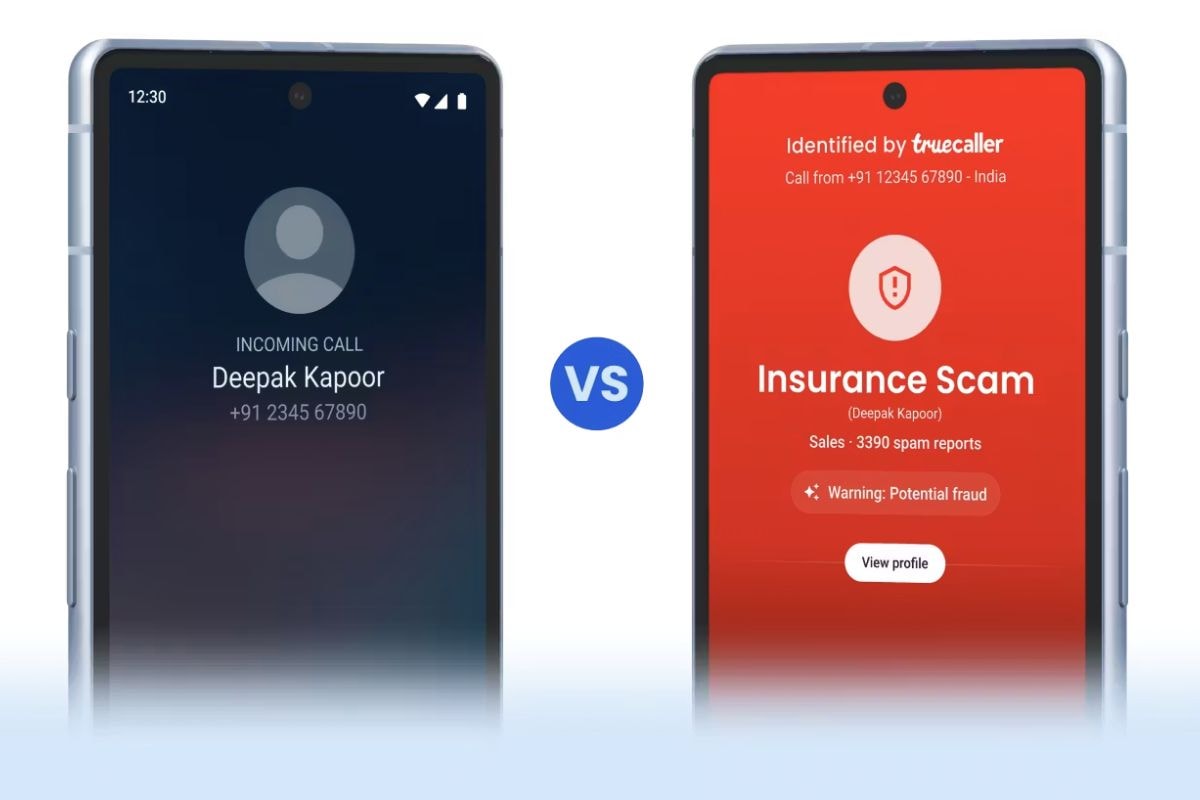
India’s telecom regulator is rolling out Calling Name Presentation, or CNAP, across 4G and 5G networks, offering a network-level caller name display that does not require an app or internet access. The phased rollout follows tests in selected regions and aims to provide KYC-verified names from the operator’s database as calls arrive, giving users a built-in alternative to third-party caller ID services such as Truecaller.
CNAP vs Truecaller
CNAP retrieves the caller name from the telecom operator’s KYC records tied to the SIM. When a call is made, the network queries the operator database and displays the registered name on the recipient’s device as the phone rings. The system is designed to be standardised across operators and devices, and TRAI has included an opt-out via Calling Line Identification Restriction for subscribers who prefer not to display their name.
Truecaller, by contrast, is an app-based service that builds its database from community input and real-time signals. It identifies spam and fraud by analysing usage patterns from millions of users and supplements names with business verification, logo badges and context such as reason for call or frequency. Truecaller requires installation and permissions, and its labels can differ from official KYC names when numbers change hands or community tags vary.

How CNAP works and what it means for users
Because CNAP operates at the network level, it does not depend on internet connectivity or a third-party application for basic name display. Telecom vendors have been asked to ensure device support within months of the official rollout, and availability is expected to widen through a staged deployment by March or April 2026.
CNAP’s strength is its reliance on verified subscriber information. This reduces the risk of misleading names that can arise when numbers are reassigned or when crowdsourced databases carry outdated labels. However, CNAP is deliberately narrow in scope: it aims to present the registered name only. It does not offer spam scoring, community flags, automatic blocking or additional context that many users value.
Which option should consumers choose
For users prioritising privacy and minimal device permissions, CNAP is a clear improvement over relying solely on third-party apps. It presents a verified name without requiring data sharing with external platforms. For users who want active spam detection, automatic blocking, voicemail services and global identity lookups, Truecaller remains the more feature-rich choice.
There is also a practical middle ground. Users can rely on CNAP for official name display while keeping Truecaller or similar apps installed for spam detection and additional features. Those who prefer maximum privacy can choose to avoid apps and use only the network-provided name. Conversely, users who accept app permissions for enhanced protection can retain both services for complementary benefits.
As CNAP rolls out across networks, its impact will depend on device compatibility and how quickly operators implement the standard. For now, CNAP and Truecaller are better viewed as complementary tools rather than strict replacements. The introduction of network-level name presentation marks a step toward a standardised caller ID experience in India, but the wider fight against spam and fraud will continue to rely on both operator measures and community-driven solutions.
Key Takeaways:
- TRAI is phasing in CNAP to show KYC-verified caller names on network level without an app.
- CNAP vs Truecaller: CNAP pulls official records while Truecaller uses crowdsourced data and real-time spam signals.
- CNAP needs no internet; Truecaller adds spam blocking, voicemail and business verification.
- Users should weigh privacy and convenience when choosing between CNAP and Truecaller.