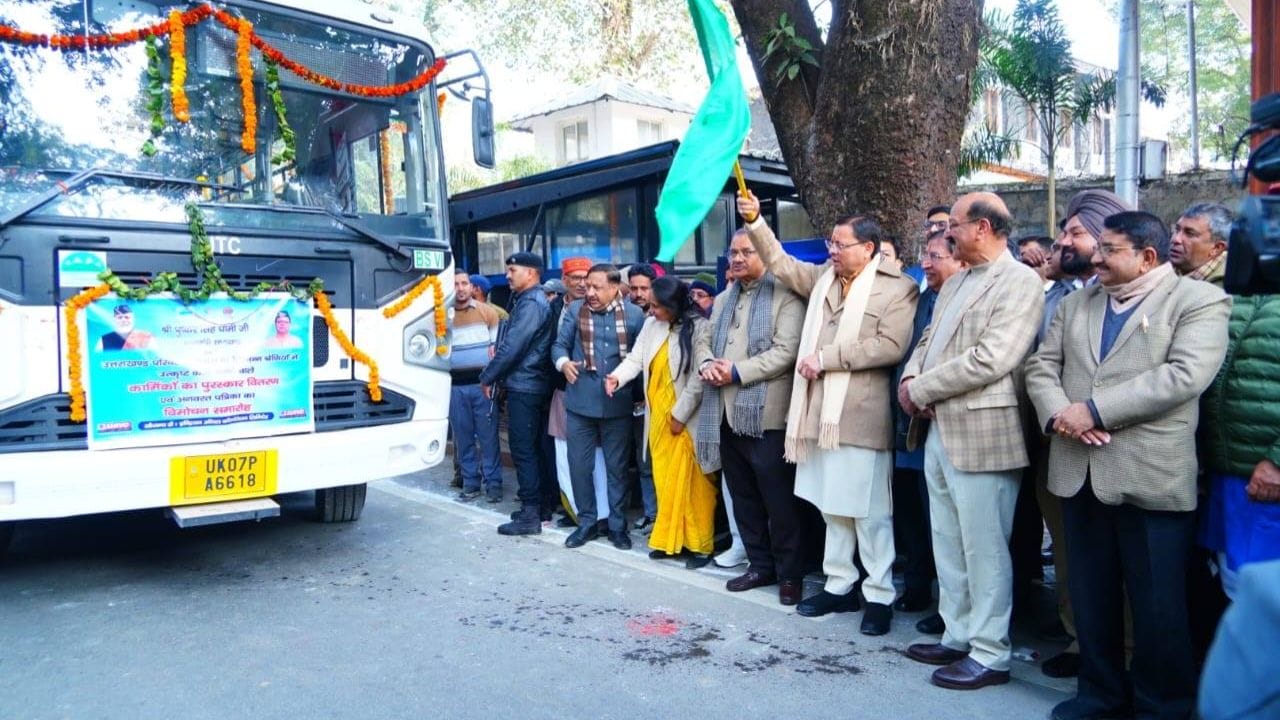
The Uttarakhand Transport Corporation added 112 new buses to its fleet on 1 January, a move the state government says will strengthen public transport and improve connectivity across the region. Chief Minister Pushkar Singh Dhami flagged off the vehicles at a ceremony held at the Chief Servant House in Dehradun, marking the first day of the new year with a major upgrade to the state transport network.
Uttarakhand new buses strengthen connectivity across the state
The batch includes UTC smart buses in both ordinary and air-conditioned variants. Officials described the vehicles as part of a broader modernisation drive intended to make travel safer, more comfortable and more affordable for pilgrims, tourists, students and daily commuters. The corporation also released a commemorative volume titled ‘Anvarat’ at the event and honoured several outstanding employees for their service.
CM Dhami highlighted the financial turnaround of the transport corporation, saying that it has moved from long-standing losses to a profit of ₹56 crore — the first profitable year for the corporation in 20 years. He credited the administration’s focus on good governance and systematic reforms for that recovery.

Investment in infrastructure has gone hand in hand with the new fleet. The government has completed 13 new bus stands and workshops, with work ongoing at 14 more locations. Several stations are being upgraded on the lines of an Inter-State Bus Terminal to improve passenger amenities and operational efficiency.
“Given Uttarakhand’s challenging topography, buses are a lifeline for many communities,” the chief minister said. He noted the state’s mountainous terrain, deep valleys and remote areas make road transport essential for daily life. The new vehicles, he said, will support the government’s pledge to connect every corner of the state through reliable bus services.
Officials expect the newer vehicles to reduce crowding on popular routes, enhance safety standards and provide a more consistent timetable for travellers. The UTC smart buses come with features designed for passenger comfort and operational reliability, which authorities say will shorten turnaround times and improve service frequency on key corridors.
The transport upgrades also aim to support the state’s tourism and pilgrimage economy. Uttarakhand receives a steady flow of visitors throughout the year. Better intercity and rural connectivity should make travel easier for large groups of devotees and tourists, while also benefiting students and local commuters who depend on state-run services.
The corporation’s leap into profitability is being presented as evidence that investment and managerial reforms can restore public enterprises. Alongside fleet renewals and infrastructure projects, the administration has focused on operational efficiencies and service quality to generate sustainable revenue.
Local officials said the fleet expansion will be progressively deployed across routes to ensure improved coverage, particularly in hard-to-reach areas. The state’s objective is to make scheduled bus services available to more villages and smaller towns, ensuring residents have access to education, healthcare and markets.
The event in Dehradun was covered by national agencies and shared on social media, highlighting both the modern buses and the wider plan to upgrade transport infrastructure across the state. With these additions, Uttarakhand’s public transport system aims to become more resilient and better suited to the needs of its residents and visitors.
Key Takeaways:
- Uttarakhand new buses: 112 UTC smart vehicles (AC and non-AC) were added to the state fleet.
- Transport corporation returned to a ₹56 crore profit after two decades, according to CM Pushkar Singh Dhami.
- Government has built 13 new bus stands and workshops, with 14 projects underway and station upgrades modelled on ISBTs.
- Officials say the additions will improve connectivity for pilgrims, tourists and residents across the mountainous state.