Key Takeaways:
- Borno 2026 budget of N890.33bn prioritises capital spending to accelerate reconstruction and infrastructure.
- Education receives the largest allocation at N135.43bn, with 97.1% capital performance last year.
- Revenue projection relies on federation receipts, IGR and substantial capital receipts including aid and grants.
- State assembly will scrutinise the proposal ahead of passage to ensure alignment with development goals.

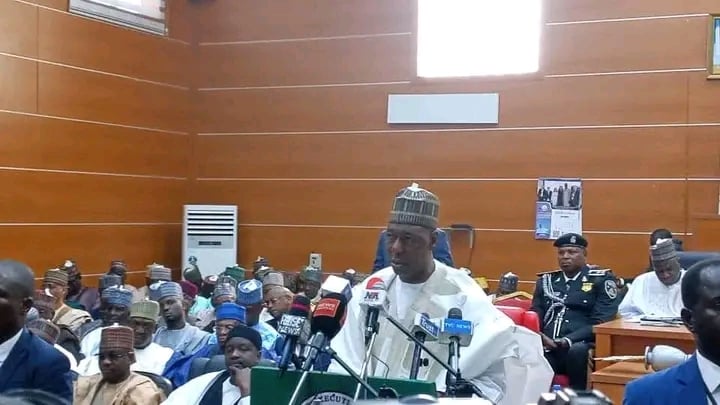
Governor Babagana Zulum of Borno State presented a N890,331,686,000 budget proposal for the 2026 fiscal year to the State House of Assembly in Maiduguri on Monday. Titled the “Budget of Sustained Recovery and Growth”, the plan places a clear emphasis on capital investment to accelerate reconstruction after years of insurgency.
Borno 2026 budget highlights major capital focus
The governor outlined a total recurrent expenditure of N353,767,349,000 and a capital expenditure of N536,564,337,000, signalling a deliberate tilt towards rebuilding infrastructure and public services. Zulum described the structure as central to long-term development and the restoration of economic activity across the state.
“This budget stands as a testament to our steadfast dedication to fostering sustained recovery and growth, even in the face of challenges,” the governor said during the presentation, urging legislators to support measures that will restore livelihoods and improve security for residents.
Priority sectors and major allocations
Education received the largest single allocation, N135,430,647,000, a reflection of the administration’s focus on human capital. Zulum pointed to a strong performance in the previous year, noting a 97.1% capital project implementation rate for the education sector. Planned interventions for 2026 include construction of new schools, rehabilitation of destroyed facilities, scholarship programmes and the recruitment of teachers across the state.
Other significant allocations include N94,270,541,000 for the Ministry of Works and Housing, N66,408,136,000 for the Ministry of Health, and N58,710,006,000 for the Ministry of Reconstruction, Rehabilitation and Resettlement. The budgets for Agriculture and Water Resources are N44,947,429,000 and N21,353,536,000 respectively, underscoring efforts to revive farming, ensure water security and support displaced communities returning home.
Revenue assumptions and financing
The proposal estimates total revenue of N317,688,140,000 from the Federation Account and N44,300,801,000 from Internally Generated Revenue. Capital receipts are projected at N417,226,513,000 and include aid, grants and the Capital Development Fund. The gap between recurrent and capital needs and projected revenue highlights the continued reliance on external support and targeted capital inflows to deliver the package.
Legislative scrutiny and political responses
Speaker Abdulkarim Lawan assured Governor Zulum of a swift and thorough review by the State House of Assembly, saying the legislature will examine the proposal to ensure it responds to the state’s developmental needs before passage. The timely review will be watched closely by residents and development partners keen to see implementation progress.
Usman Balami, an opposition lawmaker who attended the event, praised the execution of the 2025 budget and welcomed the 2026 plan. He described the proposal as consistent with the administration’s long-term strategic initiatives and said that accountability and cross-party engagement would be important to fast-track development outcomes.
If approved, the Borno 2026 budget will direct substantial resources towards reconstruction, education and basic services at a critical juncture for the state. The emphasis on capital expenditure suggests the government intends to convert budgetary allocations into visible projects that can restore normalcy and provide economic opportunities for communities affected by conflict.