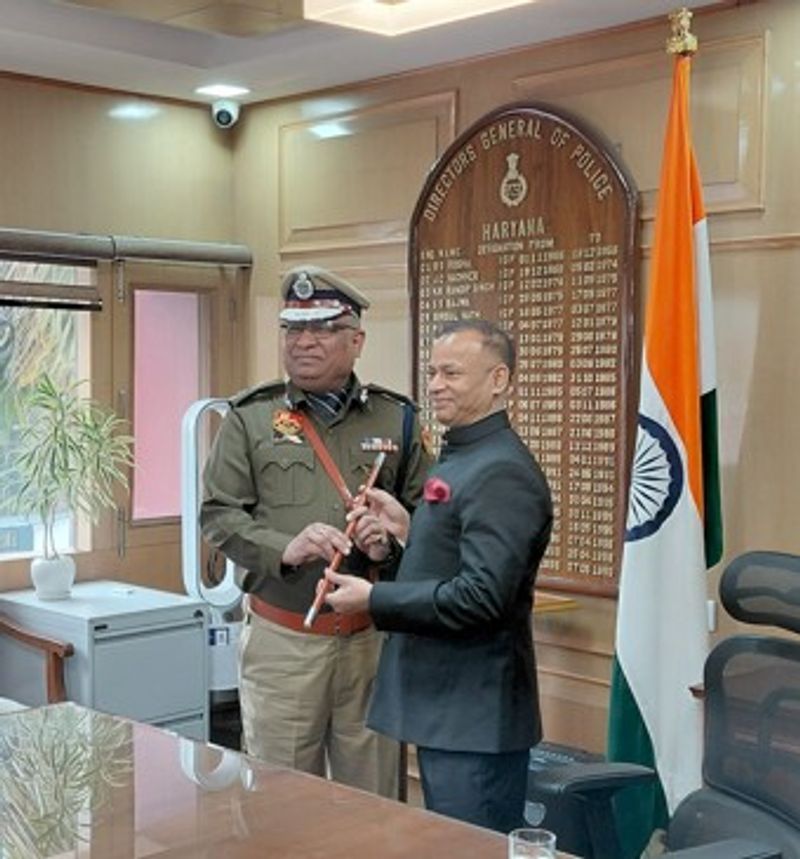
Ajay Singhal, a 1992-batch Indian Police Service officer, assumed charge as the 42nd Director General of Police and Head of Police Force in Haryana on Thursday. His father, Om Prakash Singhal, attended the ceremony as Singhal took the chair from his predecessor, OP Singh. Singhal thanked Chief Minister Nayab Singh Saini for the appointment and said he would strive to meet public expectations and follow the government’s direction.
Haryana police reforms and priorities
Singhal said policing has evolved markedly since he joined the service, driven by successive waves of technology from the internet to smartphones and now artificial intelligence. He noted the changing profile of criminals and pledged that the Haryana Police would adapt through both training and technology. “We have faced terrorism, crime control and law-and-order situations, and the Haryana Police have always been successful,” he said.
The new DGP addressed concerns about corruption after the State Vigilance and Anti-Corruption Bureau reported that 44 police personnel were taken to task in 2025, the highest number among state departments. Singhal said the higher detection rate reflected vigilance rather than a unique problem in the police. “We are alert; that is why police personnel are being caught. The rotten apples will be weeded out. Strict action will be taken as per the law,” he added.

Recruitment drive and personnel welfare
Against a sanctioned strength of 79,063, the force currently faces a shortfall of 23,189 posts, a gap of 29.3 per cent. Head Constable vacancies stand at roughly 50.5 per cent and Constable vacancies at 27.3 per cent. To address the deficit, the state will recruit more than 5,000 personnel in phased intakes, including 1,500 women. Singhal stressed the need to balance recruitment with training capacity.
Singhal also outlined welfare measures aimed at improving morale and retention. Financial aid will be available to police personnel for their children’s weddings, and a banquet hall will be constructed within police lines. He said the force would seek to ensure mandatory weekly leave and regular health check-ups for personnel over the age of 35 to address mental-health pressures associated with policing.
Technology, community policing and operations
The DGP announced plans to use technology to map crime hotspots, with particular attention to crimes against women and atrocities targeting Scheduled Castes. A similar approach will be applied to cybercrime. Singhal said a community-focused initiative, to be known as Madadgar Police or May I Help You, will provide night-time assistance for those travelling or in distress, offering help ranging from emergency hospital transfers to fuel for stranded motorists.
Singhal urged each of the state’s police stations to “adopt” a village and work on needs spanning sanitation to crime control. He reaffirmed the force’s intent to take decisive action against extortionists and said efforts were under way to extradite offenders operating from abroad. Operation Muskaan will continue to trace missing persons, and teams are collecting intelligence on cross-border infiltration, which Singhal described as a significant challenge.
Addressing criticism of law and order, the DGP said the scale of investment into the state was evidence of a stable security environment. He noted that the force currently lists some 10,000 absconding criminals, including proclaimed offenders and bail jumpers, and warned that none involved in organised extortion or serious crime would be spared legal action.
Singhal’s first public statements as DGP combine administrative priorities with technological and welfare measures, signalling a multi-pronged approach to strengthen policing in Haryana in the months ahead.
Key Takeaways:
- New Haryana DGP Ajay Singhal outlines Haryana police reforms with an anti-corruption drive and technology-led crime detection.
- State vigilance figures show 44 police personnel taken to task in 2025; Singhal vows strict action against “rotten apples”.
- Major recruitment push planned with 5,000 hires, including 1,500 women, alongside welfare measures for personnel.
- Initiatives include Madadgar Police, hotspot mapping for crimes against women and SCs, cybercrime focus and Operation Muskaan.