Key Takeaways:
- Collector Anna Lyashenko has assembled a Petropavl Santa collection of 135 figures gathered over more than 20 years.
- The collection includes pieces from the 1930s to modern plastic and fabric Santas, many restored by the owner.
- The exhibition at the city botanical garden allows residents to revisit childhood memories and see rare holiday artefacts.

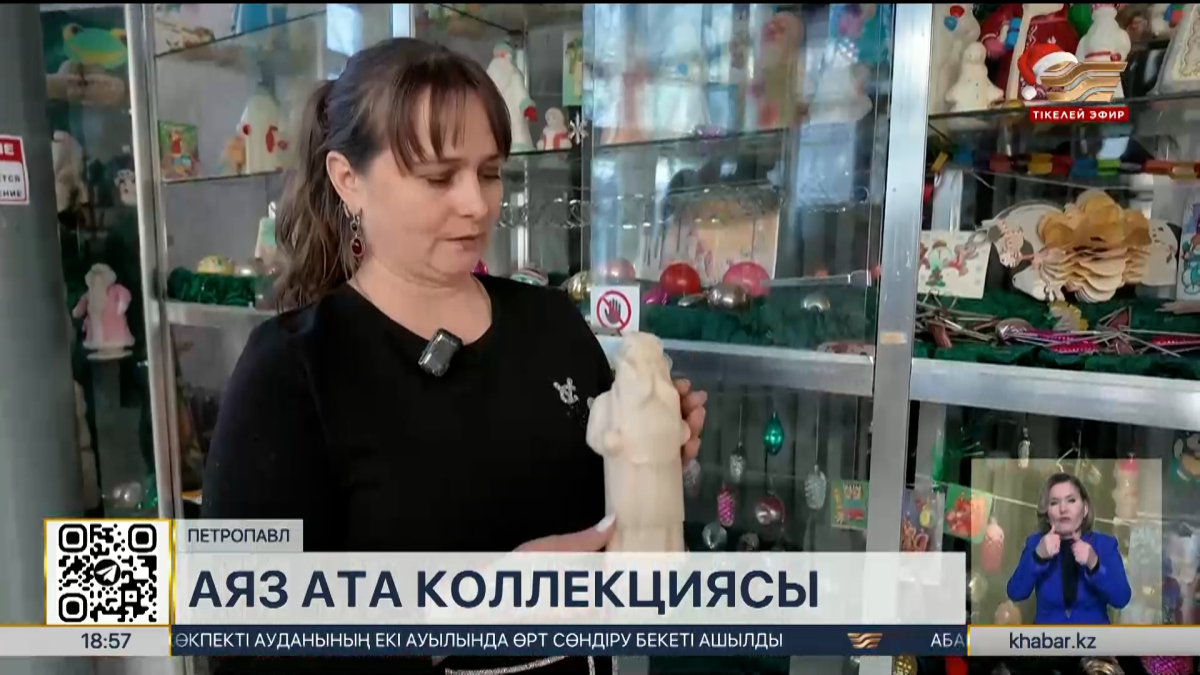
In Petropavl, northern Kazakhstan, a private collection of 135 Santa Claus figures has gone on public display at the city botanical garden, drawing locals eager to revisit the toys and decorations of their childhood. The collection, assembled by collector Anna Lyashenko over more than two decades, ranges from a wooden-legged Santa made of dense cardboard from the 1930s to modern plastic and textile versions.
Petropavl Santa collection spans a century
The oldest item in the Petropavl Santa collection dates to the early 1930s and was purchased by Ms Lyashenko during a trip to Almaty. She said the figure’s body is made of thick cardboard and its legs are wooden, a rare survivor of a time when holiday ornaments were crafted from durable materials rather than mass-produced plastics.
“This is a special piece,” Ms Lyashenko said. “Its body is dense cardboard and the legs are wooden. You will not find many like it.” Many other figures in the collection were repaired by hand, and several were purchased from private sellers and flea markets. The collector keeps the items in a temperature-controlled, dry environment and stores them away from ultraviolet light to prevent fading and damage.
Materials represented in the display include glass, plaster, fabric, polystyrene, and various plastics. One striking piece is a Santa carved from a single block of salt, which once contained a hole for a bulb and a loop for hanging. The bulb would have been used as a small lamp, illustrating how New Year decorations of earlier eras often combined ornament and illumination.
“This is one of the unusual items in my collection,” Ms Lyashenko said. “It even had a place for a lamp.” Her childhood yearning to find a Santa like the one that sat beneath her family tree sparked years of collecting. Over time she gathered 135 distinct Santa figures, each representing a chapter in the region’s festive traditions.
The botanical garden exhibition also features contributions from other collectors. Snow Maidens, garlands and ornaments from different decades accompany the Santa figures, offering a broader view of how New Year celebrations have evolved. A rotating, vintage motorised tree that once entranced children with its motion is installed nearby; the garden’s director noted how such items once felt like magic.
“This tree felt like a piece of childhood magic,” said Artur Ryazapov, director of the botanical garden. “We used to ask our grandparents to switch it on. When it turned, it warmed the air and created movement. For many visitors, the exhibition brings back those small family rituals.”
The display, staged during the New Year season, aims to offer visitors a nostalgic journey through decades of holiday design and domestic tradition. For some, it is a rare chance to see decorations that cannot be found in shops today. For others, it is an educational moment about the materials and manufacturing techniques used over the last century.
Ms Lyashenko’s collection and the botanical garden exhibition underscore a local appetite for cultural preservation and community celebration. Each figure tells a story of craftsmanship, family memory and the changing face of seasonal decoration. The exhibition remains open through the New Year period, inviting residents and visitors to share in a small, tangible piece of history.