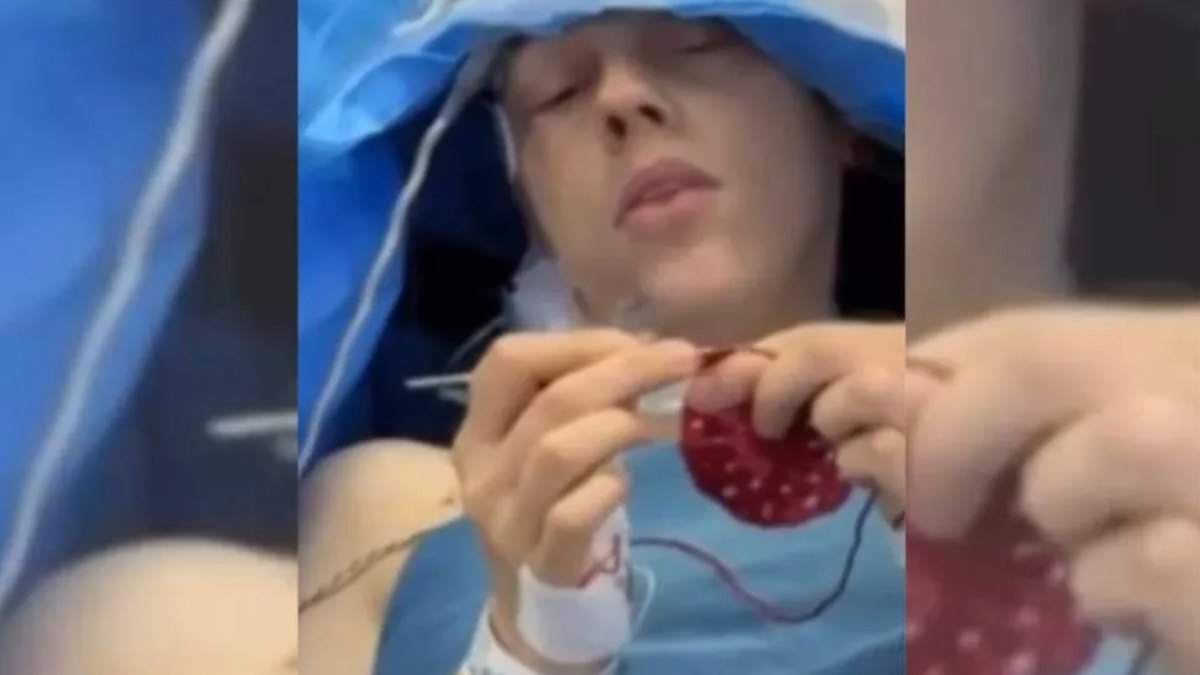
An agricultural worker from Cascavel in western Paraná underwent a delicate neurosurgical procedure while remaining awake, drawing attention after a video showed her calmly crocheting as surgeons worked to remove a tumour from her brain.
awake brain surgery in Brazil
The patient, identified as Elidamaris Ferreira Martins Galter, needed to stay conscious so the medical team could continuously assess her speech, reasoning and fine motor control throughout the operation. Surgeons routinely ask patients to perform simple tasks during awake craniotomies to ensure critical brain functions are preserved while removing abnormal tissue.
In Elidamaris’s case, the task chosen was crocheting. The activity was already part of her daily routine and allowed the surgical team to monitor her hand movements and coordination in real time. While the surgeons focused on excising the tumour, she kept her hands occupied with needle and thread, providing immediate feedback on motor function without verbal interruption.

Medical staff at the hospital explained that awake procedures are indicated when a lesion lies close to regions that govern language, movement or other essential faculties. By keeping a patient engaged in a familiar, simple activity, clinicians can map functional brain tissue and reduce the chances of harming vital areas. This approach improves precision and lowers the risk of lasting deficits.
Elidamaris had been diagnosed with breast cancer in 2023. As the disease progressed it metastasised to several sites in her brain, prompting a combined treatment plan that included chemotherapy before surgical intervention. The recent operation formed part of that ongoing treatment.
Surgeons performing awake craniotomies must balance the technical demands of neurosurgery with attentive patient care. Anaesthesia teams manage comfort and pain while keeping the patient responsive. Neuropsychologists or speech therapists are often present to administer tasks and interpret responses during critical stages of tumour removal.
Observers who viewed the published footage noted the calm atmosphere in the operating theatre and the patient’s concentration on her crochet work. The video, shared by regional outlet XV Curitiba, illustrated how everyday actions can become clinical tools in complex operations.
Specialists emphasise that not every brain tumour surgery requires the patient to remain awake. The decision depends on tumour location, patient health and the specific goals of the procedure. When appropriate, awake surgery is a valuable option for protecting quality of life while treating harmful growths.
Elidamaris’s case highlights both the technical sophistication of contemporary neurosurgery in Brazil and the role of patient cooperation in successful outcomes. As treatments for metastatic cancer often combine systemic therapies with targeted surgical approaches, stories like this underline the multidisciplinary nature of modern care.
Hospital officials did not disclose full clinical details beyond the publicly shared footage, but they confirmed the operation’s aim was to remove the tumour while preserving the patient’s neurological functions. Elidamaris remains under medical follow-up as part of her ongoing cancer treatment.
Key Takeaways:
- A patient in Cascavel, Brazil remained awake and crocheted during an awake brain surgery to allow surgeons to monitor speech and motor skills in real time.
- The procedure was used to remove a brain tumour that developed after breast cancer metastasis; the patient had prior chemotherapy.
- Surgeons chose a simple, familiar task to test coordination and minimise risk while operating in an area linked to essential functions.