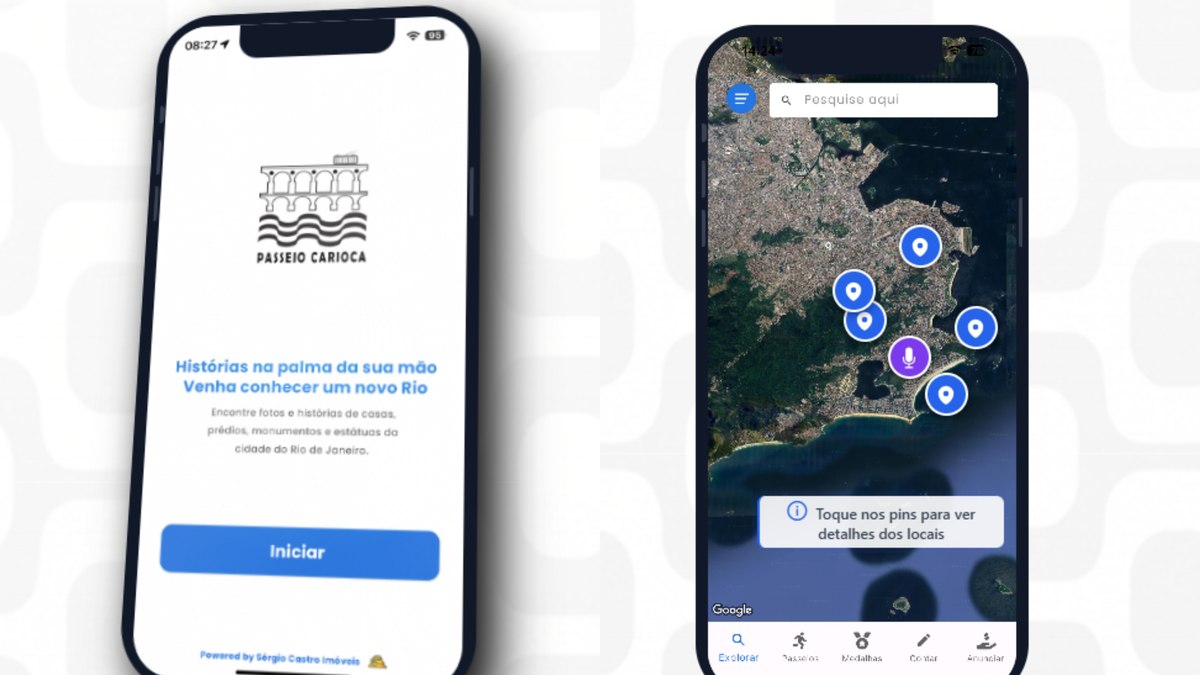
An app launched by a team of Brazilian entrepreneurs is reshaping how both visitors and residents experience Rio de Janeiro’s cultural heritage. Passeio Carioca, officially released in 2025, compiles an extensive, free digital catalogue of the city’s monuments, statues, squares, historic houses, churches, theatres and traditional bars and restaurants, all accessible on users’ phones.
Passeio Carioca app Rio brings curated routes and local income
The mobile platform features a map with roughly 2,000 georeferenced points, each illustrated with photographs and concise historical descriptions. Users can tap any location to view images and background text, share entries with other apps and follow curated, themed routes. These routes are gamified, allowing visitors to collect virtual coins and earn up to 11 commemorative medals that reflect different strands of the city’s memory, including black heritage, literature, theatre, LGBTQIA+ diversity and Carioca architecture.
While the catalogue and most app functions are free, Passeio Carioca offers scheduled guided visits for trails, museums and well-known attractions for a collaborative fee. The paid guided visits are the app’s sole revenue stream and are intended to channel income towards local guides and small neighbourhood businesses rather than to generate profit for a distant platform.

Creators Renato Belinni, Rafael Bokor and Igor Laytnher developed the project with the explicit aim of linking urban memory and the creative economy. In an interview with Portal iG, Laytnher said the team identified a gap in local knowledge: many Cariocas themselves are unfamiliar with the deeper histories outside the typical tourist circuit. The app is designed to democratise access to heritage knowledge and to encourage walking the city as an interactive cultural experience.
From a public policy perspective, Passeio Carioca has already attracted institutional recognition. In December 2025 the app received the bronze trophy from Brazil’s Ministry of Tourism in the Valuing Cultural Heritage category. It also won RioTur’s Inovatur award and took first place in the City Routes category. Those accolades have helped secure partnerships with public bodies and provided validation for the model as a low-cost solution for municipal cultural tourism strategies.
The founders say the platform is intended to complement, not replace, professional guides. By providing layered information and historical context, the app seeks to enhance in-person tours and stimulate demand for local services, including independent guides, small retailers and cultural providers. The integrated approach aims to strengthen neighbourhood economies and local identity while making heritage more accessible to residents and visitors alike.
Looking ahead, the team plans to offer the business model to other Brazilian cities in 2026. They propose working directly with city halls, tourism and culture secretariats to adapt content to each municipality’s history and identity. The goal is to scale Passeio Carioca as a replicable cultural tourism platform that supports local economic development and municipal heritage education across Brazil.
As urban tourism evolves, the Passeio Carioca app demonstrates how simple technology and careful curation can broaden participation in cultural heritage. By combining free digital access, gamified engagement and paid guided services that favour local providers, the project presents a pragmatic route for cities to connect citizens and visitors with overlooked historical narratives while fostering economic opportunities at neighbourhood level.
Key Takeaways:
- Passeio Carioca app Rio offers a free catalogue with around 2,000 georeferenced cultural and historic sites across the city.
- The app combines curated historical content, gamified themed routes and paid guided visits to support local guides and small businesses.
- Recognised by the Ministry of Tourism and RioTur, the project plans expansion to other Brazilian municipalities in 2026.