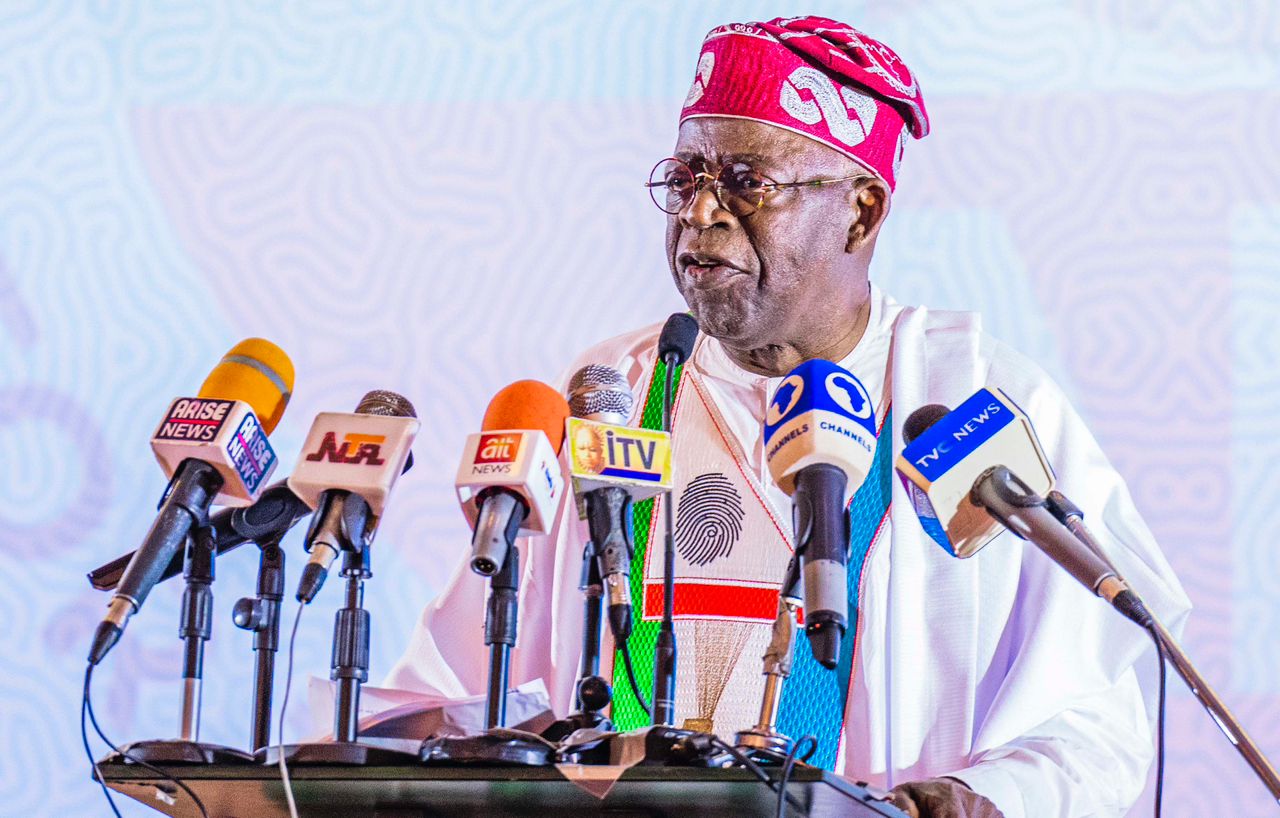
President Bola Ahmed Tinubu opened 2026 by setting out a cautiously optimistic economic agenda for Nigeria, saying the year marks the start of a more robust phase of growth following a series of fiscal and tax reforms implemented in 2025. He told citizens that recent gains — including consistent quarterly GDP expansion, lower inflation and stronger foreign reserves — provide a firm platform for renewed private investment and social programmes.
Nigeria 2026 economic growth outlook and priorities
Tinubu said annualised GDP growth for 2025 is expected to exceed 4 per cent and that the country closed the year with trade surpluses and improved exchange-rate stability. Inflation fell below 15 per cent, he noted, and the Central Bank’s management, paired with a $45.4 billion foreign reserve buffer at the end of December, offers protection against external shocks to the naira.
He highlighted a sharp quarter-on-quarter recovery in foreign direct investment, with FDI rising to $720 million in Q3 2025 after a substantially lower quarter earlier in the year. Global credit rating agencies have signalled growing confidence in Nigeria’s direction, the president added, helping to underpin capital flows and market sentiment.

Fiscal discipline, tax reform and investment
The president reiterated his administration’s commitment to fiscal discipline and a harmonised tax architecture. He has presented the 2026 Appropriation Bill to the National Assembly and urged states to align with national tax harmonisation to reduce multiple taxation that burdens businesses and consumers.
Tinubu said moderating inflation and interest rates should create fiscal space for productive investments in infrastructure and human capital. The administration intends to prioritise roads, power, ports, rail, airports, pipelines, healthcare and education to strengthen food security and raise living standards.
Jobs, local economies and the Renewed Hope programme
To translate macroeconomic gains into tangible improvements at grassroots level, the Renewed Hope Ward Development Programme will target at least 10 million Nigerians, empowering roughly 1,000 people in each of the nation’s 8,809 wards. The initiative will focus on agriculture, trade, food processing and mining to stimulate local economies and expand livelihoods.
Tinubu stressed that ongoing infrastructure projects will continue without interruption, and that efforts to tackle multiple taxation will support small businesses and household consumption.
Security and regional cooperation
On national security, the president said economic progress must be matched by peace. He referenced recent operations against terrorist targets in the north-west and stronger cooperation with international partners, including the United States. Tinubu reiterated support for decentralised policing with safeguards and regulated forest guards as part of a broader effort to stabilise affected regions and protect investment.
In closing, Tinubu called for unity and collective responsibility, urging Nigerians to support reforms and contribute to nation-building. The address set clear expectations for 2026: maintain fiscal discipline, advance structural reforms and ensure that growth becomes more inclusive and visible in everyday life.
Key Takeaways:
- President Tinubu forecasts stronger growth in 2026 after fiscal and tax reforms and sustained quarterly GDP gains.
- Inflation eased below 15% and foreign reserves rose to $45.4bn, supporting exchange-rate stability and investor confidence.
- FDI recovered sharply and the Renewed Hope Ward Development programme aims to lift 10 million Nigerians into productive activity.
- Security cooperation with international partners and decentralised policing are highlighted as essential to sustain economic progress, tying into Nigeria 2026 economic growth.