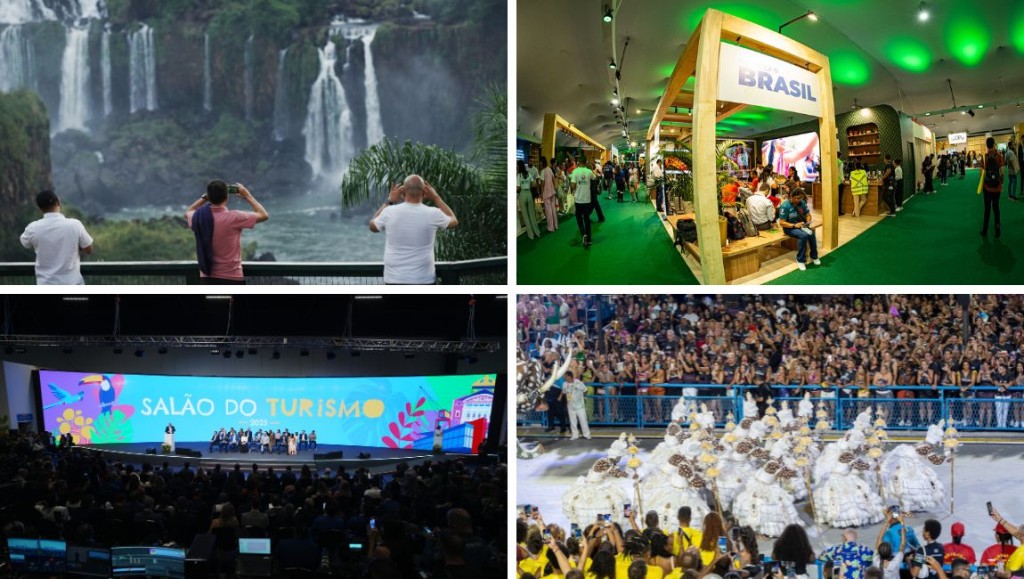
Brazil closed 2025 as a turning point for its tourism sector, registering record international arrivals and a string of policy and infrastructure advances that strengthened the industry’s economic role. By November, more than 9 million foreign visitors had entered the country, surpassing the pre‑pandemic level of roughly 6.6 million and establishing a new historic high.
Brazil tourism growth drives economic gains
The United Nations reported that Brazil led global growth in international inbound travel from January to September, with a 45% increase that outpaced destinations such as Egypt and Japan. International visitors spent US$7.17 billion in the first 11 months of the year, up 8.4% on the same period in 2024, supporting local businesses and public revenues.
Domestic travel rose in step with international demand. A national programme to expand domestic air links, known as Conheça o Brasil: Voando, helped airlines exceed 50 million domestic travellers by July. The surge in movement has translated into employment gains: official payroll data recorded more than 1.5 million formal hirings in the sector through October, leaving a net positive balance of almost 91,000 new jobs.

Policy and marketing interventions underpinned these results. The Ministry of Tourism launched the Plano Brasis with Embratur and Sebrae to promote Brazil’s continental scale and cultural diversity. A national survey conducted by Embratur, Visa and Ipsos found that 94% of foreign travellers rated their experience as good or very good, citing hospitality, accommodation and cuisine.
International promotion was complemented by regional cooperation. Brazil introduced the Visit South America brand in partnership with Argentina, Paraguay, Uruguay and Chile to present South America as an integrated destination, and it pursued visibility at major trade fairs and targeted campaigns in key source markets.
Investment, infrastructure and digital modernisation
To attract private capital, the Ministry presented a Guide for Investment Attraction in Tourism at Fitur in Madrid, developed with UN Tourism and the Development Bank of Latin America and the Caribbean (CAF). Infrastructure works accelerated, with more than 270 completed projects and 300 restarted initiatives supported by the Secretariat for Infrastructure, Credit and Investments, backed by R$360 million in funding.
Public financing was expanded through the New Fungetur, which approved 1,059 loans totalling R$574.1 million on preferential terms for entrepreneurs. The government also introduced a digital National Guest Registration form in partnership with Serpro, enabling pre check‑in and replacing paper records while generating improved statistical data for policymaking.
Sustainability and inclusion were central to the agenda. The Ministry advanced implementation of the 2024 General Tourism Law, extended Cadastur registration to family farmers, launched a mapping of tourism in indigenous communities and supported cultural routes such as the Mercosur Football Tourism Route. Programmes aimed at black and indigenous communities, and initiatives to protect children and adolescents from sexual exploitation, reinforced social responsibility across the industry.
Belém’s hosting of COP30 brought further investment in local tourism infrastructure. Works included R$4.7 million for bilingual signage across nearly 30 circuits and upgrades to communications networks, leaving permanent improvements to connectivity and visitor services in the Amazon gateway.
Looking ahead to 2026, airlines have scheduled higher capacity with 150,000 flights and 20 million seats for the high season, and Brazil will continue to play a leading role in UN Tourism governance, hosting the first UN Tourism office for the Americas and presiding over the organisation’s Executive Council. With strong demand, targeted promotion and sustained investment, Brazil’s tourism growth looks set to remain an engine for jobs, regional development and international engagement.
Key Takeaways:
- Brazil tourism growth recorded over 9 million international arrivals through November 2025 and US$7.17 billion in visitor spending.
- Domestic travel also surged, with more than 50 million domestic flyers and significant job gains across the tourism sector.
- Major initiatives such as the Plano Brasis, Visit South America brand and digital guest registration boosted investment and sustainability efforts.
- Brazil hosted COP30 in Belém and launched measures to attract private investment, including a tourism investment guide co‑authored with UN Tourism and CAF.