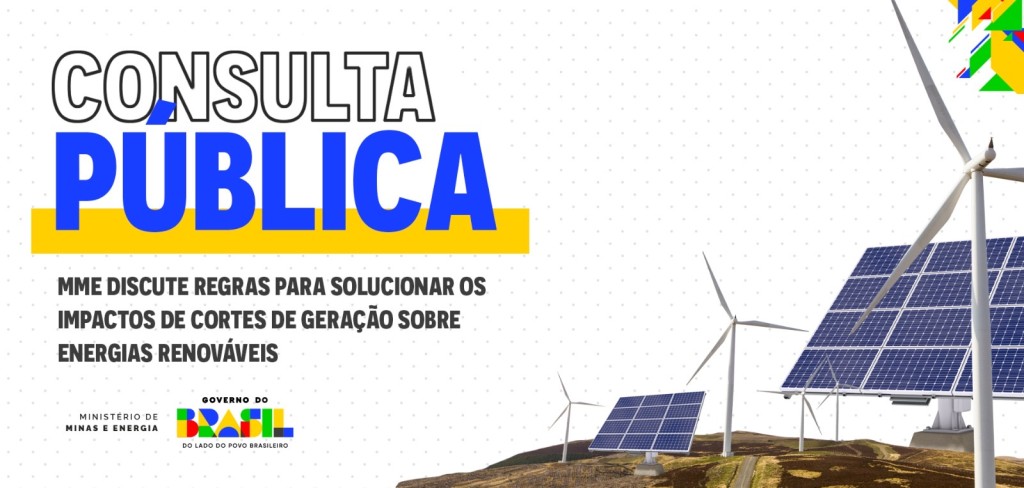
Brazil’s Ministry of Mines and Energy (MME) and the Energy Research Company (EPE) have opened a public consultation on the Planning of Service for Isolated Systems covering the 2026–2030 cycle. The document sets out market projections and a supply‑and‑demand balance for the next five years, with the stated aim of securing energy supply and informing future expansion or replacement auctions.
Brazil SISOL planning to 2030
The planning report consolidates detailed information on 160 isolated systems (SISOL), including forecasts of power deficits, anticipated interconnections, losses and other locality‑specific data. These figures allow authorities and investors to identify where generation parks must expand or where existing plants should be replaced to ensure reliable electricity in regions not yet linked to the National Interconnected System (SIN).
Today, approximately 1.965 million people are served by the 160 isolated systems, a reduction of 52 systems compared with 2022. Officials attribute this decline to progress under the Energias da Amazônia programme, which seeks to decarbonise generation, improve quality and reliability, and lower generation costs across isolated systems within the Legal Amazon. The plan expects further reductions in fossil fuel use and a continued fall in effective generation costs and CO2 emissions in SISOL.

Since 2018, 110 localities have been connected to the SIN, accounting for more than 1.2 million people. Between 2023 and 2025 alone, 36 localities and around 1 million inhabitants were linked, including the capital Boa Vista in Roraima, whose connection was completed in September 2025. That interconnection led to a roughly 50% reduction in energy load in the isolated systems compared with 2025 levels. The planning anticipates another 16 interconnections by the end of 2030.
Recent procurement under the SISOL 2025 auction contracted hybrid projects combining diesel, solar generation and energy storage for six localities—five in Amazonas and one in Pará. The auction set a minimum 22% share for renewable sources in contracted solutions, a requirement designed to cut both costs and emissions. Notably, the tender included the country’s largest battery energy storage system (BESS) to date: a 30 MW installation paired with a photovoltaic plant in Jacareacanga, Pará.
The plan also highlights approvals by the Management Committee of the Programme to Reduce Structural Generation Costs in the Legal Amazon and for the navigability of the Madeira and Tocantins rivers (CGPAL). Those approvals cover 14 isolated localities and feature measures such as hybridising diesel plants with solar arrays and batteries, and modernising public lighting.
Transparency measures form a central part of the planning package. The Portal for Monitoring and Information on Isolated Systems (PASI) provides an interactive interface for the SISOL planning data, with projections out to 2035. The portal enables dynamic analysis and easy access for the public, sector participants and policymakers to information on load, demand, losses, generation costs and CO2 emissions.
MME and EPE are seeking contributions through the public consultation to refine projections and policy options ahead of the next planning cycle. The emphasis on hybrid renewables, storage and grid interconnection reflects Brazil’s effort to reduce reliance on diesel in remote regions while supporting broader decarbonisation and cost‑reduction objectives.
Contact details provided by MME for the public consultation include the ministry’s communications office and the PASI portal for further documentation and datasets.
Key Takeaways:
- Brazil SISOL planning outlines market projections and supply-demand balance for isolated systems through 2030.
- Programme Energias da Amazônia and SISOL 2025 leilão promote hybrid renewables, BESS deployment and reduced diesel reliance.
- Interconnections to the national grid have reached over 1.2 million people; more links to the SIN are scheduled by 2030.
- PASI portal increases transparency with interactive data and projections to 2035 for policymakers and sector stakeholders.