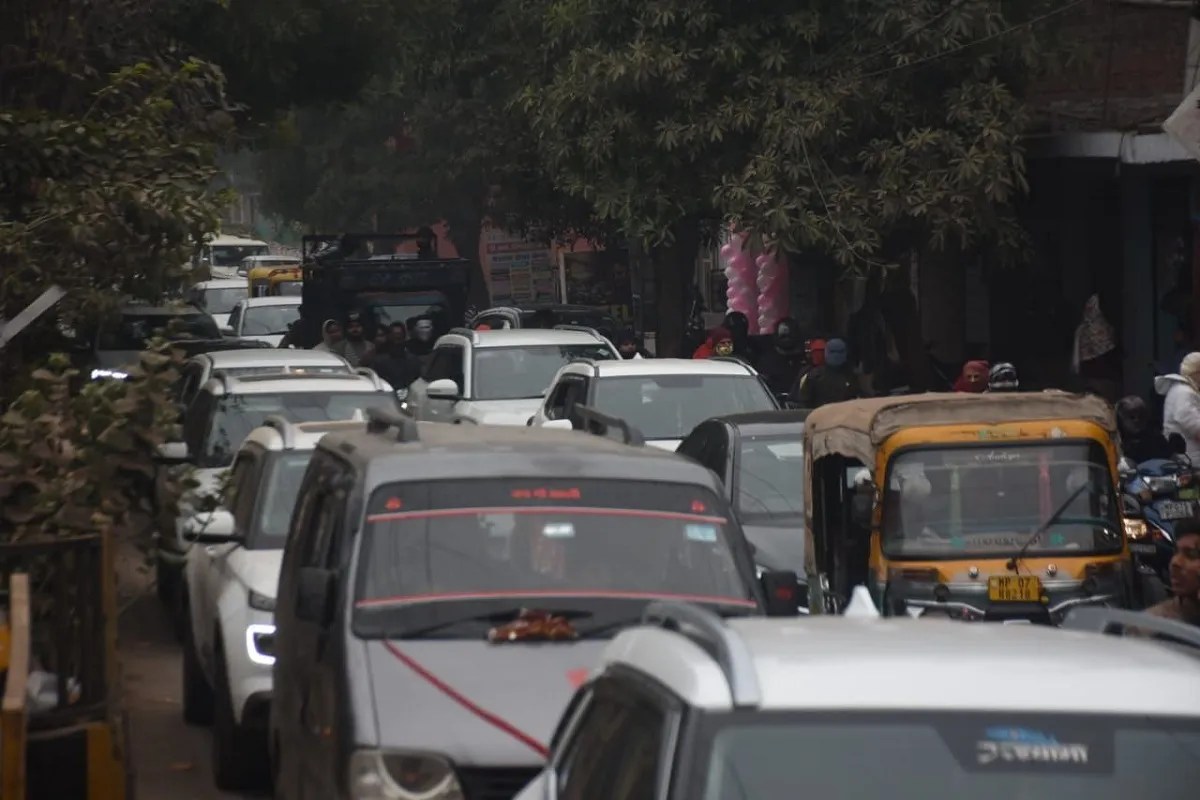
Thousands of residents and visitors converged on Gwalior’s religious and historic sites on the first day of the new year, causing significant traffic congestion and prompting police to impose temporary restrictions on vehicle movement.
Gwalior traffic jam: police impose no-vehicle zones
Early on New Year’s Day, large numbers of devotees visited Achaleshwar temple, while others headed to the city’s mela ground, shopping malls and Gwalior Fort. The sudden surge of visitors led to heavy crowding on key approaches, forcing the city police to act to prevent gridlock and ensure public safety.
Officers declared the routes leading to Achaleshwar temple a no-vehicle zone from Inderganj and the Telephone Exchange chowraha after assessing the crowd density. Police allowed vehicles to proceed only when the flow of visitors thinned, releasing them in phases to avoid further congestion.

Gwalior Fort also experienced intense crowding. From around noon, vehicles began to build up at Urvai Gate, where the approach road narrows and two-way movement became difficult. The constricted roadway and bidirectional traffic soon resulted in long delays and a virtual standstill at several points.
Bahodapur police station inspector Alok Singh Parihar told reporters that, because of the volume of vehicles near the fort, authorities suspended entries twice during the day. In the evening, from 5pm, barricades were installed at Urvai Gate to deter additional traffic from attempting to reach the fort while visitor numbers remained high.
Police officials said the staggered release of vehicles and strategic placement of barricades helped restore movement gradually and reduced the risk of accidents. They urged motorists and visitors to cooperate with directions from traffic personnel and to use alternative parking areas to avoid adding to congestion.
Local residents described long waits and slow progress on several roads leading to the city’s tourist and worship sites. Commuters were advised to plan journeys earlier or postpone non-essential trips, especially during peak visiting hours.
City authorities are reviewing traffic management plans for major public events and festival days, aiming to improve signage, deploy additional traffic officers and expand designated parking near popular spots. Officials also indicated they will study whether temporary pedestrian-only zones should be announced earlier on high-footfall days to prevent repeat gridlock.
While no major incidents were reported, the episode highlighted the challenges of managing sudden surges in visitors to compact historic areas. Police and civic officials said lessons from the day will inform preparations for future festivals and public holidays, with a view to balancing public access to religious and cultural sites with safety and traffic flow.
Visitors are advised to follow official advisories and keep updated through local news and police social media channels on route closures or timing changes when planning visits to Achaleshwar temple and Gwalior Fort.
Key Takeaways:
- Heavy New Year crowds at Achaleshwar temple and Gwalior Fort led to major traffic congestion.
- Police declared no-vehicle zones on routes to the temple and twice halted vehicle entry to the fort to control crowds.
- Traffic was managed by staggered vehicle release and evening barricades at Urvai Gate.