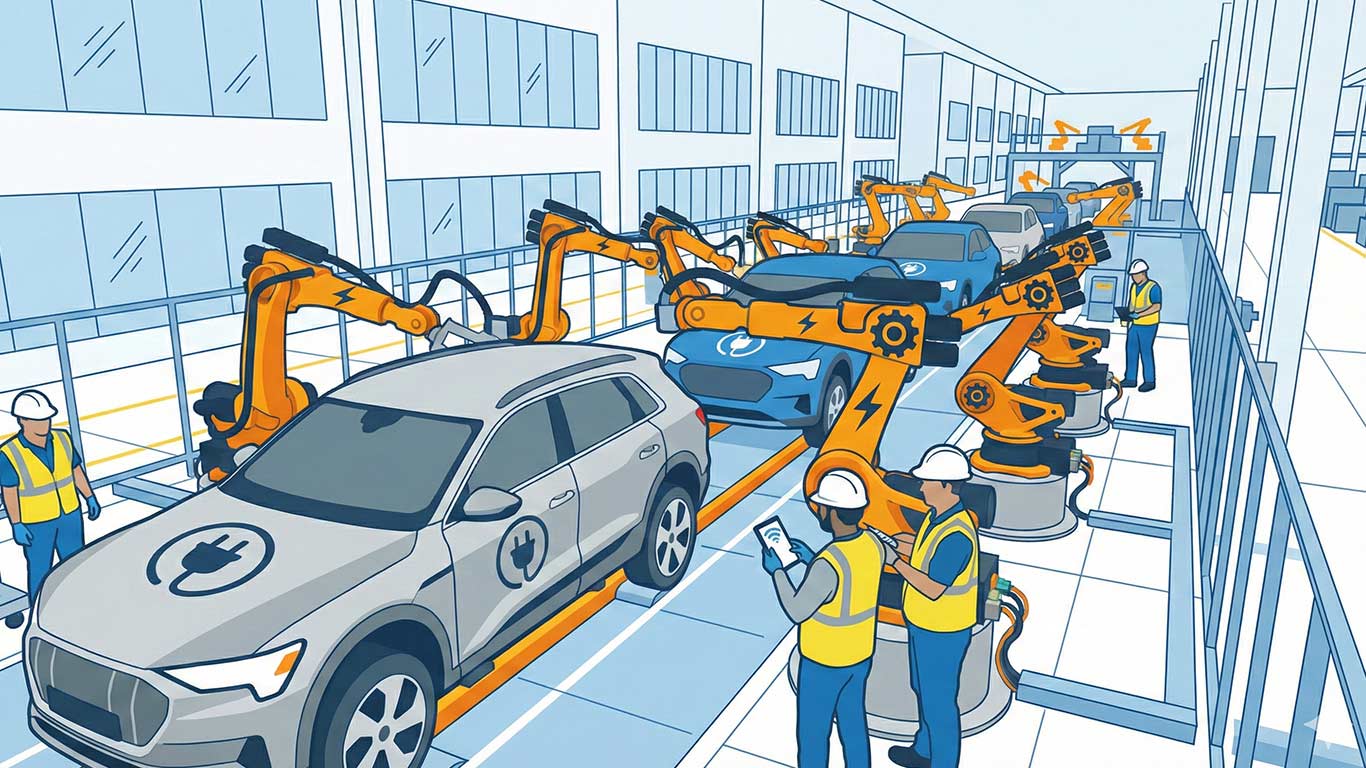
The Indian government disbursed Rs 1,999.94 crore in fiscal 2024–25 to five approved applicants under the Production Linked Incentive (PLI) Scheme for the Automobile and Auto Components sector, the Ministry of Heavy Industries said on 1 January. The payment forms part of a wider plan to strengthen domestic manufacturing of advanced automotive technologies, with a particular emphasis on electric vehicles.
PLI Auto Scheme India drives EV manufacturing and localisation
Launched with a total budgetary outlay of Rs 25,938 crore, the PLI Auto Scheme covers a five-year performance period from FY 2023–24 to FY 2027–28. The programme links incentives directly to production and sales, and it requires a minimum Domestic Value Addition (DVA) of 50 per cent for eligible products, reflecting the government’s push for localisation and self-reliance.
Under the scheme, incentives have been extended for the production and sale of more than 13.61 lakh electric vehicles across several categories. The breakdown includes 10.42 lakh electric two-wheelers, 2.38 lakh electric three-wheelers, 79,540 electric four-wheelers and 1,391 electric buses. Only models and components that meet the 50 per cent DVA threshold qualify for the benefits.

To date, eight applicants in the Champion Original Equipment Manufacturer category have secured DVA certification for 94 vehicle variants. Certified models come from established manufacturers such as Tata Motors, Mahindra & Mahindra, Bajaj Auto, TVS Motor Company, Ola Electric, Eicher Motors, Pinnacle Mobility Solutions and Hero MotoCorp. In the Component Champion category, 10 applicants have received certification for 37 component variants, covering systems including traction motors, trans-axles, engine management units, dual clutch transmissions and EV charging components.
The scheme has reported notable investment and sales figures. Cumulative investments attributed to approved applicants stand at Rs 35,657 crore, while cumulative determined sales amount to Rs 32,879 crore as of 30 September 2025. Employment generation under the scheme is recorded at 48,974 jobs so far. Cumulative incentive disbursement under the PLI Auto Scheme reached Rs 2,321.94 crore as of 31 December 2025.
Major beneficiaries among OEMs include Tata Motors, Bajaj Auto, Mahindra & Mahindra, TVS Motor Company and Ola Electric. In the component segment, Toyota Kirloskar Auto Parts is listed among the prominent recipients. Incentive payouts vary according to each applicant’s performance and eligible sales achieved during the respective years of the scheme.
Industry analysts say the PLI Auto Scheme India is designed to accelerate manufacturing capacity and deepen local supply chains for electric mobility. By tying payments to both production and a clear DVA threshold, the scheme aims to attract investment while ensuring that a significant portion of value creation remains in India.
As the performance window continues through FY 2027–28, observers will watch whether the incentives translate into sustained domestic production, greater exports and broader job creation across the automotive ecosystem. The government’s continued monitoring of DVA certification and disbursement will determine how effectively the programme meets its localisation and industrial growth objectives.
Key Takeaways:
- Government released Rs 1,999.94 crore in FY25 under the PLI Auto Scheme to support electric vehicle production.
- PLI Auto Scheme India incentivises production of over 13.61 lakh EVs across categories, with a 50% Domestic Value Addition requirement.
- Cumulative investments total Rs 35,657 crore and employment has reached 48,974 jobs as of late 2025.
- Major beneficiaries include Tata Motors, Bajaj Auto, Mahindra & Mahindra, TVS and Ola Electric.