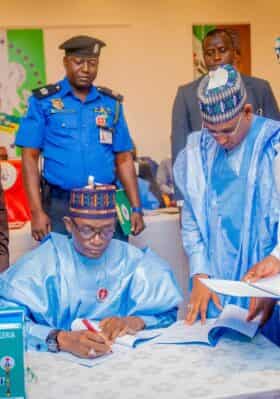
Governor Mai Mala Buni has signed the 2026 Appropriation and Finance Bills into law, approving a N515.53 billion fiscal plan for Yobe State that the administration says will accelerate economic growth and infrastructural transformation.
The governor assented to the bills at a ceremony in Damaturu, roughly two months after presenting the original proposal to the Yobe State House of Assembly on 6 November 2025. The legislation follows legislative scrutiny and modest adjustments to the initial submission.
Yobe State 2026 budget priorities and allocations
The approved budget dedicates N291.9 billion, or about 62 per cent, to capital expenditure, with the remaining N223.63 billion, or 38 per cent, earmarked for recurrent spending. Government statements say this split reflects a sustained focus on physical infrastructure while maintaining essential public services.

Key sectors identified for continued support include education, health, agriculture, infrastructure and employment generation. The governor described the plan as designed to raise the quality of life for residents by expanding access to services and creating jobs through targeted capital projects.
Governor Buni commended the House of Assembly for acting promptly and for what he called thorough legislative scrutiny that protected public interest. He said the passage demonstrated constructive cooperation between the executive and legislative branches of the state government.
There were internal reallocations across several Ministries, Departments and Agencies (MDAs) to align resources with emerging priorities. The governor directed the Secretary to the State Government, the Ministry of Budget and Planning and the Ministry of Finance to coordinate implementation and monitoring across the state’s 23 MDAs to ensure effective execution of programmes.
Underlining a commitment to fiscal probity, the administration reiterated its adherence to transparency and accountability in budget processes. Over the past six years, the state’s fiscal practices have been recognised by organisations such as the World Bank’s SIFTAS programme and the transparency group BudgIT, the governor noted.
Officials said the budget will be rolled out with regular monitoring and reporting mechanisms to track delivery and allow for timely corrective measures where necessary. The state intends to publish progress updates and maintain open channels with development partners and civil society to foster oversight.
Analysts suggest that Yobe’s emphasis on capital spending is appropriate for a sub-national government seeking to address infrastructure deficits and stimulate private-sector activity. However, they caution that success will depend on efficient procurement, project management and continued fiscal discipline to avoid budget overruns.
For residents, the immediate impacts to watch will be visible projects such as road works, school and clinic upgrades, and agricultural support programmes that aim to boost local livelihoods. The administration has pledged to ensure that capital projects deliver value for money and tangible socio-economic benefits.
The signing of the 2026 budget marks the next phase of the state’s medium-term development agenda and sets out clear funding priorities intended to support recovery and growth in the coming year.
Key Takeaways:
- Governor Mai Mala Buni has assented to the Yobe State 2026 budget totalling N515.53 billion.
- The Yobe State 2026 budget allocates 62% to capital projects and 38% to recurrent spending, prioritising education, health, agriculture and infrastructure.
- The administration reaffirmed commitments to transparency and fiscal responsibility following recognition from SIFTAS and BudgIT.