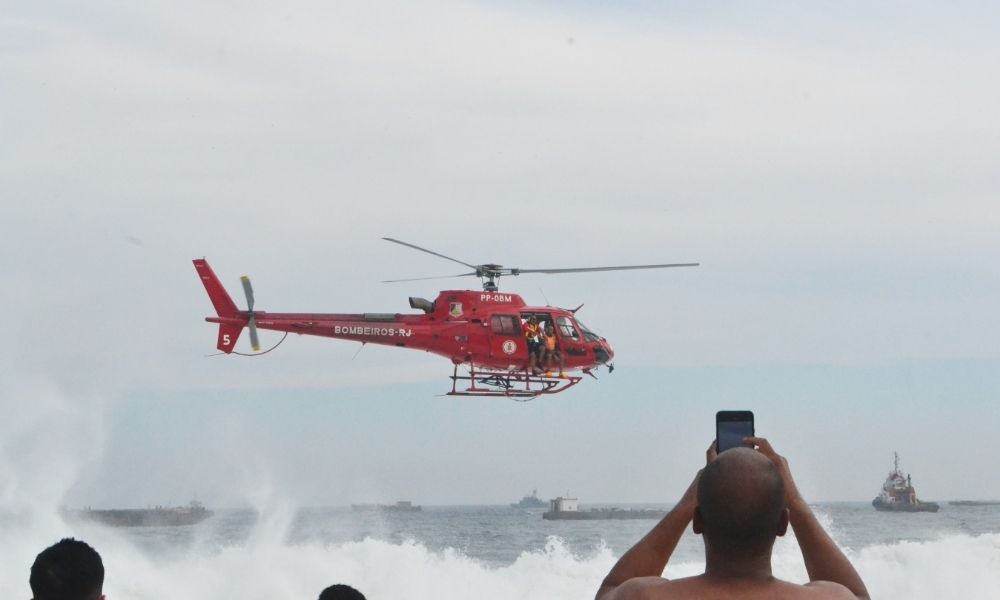
A 14-year-old boy who disappeared in the waters off Copacabana on the morning of Wednesday 31 December remained missing on Thursday 1 January, authorities confirmed. The Rio de Janeiro Fire Department reported an extraordinary 547 rescues across the city’s southern beaches during the New Year period, a sharp rise from 29 rescues in the previous New Year.
Copacabana rescues spike amid severe marine conditions
The missing teenager was last seen near Posto 2 of Copacabana. Television reports identified him as a visitor from Campinas, São Paulo, who was spending the holiday in Rio. Firefighters and civil defence teams continued search operations on Thursday as the public was urged to avoid the sea.
The State Civil Defence issued a city-wide warning of a marine swell and sent alerts directly to residents’ mobile phones. The Brazilian Navy also issued a cautionary notice, forecasting waves of up to 2.5 metres into Thursday morning. Authorities warned that strong currents and return channels had made swimming particularly hazardous.

Rescue figures for the main beaches of the south zone were reported as follows: Copacabana 248, Ipanema 168, Leme 70, Arpoador 40 and Leblon 11. The beaches, already crowded for Rio’s famous New Year celebrations, saw waves approach the stage structures erected for public performances.
“The sea is not suitable for bathing. We have waves up to 2.5 metres, a very energetic sea, many channels and strong return currents,” said Lieutenant-Colonel Fábio Contreiras of the Rio de Janeiro Fire Department. He said rescue teams would use drones with loudspeakers to warn people not to enter the water.
Contreiras added that the brigade would not compromise on safety and urged that people obey the warnings despite the heat and the temptation to swim. “We will be sending audio warnings with drones so people do not insist on entering the water. The risk is real,” he said.
Marine safety specialists also urged caution. Gerardo Portela, a risk management specialist in the Department of Naval and Ocean Engineering at the Federal University of Rio de Janeiro (UFRJ), stressed that local conditions could suddenly turn dangerous even for experienced surfers.
“I am from Rio and I surf regularly. But conditions are totally unfavourable,” Portela said. He recounted pulling several people from the water in the days before the swell because sudden currents had swept swimmers away in places where the sea usually feels shallow.
Portela further warned of the risk from lightning during storms. In an open location such as a beach, a single strike can affect many people, he said, and those on sand are particularly vulnerable during electrical storms.
Search and rescue teams from the fire department and civil defence continued patrols and operations along the coastline. Authorities reiterated their appeal: do not enter the sea while the swell warning remains in force.
Reporting for this article included information from Estadão Conteúdo.
Key Takeaways:
- Copacabana rescues surged to 547 across Rio’s south zone during New Year, driven by rough seas and strong currents.
- A 14-year-old from Campinas remains missing after disappearing near Posto 2 of Copacabana; searches continue.
- Authorities issued a marine warning and advised the public not to enter the water; waves of up to 2.5 metres were forecast.