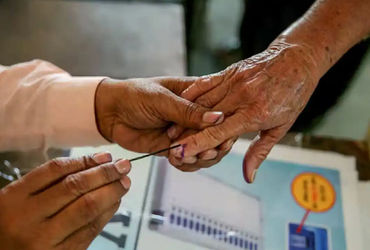
India will hold assembly elections in five states in 2026, a set of contests with the potential to shift momentum ahead of the next national election. The battles in West Bengal, Assam, Tamil Nadu, Kerala and Puducherry will test incumbent governments and offer the Bharatiya Janata Party (BJP) chances to consolidate gains beyond its traditional strongholds.
India 2026 Assembly Elections, key battlegrounds
In West Bengal, Chief Minister Mamata Banerjee’s Trinamool Congress (TMC) remains a dominant regional force following a strong performance in 2021, when it won 213 seats and around 48 per cent of the vote. TMC’s welfare programmes and Banerjee’s personal popularity underpin its position, but economic pressures and governance controversies could erode support. The BJP, buoyed by recent successes elsewhere, will press hard to convert earlier advances into a significant breakthrough. Congress faces leadership challenges and must rebuild to remain relevant in the state.
Assam offers the BJP an opportunity to reinforce its hold under Chief Minister Himanta Biswa Sarma. The party and its allies captured a decisive mandate in 2021 and Sarma has styled himself as a pro-development, security-focused leader. Opposition parties, including Congress and the All India United Democratic Front (AIUDF), plan targeted campaigns, with identity politics and local development forming key issues. A strong BJP showing in Assam would cement its eastern strategy, while gains by the opposition could signal vulnerabilities.

Tamil Nadu is set for a competitive contest under the shadow of incumbent DMK leader M.K. Stalin. The DMK benefited from large-scale welfare schemes in 2021 but now faces anti-incumbency pressures such as unemployment. The AIADMK-BJP alliance will marshal its resources and the emergence of new parties aiming to attract younger voters adds uncertainty. Success for the BJP here would mark organic southern growth; a DMK defeat would weaken the broader INDIA alliance.
Kerala presents a different dynamic. The Left Democratic Front (LDF), led by Pinarayi Vijayan, has focused on social welfare and development, but recent economic strains and criticisms of an authoritarian style have opened space for the opposition. The United Democratic Front (UDF) led by Congress performed well in 2025 local polls, and the BJP has also improved its vote share. The outcome in Kerala will hinge on state governance records and local sentiment rather than national narratives.
Puducherry, though small, is strategically important for coalition arithmetic in the south. The current local alliance between the All India N.R. Congress and the BJP faces internal strains. Opposition forces, including DMK and Congress, will press on local governance and development issues to reclaim the union territory. A loss for the ruling alliance would complicate the BJP’s strategy of building southern partnerships.
Collectively, these five elections will test policy resonance, welfare delivery and opposition unity. For the BJP, strong performances would support a narrative of national momentum and broaden its regional base. For the opposition, wins would demonstrate resilience and could reinvigorate the INDIA bloc going into 2029. Voter concerns ranging from employment and economic management to identity and local development will determine outcomes more than national slogans. Observers should watch campaign strategies, alliance coherence and turnout patterns as indicators of how results might influence India’s broader political trajectory.
Key Takeaways:
- India 2026 Assembly Elections will be held in five states—West Bengal, Assam, Tamil Nadu, Kerala and Puducherry—and could reshape national politics.
- The BJP views these polls as an opportunity to expand in the east and south while the opposition aims to block further gains.
- State issues such as welfare schemes, identity politics and anti-incumbency will be decisive in each contest.
- Results will influence momentum ahead of the 2029 general election.