











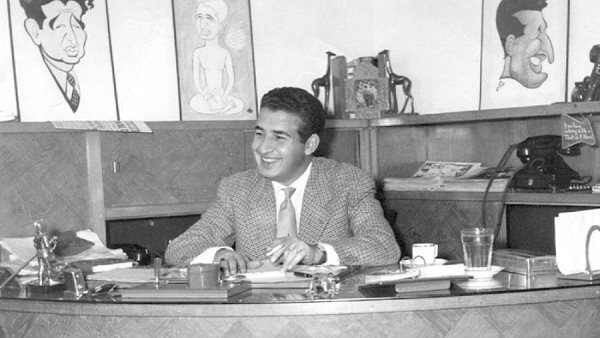
On 1 January 2026 Egyptians mark the birthday of Ihsan Abdel Quddous, one of the twentieth century’s most influential Arabic novelists. Born in the Nile Delta governorate of Gharbia into a household steeped in the arts, Abdel Quddous combined journalistic rigour with novelist’s sensitivity to human emotion, producing work that challenged social norms and opened public debate.
Ihsan Abdel Quddous and His Themes
Abdel Quddous wrote about love, freedom and the position of women in society at a time when those subjects were often treated as taboo. He steered clear of sentimental clichés, favouring direct portrayals of the conflicts between individual desire and social expectation. His novels consistently addressed the tension between passion and duty, and he insisted on treating his characters as complex people rather than symbols.
Raised by his mother, the pioneering journalist and actress Roz el-Youssef, and his father, the actor and writer Mohammed Abdel Quddous, he absorbed both the craft of reporting and the dramatic instincts of the stage. That background helped him develop a spare, accessible prose and an eye for dramatic situations that translated readily to other media.

Early influence from English literature is visible in his character development and narrative pacing. Critics have noted how he blended a journalistic attention to the social setting with novelistic sympathy for individual moral struggles, a mixture that made his books both readable and controversial.
Abdel Quddous did not confine his work to the page. He began his literary career with a short story collection titled “The Maker of Love and the Seller of Love” and soon moved on to novels that became part of Egypt’s cultural conversation. His willingness to provoke discussion made him a writer who was read widely and argued about openly.
From Page to Screen
No modern Egyptian writer had a greater presence on screen. More than 60 films and around 16 television series were adapted from his stories, creating enduring images in Egyptian cinema and television. Films such as Fi Baytina Rajul (A Man in Our House), The Black Glasses and The Bullet Is Still In My Pocket became landmarks, marrying daring themes with popular appeal.
His adaptations covered a range of genres but kept the central concerns of the novels intact: the complexities of love, social constraint and personal liberty. Directors and actors repeatedly returned to his work because it offered strong characters and situations that could be staged convincingly for wide audiences.
As the decades passed, translations of his work introduced international readers to a writer who combined local detail with universal themes. His novels have been translated into several languages, extending his influence beyond the Arab world.
In a cultural landscape that often prefers safe narratives, Ihsan Abdel Quddous remains a reminder that literature can stir public debate and influence social attitudes. As Egyptians mark his birth anniversary, his books and their screen versions continue to be read and watched, testifying to an author who wrote not merely to entertain but to engage society.
Key Takeaways:
- Ihsan Abdel Quddous remains one of Egypt’s most influential novelists, known for exploring love, freedom and the role of women in society.
- Many of his works were adapted for screen—over 60 films and around 16 television series—shaping modern Egyptian cinema.
- Born into a cultural family, his journalism background and love of English literature informed his bold narratives.
- His novels continue to provoke discussion and have been translated into several languages, sustaining his legacy.








