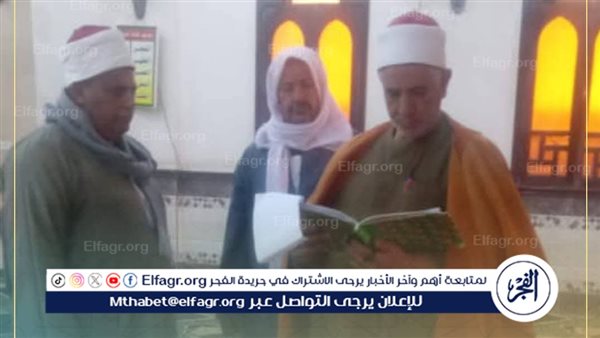
Sheikh Salama Abdel Razek, director of the Fayoum Awqaf Directorate, carried out an extensive round of inspections this week at the Qibli al-Gharq administration office and later at several mosques in the Fayoum South district. The visits form part of a ministry-wide push to maintain consistent field oversight and raise the standards of both administrative and preaching work.
Egypt Awqaf inspection reinforces administrative discipline
Acting on instructions from Minister Osama Al-Azhari, Sheikh Abdel Razek monitored the day-to-day running of offices and mosques, checking that staff were performing their duties and adhering to ministry regulations. He reviewed records of activities, observed interactions between staff and the public, and assessed the level of preparedness among employees responsible for delivering the directorate’s programmes.
Officials said the inspections seek to ensure that the Awqaf directorate fulfils its mandate to promote a moderate, enlightened religious discourse while delivering efficient public services. Sheikh Abdel Razek emphasised that regular on-the-ground follow-up helps identify obstacles early and supports corrective action to maintain high standards of conduct and service.

During the visits, particular attention was paid to the scheduling and delivery of preaching and Quranic activities, with a view to strengthening the religious and educational offer provided by local mosques. Staff were reminded to prioritise courteous dealings with worshippers and the wider community, and to ensure that programmes align with ministry guidelines.
Operational efficiency was another focus. The director urged managers to tighten controls on utility usage and resource consumption, calling for specific measures to rationalise water and electricity use across facilities. Such measures are framed as part of broader efforts to improve cost-effectiveness and environmental responsibility at the directorate level.
Sheikh Abdel Razek also underlined the importance of institutional discipline and accountability. He called on personnel to demonstrate seriousness in carrying out their responsibilities and to cooperate across departments to deliver cohesive, measurable results. The director described the visits as essential to reinforcing a culture of responsibility that serves the public interest and supports the ministry’s goals.
Local stakeholders welcomed the attention from senior Awqaf officials, saying the visits have led to clearer expectations and swifter responses to operational issues. Community leaders said that more frequent field oversight can foster public confidence in religious institutions and improve the quality of services provided to worshippers.
The Fayoum inspections reflect a continuing emphasis by the Ministry of Awqaf on hands-on management and practical oversight. By combining programme monitoring with administrative audits and staff engagement, the directorate aims to ensure that mosques remain active centres of moderate religious teaching and community service while operating efficiently and transparently.
Key Takeaways:
- Egypt Awqaf inspection in Fayoum saw the director review administrative and preaching work across local mosques and offices.
- Visits followed directives from Minister Osama Al-Azhari and focused on operational readiness, staff performance and adherence to ministry guidelines.
- Emphasis placed on promoting moderate religious teaching, sustained field monitoring, and efficiency measures including water and electricity conservation.