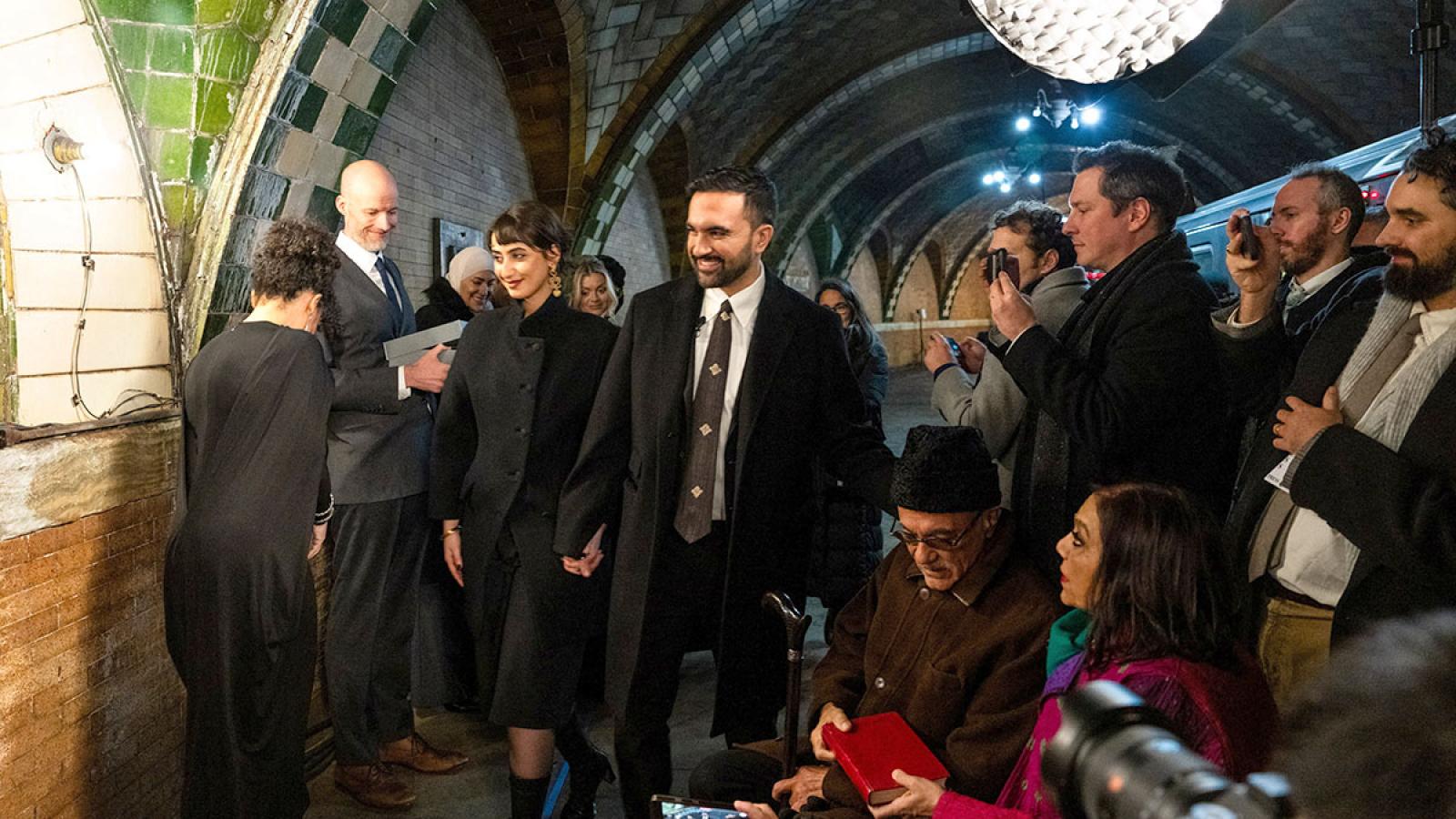
Zohran Mamdani took office as New York City’s 112th mayor in a private swearing-in ceremony just after midnight, marking a historic moment for the city and the Indian-American community. At 34, Mamdani is the first Muslim and the first Indian-origin individual to hold the office, as well as the second-youngest mayor in the city’s history. The ceremony was conducted on a Quran at the Old City Hall subway station, symbolising both personal conviction and a break with tradition.
Indian-origin New York Mayor outlines affordability agenda
Mamdani campaigned on a platform aimed at tackling the city’s affordability crisis, promising immediate and sweeping measures to ease the burden on working New Yorkers. His pledges include a rent freeze for all rent-stabilised tenants, the establishment of city-owned grocery stores to keep food prices low, fare-free buses with priority lanes to speed commutes, and universal childcare for children aged six weeks to five years.
These proposals won him significant support among young voters and working-class communities that have been struggling with rising costs and job insecurity. Mamdani’s campaign argued that the measures would be funded through existing municipal resources and targeted new investments, a claim that his administration will need to substantiate as it implements its agenda.

Born in Kampala, Uganda, Mamdani moved to New York City with his family at the age of seven. He became a naturalised US citizen in 2018. The son of filmmaker Mira Nair and academic Mahmood Mamdani, he attended Bronx High School of Science and earned a bachelor’s degree in Africana Studies from Bowdoin College. Early in life he helped establish his high school’s first cricket team, reflecting his immigrant community roots.
Before entering elected office, Mamdani worked as a foreclosure prevention housing counsellor in Queens, assisting low-income homeowners of colour to avoid eviction. That experience informed his decision to pursue public office. He was elected to the New York State Assembly in 2020, representing the 36th Assembly District, which includes Astoria and neighbouring areas.
In November’s closely watched mayoral contest he defeated a field that included an independent candidate and a Republican challenger. His victory has been framed by supporters as the start of a new political era in the United States, bringing a democratic socialist perspective to the leadership of one of the world’s major financial and cultural centres.
Critics and sceptics questioned Mamdani’s relative inexperience managing a city with a budget exceeding $100 billion and raised concerns about the practicalities of implementing his ambitious plans. In response, Mamdani has emphasised his hands-on experience with housing issues and his commitment to putting working New Yorkers at the centre of city policy.
As he begins his term, attention will turn quickly to how he translates campaign promises into policy while maintaining fiscal stability. Observers both in the United States and among the global Indian diaspora will be watching to see whether his administration can deliver tangible relief on rent, transport and childcare costs without compromising essential services.
Mamdani’s inauguration is likely to have symbolic resonance beyond New York. For Indian-origin communities and diasporas that track political representation abroad, his elevation to mayor of America’s largest city represents a milestone in civic participation and diversity in public office.
Key Takeaways:
- Zohran Mamdani, the Indian-origin New York Mayor, was sworn in in a private ceremony, becoming the city’s first Muslim and first Indian-origin mayor.
- His victory reflects strong youth and working-class support and signals a shift towards a democratic socialist agenda in the city.
- Mamdani campaigned on an affordability platform: rent freezes for stabilised tenants, fare-free buses, universal childcare, and city-owned grocery stores.
- Born in Kampala and raised in New York, his background in housing counselling and state-level politics shaped his focus on lower living costs for working New Yorkers.