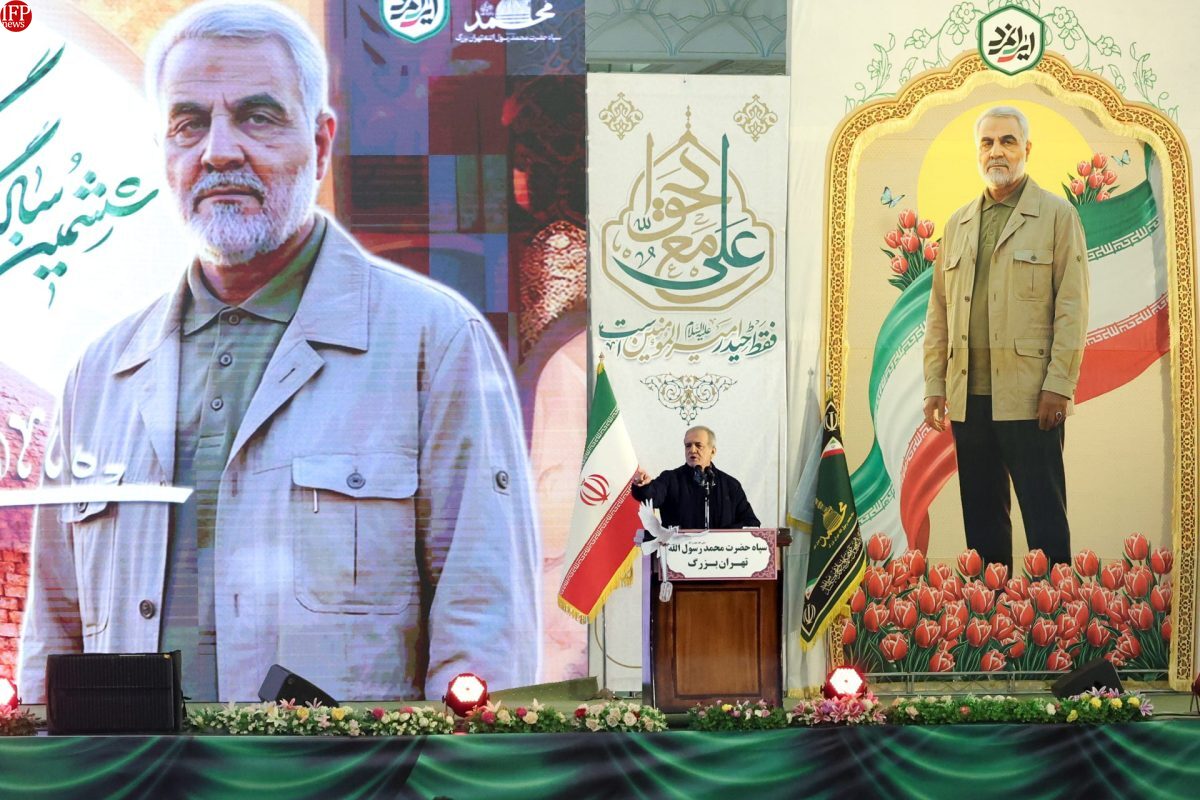
President Mohammad Pezeshkian delivered a firm defence of General Qassem Soleimani on the sixth anniversary of the commander’s death, saying those who commit violence often brand their victims as terrorists. Speaking at a commemorative ceremony, Pezeshkian accused powerful governments of using the language of democracy and freedom to justify oppression and violence abroad.
At the event, the president singled out the United States and the Israeli regime, saying they have targeted influential and capable individuals who stand against injustice. Pezeshkian characterised these actions as a form of “state terrorism”, arguing that the branding of such figures as terrorists is intended to obscure the crimes of those who hold power.
He listed a range of individuals he said were targeted for their resistance, including General Soleimani, Iraqi commander Abu Mahdi al-Muhandis, Iranian scientists, military commanders and religious leaders. According to Pezeshkian, these figures were singled out precisely because they defended oppressed communities and resisted domination in the region.

Soleimani legacy and national commitment
Pezeshkian paid tribute to Soleimani as a sincere and humble figure who served without seeking recognition. He said the general was never attached to worldly interests and consistently opposed injustice, both inside Iran and beyond its borders. That moral integrity, the president added, is why Soleimani became a symbol respected not only in Iran but in other countries after his assassination.
The president emphasised that Soleimani’s support for the oppressed was not limited to military matters. Pezeshkian portrayed the late commander as someone who stood by vulnerable communities and provided support where it was needed, reinforcing the image of a leader guided by principle rather than personal gain.
Addressing his audience, Pezeshkian said the Iranian nation remains committed to continuing the path of Soleimani and other martyrs. He highlighted values he described as central to that path: honesty, courage, justice and a steadfast defence of the oppressed. Those values, he said, will remain a guiding model for Iran’s policies and public life.
Analysts say the ceremony serves multiple purposes. Domestically, it helps consolidate national unity by honouring a widely recognised figure and reaffirming state narratives about resistance and sovereignty. Regionally, the message underlines Tehran’s continuing mistrust of Western and Israeli policies and signals to allies and rivals alike that Iran intends to maintain its strategic posture.
While the commemoration was largely rhetorical, it comes amid a backdrop of ongoing tensions in the Middle East. Pezeshkian’s remarks are likely to echo in diplomatic discussions, where accusations of targeted killings and the use of force remain highly sensitive. For many Iranians, the ceremony was a reminder of a contested chapter in recent history and a reaffirmation that the state honours those it considers to have defended the oppressed.
In closing, Pezeshkian urged the public to keep the memory of the martyrs alive through practical commitment to the values they championed. He pledged that Iran will continue to uphold those principles in its domestic affairs and in its interactions with the wider world.
Key Takeaways:
- President Pezeshkian marked the sixth anniversary of General Qassem Soleimani, condemning powerful states for what he called “state terrorism”.
- Pezeshkian asserted that figures like Soleimani were targeted for defending the oppressed, framing their deaths as efforts to silence dissent.
- The president praised Soleimani’s integrity and global standing and vowed Iran will continue the martyrs’ path.
- The message reinforces national unity and Iran’s resistance narrative amid ongoing regional tensions.