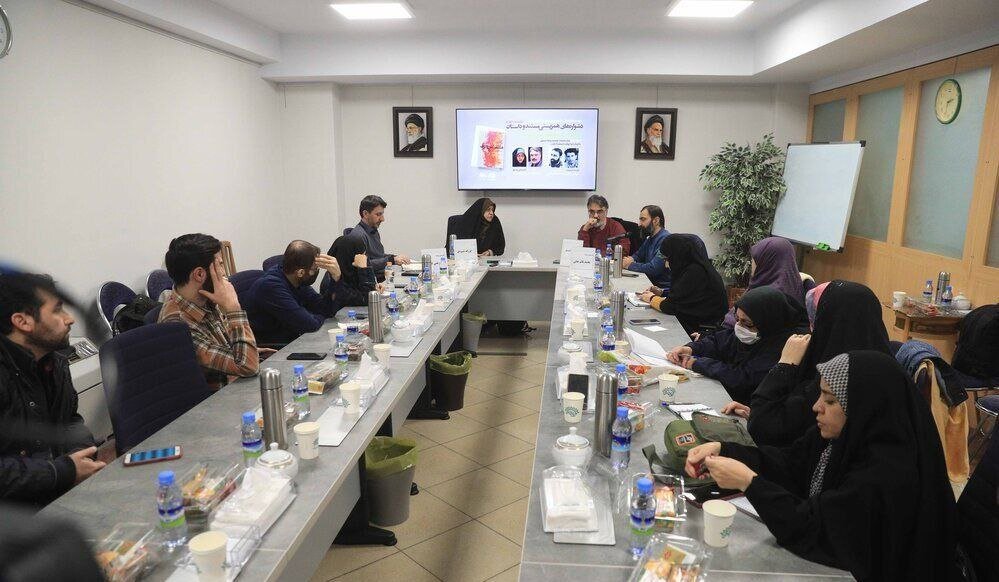
A roundtable in Tehran has placed the spotlight on the documentary novel as a distinct form in contemporary Iranian letters, arguing that careful literary shaping can coexist with strict fidelity to lived experience. The fourth session in the series “Difficulties of Coexistence: Documentary and Fiction” examined the book “Hamsofer of Fire and Snow”, a life narrative of martyr Saeed Ghahari as told by his wife, Farahnaz Rasouli, and written by Farhad Khezri.
Documentary novel and the boundary between fact and fiction
Speakers including Mortaza Ghazi, Behdad Daneshgar and researcher Farzaneh Mardi framed the discussion not as a review of a single book but as a theoretical inquiry into the genre. Ghazi outlined the series’ aim to clarify whether the label “documentary novel” is justified and, if so, which formal conditions it should meet. He noted that the term has only recently found traction in Iranian criticism despite a long history of hybrid narrative forms.
Several contributors argued for a transparent contract between author and reader. Daneshgar said some readers expect documentary works to present unvarnished fact and warned against assigning a documentary appearance to an otherwise fictional text. He recommended that writers who mix material indicate where creative shaping occurs so readers understand what is documentary and what is literary reconstruction.

Mardi, who conducted the interviews and research for the book, explained the editorial process. The project began in 2010 with around 15 hours of recorded interviews with Rasouli. After transcription, Khezri organised and shaped the material. Mardi maintained that roughly 90 percent of the book remains documentary, with the remaining passages shaped by the author to create continuity and readability. Some passages and names were omitted at the request of the narrator.
Other panelists placed the conversation in a broader literary context. Mohammad Ghaem Khani warned against confining the documentary novel to post-war experience alone. He traced precedents in older texts and in international literature and film, suggesting the form belongs within a recognised repertoire of literary practices rather than a limited national phenomenon.
Debaters also discussed the mechanics of narrative. They noted the book’s heavy use of dialogue and present-tense verbs, choices designed to create immediacy and rhythm. Participants accepted that dialogue and compression sometimes reflect the writer’s interventions. The central question was whether those interventions preserve the truth of the events and the voice of the narrator.
The panel reached a cautious consensus. Literary craft has a role in rendering recollection readable and compelling, provided it does not falsify the core facts. Preservation of testimony, they argued, carries civic weight. Ghazi concluded that when only a single account of an event exists, turning it into a readable documentary narrative is not a betrayal but a duty to memory.
The Tehran session underlined a working principle for practitioners: if writers acknowledge their methods, safeguard essential facts and respect narrators’ limits, the documentary novel can bridge testimony and art. For publishers and scholars, the debate points to the need for clear labels and methodological notes so readers know what to expect from hybrid works.
Key Takeaways:
- Tehran discussion examined the book “Hamsofer of Fire and Snow” and promoted the documentary novel as a legitimate literary form.
- Speakers debated fidelity to source material, the writer’s creative role and the need for transparency with readers.
- Researchers emphasised that the book is roughly 90 percent documentary, with selective literary shaping for readability.
- Participants concluded that controlled literary craft can preserve collective memory while keeping factual integrity.